Which Is Safer, Cabo San Lucas Or Puerto Vallarta?
A grounded comparison of tourist safety in Cabo San Lucas and Puerto Vallarta, covering official advisories, the February 2026 Jalisco incident, hurricane season and practical precautions.
Which Is Safer, Cabo San Lucas Or Puerto Vallarta?
Neither city is a clear winner on the official record, because both sit in states rated Level 3 (Reconsider Travel) by the U.S. State Department while both city zones themselves are explicitly carved out of the restrictions. Puerto Vallarta's carve-out is documented in detail; for Cabo San Lucas, no comparable advisory level is cited here, so any head-to-head ranking beyond that would be invented.
That is the honest answer, and it is more useful than the confident verdicts most comparison articles hand out. The question people are really asking is: if I book a beach week in one of these two resort towns, which one carries more risk to me, a regular tourist staying in the hotel zone, doing tours, eating downtown? The sourced record answers that in layers, and the layers do not all point the same way.
The first layer is the official advisory map. The second is what actually happened on the ground recently, and February 2026 put Puerto Vallarta in the news in a way Cabo was not. The third layer is the mundane stuff that statistically matters more to travelers: hurricane exposure, ocean conditions, transit logistics and petty crime. A traveler who reads only the first layer would skip Puerto Vallarta entirely. A traveler who reads all three usually reaches a different conclusion.
This site publishes Tours in Puerto Vallarta, so the fair thing to do is lay out the full record on the Puerto Vallarta side, including the parts that do not flatter it, and be explicit about where the Cabo-side research simply does not carry a verified figure. If you want the deeper single-destination treatment, the safety hub at Puerto Vallarta safety for tourists covers the city in more detail than this comparison needs.
What Do The Official Travel Advisories Actually Say?
The U.S. State Department rates Jalisco, the state containing Puerto Vallarta, at Level 3 (Reconsider Travel), but explicitly applies no restrictions to Puerto Vallarta itself, nor to Riviera Nayarit, the Guadalajara metro area, Chapala or Ajijic; the restrictions target other parts of Jalisco. For Baja California Sur, the state containing Cabo San Lucas, no official advisory level is stated on this page, so no specific level figure is printed here.
That asymmetry is worth pausing on, because most comparison articles paper over it. The Level 3 rating for Jalisco is real and current through 2026, driven by terrorism, crime and kidnapping risk categories. But the same advisory text that assigns the rating also draws a line around the tourist corridor and says, in effect, government employees face no special restrictions there. You can read the full advisory yourself at the U.S. State Department Mexico travel advisory, which is the only source that matters for this question, since it is the document hotels, insurers and embassies all work from.
What the advisory system does well is separate states. What it does poorly is separate cities within states, which is exactly the distinction a Cabo-versus-Vallarta shopper needs. Puerto Vallarta happens to be one of the few Mexican destinations where the carve-out is spelled out by name, which paradoxically means it is better documented than many places with cleaner ratings. A city that is never mentioned in an advisory is not necessarily safer; it may simply be smaller.
The practical takeaway for either destination: the advisory is a state-level instrument, your risk is a neighborhood-level reality, and in both Cabo and Puerto Vallarta the tourist zones are heavily policed, economically central and, on the sourced record, not the sites of the incidents the advisories describe.
What Happened In Puerto Vallarta In February 2026?
In February 2026, the killing of CJNG leader Nemesio "El Mencho" Oseguera by Mexican forces triggered retaliatory disruption in Puerto Vallarta: arson at businesses and vehicles, road blockages, flight delays and cancellations at the Puerto Vallarta and Guadalajara airports, a temporary U.S. Embassy shelter-in-place advisory, and halted rideshare and transport. The situation calmed within days, and operations returned toward normal by late February, though the state-level Level 3 advisory remained.
This is the event that reshaped the safety conversation around Puerto Vallarta, and it belongs on this page in full rather than softened. Tourists in the city during those days reported smoke, shuttered stores and a genuine unease; some were caught near incidents, and the shelter-in-place guidance was not hypothetical. Anyone comparing destinations fairly has to weigh the fact that this happened in Puerto Vallarta and, on the sourced record, no equivalent major tourist-impacting incident is documented for Cabo San Lucas in the same period.
But the honest reading has a second half. The disruption was retaliatory and short-lived, it was not targeted at tourists, and by late February flights, rideshares and tour operations were running again. The State Department's own follow-up reporting described the situation calming within days. A single bad week is a real data point, and it is not the same thing as a pattern.
For Sayulita and the Riviera Nayarit side of the bay, the same incident produced temporary shuttering and stay-indoors guidance, but later 2026 sources describe the area as low-risk with standard petty-crime precautions, and no ongoing cartel-specific advisory for the town itself. The broader comparison between the two bays is covered in Sayulita versus Puerto Vallarta, which is relevant here because many Puerto Vallarta visitors add a Sayulita day trip.
Does Hurricane Season Change The Math?
Yes, in identical measure for both cities: the official Eastern Pacific hurricane season runs May 15 through November 30 and affects the Pacific coast of Mexico generally, with peak risk concentrated in August through October. Neither Cabo San Lucas nor Puerto Vallarta escapes that window, so weather exposure is not a differentiator between them, only a factor in choosing when to go.
The seasonal risk profile matters more for tour planning than for personal safety in the criminal sense. NOAA's official climatology page at NOAA tropical cyclone climatology is the primary source for the window itself. Within it, the practical differences are about rain rather than storms: August is the single worst month in Puerto Vallarta on climate scoring, with one ERA5-based analysis giving it a 4.4 out of 10 score, an 85% rain probability and 7.6 mm of average daily rainfall, with September close behind at 4.5 and 81%.
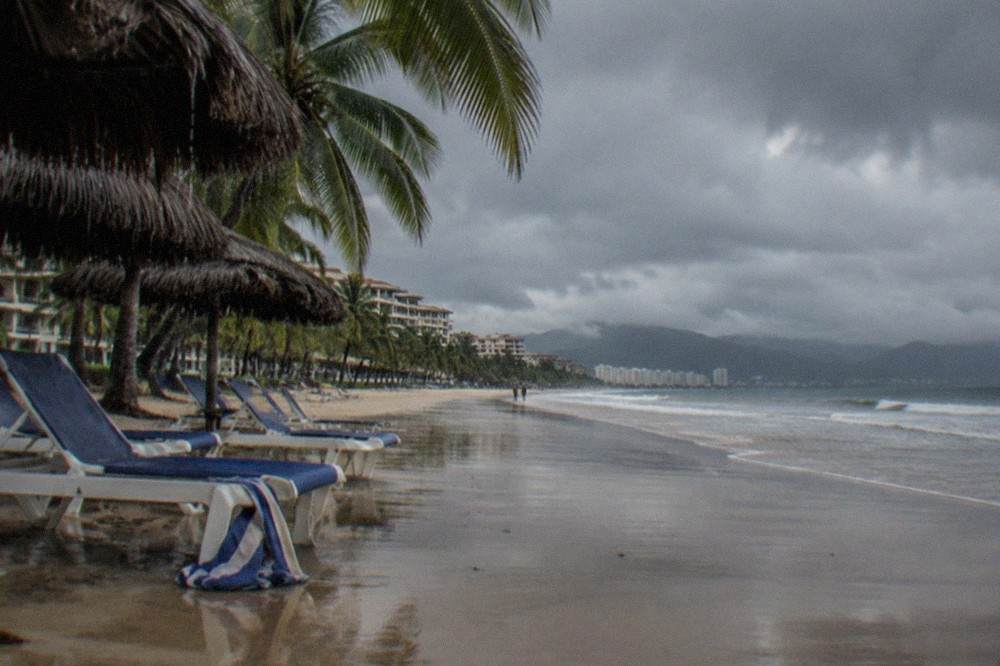
Dry season, roughly November through May, is when both destinations run their best tour calendars: calmer seas, better snorkeling visibility and the whale season that opens in early December. If a September trip is the only option, the honest advice is that tours run year-round but water visibility drops after rain and afternoon downpours are routine, not that either city is unsafe.
| Factor | Cabo San Lucas | Puerto Vallarta |
|---|---|---|
| State advisory level | Not stated on this page, no verified figure in research | Jalisco Level 3, city explicitly carved out |
| Major 2026 tourist-impacting incident | None documented in this site's research | February 2026 disruption, calmed within days |
| Hurricane season window | May 15 - November 30, peak Aug-Oct | May 15 - November 30, peak Aug-Oct |
| Rainiest months | Not stated, no verified figure | August and September |
| Tourist zone character | Resort corridor, heavily policed | Hotel zone and Romantic Zone, heavily policed |
| Documented petty-crime picture | Standard precautions | Standard precautions, opportunistic theft |
Which City Is Easier To Navigate As A Visitor?
Puerto Vallarta is compact and walkable at its core, with the Romantic Zone, the Malecon and Marina Vallarta linked by cheap local transit and short taxi hops. Cabo San Lucas instead spreads along a corridor between the town and San Jose del Cabo, making visitors more dependent on taxis and rental cars. Navigation is a quiet safety factor, because lost visitors in unfamiliar areas absorb more petty-crime exposure.
In Puerto Vallarta, most tours depart from a handful of known points: Marina Vallarta for whale watching and larger boats, Los Muertos Pier for Romantic Zone departures, and Boca de Tomatlán for the small-boat runs south to Yelapa. That concentration means a visitor spends very little time in ambiguous transit situations. A traveler who always knows exactly where they are sits at the low end of the exposure curve, and Puerto Vallarta's density makes that easy. The local transport picture, including the bus system and airport options, is laid out in the Puerto Vallarta transport guide.
Cabo's geography works differently. The 30-kilometer corridor between Cabo San Lucas and San Jose del Cabo means most visitors ride in vehicles daily, and the walkable core around the marina and Medano Beach is smaller relative to the sprawl. That is not a safety criticism, it is a logistics difference that changes where your exposure sits: in Cabo it sits in transit, in Puerto Vallarta it sits on foot, and on foot in a dense tourist core with constant foot traffic is generally the lower-exposure posture.
Neither pattern produces the advisory-level risks the State Department describes. Petty theft, overcharging and the occasional taxi dispute are the realistic visitor-side problems in both, and they respond to the same boring countermeasures everywhere.
What About Water, Beaches And Tour Safety?
On the water side, both destinations are regulated boat-tour markets, and the realistic safety questions are about swimming conditions and operator compliance rather than crime. Puerto Vallarta's Banderas Bay is a sheltered bay with calm-water beach options and a regulated whale-watching season under NOM-131-SEMARNAT-2010; Cabo's Pacific-facing beaches carry stronger surf and more documented riptide caution, though this page's verified research does not carry a Cabo-specific drowning figure, so none is printed.
For Puerto Vallarta, the regulation record is unusually specific, which helps a cautious traveler. Whale watching runs roughly December 8 through March 23, authorized boats keep minimum distances of 60 meters for small vessels and 80 meters for larger ones, non-authorized vessels stay 240 meters away, approach speeds are under 5 knots, and observation is capped at 30 minutes per group. Certified operators display an official flag with identification numbers. If you want the full season picture, Puerto Vallarta whale watching tours breaks it down.
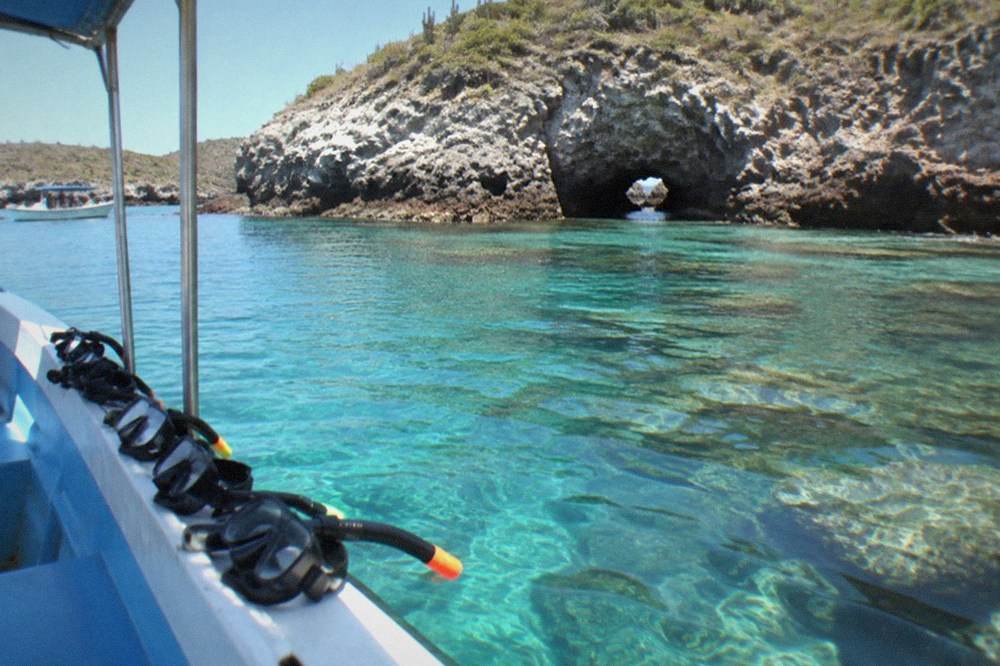
The flagship example of how regulated the bay's marine tourism has become is the Marietas Islands National Park, where access is exclusively through licensed operators, entry is paid via the official "Brazalete de la Conservación" wristband at $125 MXN per person per day, life jackets are mandatory in the water, and alcohol is prohibited inside the park. The Chica Locca all-inclusive Marietas full-day tour, 4.8 from 771 reviews and from $120, handles the wristband and licensed-vessel requirements in one booking, which is exactly the kind of compliance burden a visitor should not have to manage personally.
Closer to town, Los Arcos marine park runs under federal protection rules: no anchoring on reefs, no fishing, no touching or feeding marine life, and a small cash park fee typically collected through operators. The five-islands boat and snorkeling tour from Vallarta Nature Trips, 4.6 from 389 reviews and from $48, is the budget-standard way to see it. Visibility is best November through May, sometimes reaching 15 meters or more, which is another quiet argument for dry-season travel.
On land, the food side of the visitor economy is equally low-risk when booked through established operators. The Downtown Vallarta Food Tour by Vallarta Food Tours carries a 5.0 rating from 3,943 reviews, from $59, the strongest single review record on this site's roster, and it keeps visitors in guided small groups through the Romantic Zone's busiest, most foot-trafficked streets. You can Check availability alongside the fuller write-up in the Puerto Vallarta food tours guide.
What Precautions Actually Matter In Both Cities?
The precautions that matter in Cabo San Lucas and Puerto Vallarta are the same ones that matter in any tourist city: keep phones and wallets out of back pockets, use ATMs inside banks or hotel lobbies rather than street machines, agree taxi or rideshare details before boarding, avoid isolated beaches after dark, and drink in the tourist core rather than far from it. Neither city rewards paranoia; both reward ordinary situational awareness.
The February 2026 episode in Puerto Vallarta added one genuinely useful lesson for travelers to either coast: have a plan for a fast-moving local disruption. That means knowing your embassy's alert channels, keeping a day of flexibility on flights, keeping some cash when card systems or rideshares pause, and not treating a shelter-in-place advisory as something to argue with. The incident calmed within days, but the days it lasted were easier for travelers who had a buffer.
Booking policy is a safety tool too. Tours with free cancellation and pay-later options let you rebook around a weather day or a disrupted afternoon without eating the cost, which removes the pressure to go out when conditions argue against it. The best time to visit Puerto Vallarta for tours guide covers the seasonal trade-offs if your dates are flexible.
One last honest note on the comparison itself. The internet is full of articles declaring one of these cities definitively safer, and almost all of them either predate February 2026 or ignore the advisory carve-out language. The sourced record supports something narrower: both are functioning, heavily touristed resort cities in states with elevated ratings, Puerto Vallarta's recent incident is real and is fully priced into its current picture, and neither city's tourist zone shows a pattern of violence against visitors in the research this site has verified.
Common Questions About Cabo San Lucas Vs Puerto Vallarta Safety
Which Is Safer, Cabo San Lucas Or Puerto Vallarta?
Neither is a clear winner on the sourced record. Both sit in states with elevated U.S. advisory ratings, Puerto Vallarta is explicitly carved out of Jalisco's restrictions, and no comparable verified Cabo-specific advisory figure exists in this site's research. Puerto Vallarta had a real disruption in February 2026 that calmed within days; no equivalent Cabo incident is documented.
Is Puerto Vallarta safe for tourists despite the Level 3 advisory?
The advisory rates Jalisco state at Level 3 but applies no restrictions to Puerto Vallarta, Riviera Nayarit, the Guadalajara metro area, Chapala or Ajijic. Restrictions target other parts of Jalisco. The city's tourist zones are the carved-out areas, which is why the rating and the on-the-ground reality can look so different.
What happened in Puerto Vallarta in February 2026?
The killing of CJNG leader "El Mencho" by Mexican forces triggered retaliatory arson, road blockages, airport flight disruptions, a temporary U.S. Embassy shelter-in-place advisory and halted rideshare service. The situation calmed within days and operations returned toward normal by late February, though the state-level advisory remained.
Does hurricane season affect safety in Cabo or Puerto Vallarta?
The Eastern Pacific hurricane season runs May 15 through November 30 and affects both coasts equally, with peak risk in August through October. In Puerto Vallarta, August and September are also the rainiest months, with August carrying an 85% rain probability in one ERA5-based analysis. Dry season, roughly November through May, is the calmer window for both.
What precautions should I take in either city?
Standard tourist precautions: secure phones and wallets, use ATMs inside banks or hotels, confirm transport details before boarding, avoid isolated beaches after dark, and keep a small cash buffer. Book tours with free cancellation so weather or a disrupted day costs you nothing to reschedule.
Are the boat and marine tours in Puerto Vallarta regulated?
Yes. Whale watching operates under NOM-131-SEMARNAT-2010 with minimum approach distances and time limits, the Marietas Islands National Park requires licensed operators, a $125 MXN conservation wristband and mandatory life jackets, and Los Arcos is a federally protected marine park with no-take rules and designated mooring routes.