Is Puerto Vallarta Safe For Tourists In 2026
Puerto Vallarta sits in a state with a Level 3 travel advisory, yet the U.S. State Department explicitly places no restrictions on the city itself. Here is what that split actually means for tourists.
Short answer
Puerto Vallarta is considered safe for tourists under the U.S. State Department's Jalisco advisory, which rates the state Level 3 but explicitly carves out Puerto Vallarta, Riviera Nayarit, Guadalajara, Chapala and Ajijic with no restrictions. A February 2026 disruption calmed within days. Standard city precautions still apply.
Puerto Vallarta occupies an unusual position on Mexico's travel-advisory map. Jalisco, the state it sits in, carries a Level 3 "Reconsider Travel" rating from the U.S. State Department. Yet that same advisory explicitly exempts Puerto Vallarta, the Riviera Nayarit, the Guadalajara metro area, Chapala and Ajijic from the restrictions that apply elsewhere in the state. Tourists read the headline, miss the carve-out, and cancel trips to one of the most visited resort cities on Mexico's Pacific coast.
This guide lays out the full picture with nothing softened and nothing exaggerated. It covers what the advisory actually says, what happened in the city in February 2026, how safe the water and tour activity are, and the ordinary precautions that matter day to day. If you are weighing Puerto Vallarta against other destinations, the comparison pages on Sayulita safety and Cabo versus Puerto Vallarta safety cover those angles in detail.
Is Puerto Vallarta Safe For Tourists Right Now?
Yes, under the terms of the official advisory itself. The U.S. State Department rates Jalisco state at Level 3, Reconsider Travel, but explicitly carves out Puerto Vallarta, Riviera Nayarit, the Guadalajara metro area, Chapala and Ajijic, placing no restrictions on those areas. Restrictions apply to other parts of Jalisco. Tourists should still take standard city precautions against petty crime.
That is the whole answer in one paragraph, and it is worth reading twice because almost every panicked forum thread about Puerto Vallarta safety omits the second half of it. The advisory is a state-level document. Jalisco is a big state, covering everything from mountain villages near Michoacán to the Guadalajara conurbation to the coast. The State Department draws lines within it, and Puerto Vallarta sits on the unrestricted side of those lines.
The distinction matters practically, not just rhetorically. U.S. government employees, who must follow the advisory's restrictions to the letter, are permitted to move around Puerto Vallarta and Riviera Nayarit without limitation. That is a useful proxy for how the U.S. government itself assesses day-to-day risk in the city. UK foreign-office advice follows a similar pattern, flagging parts of Jalisco while leaving the main tourist zones untouched.
None of this means the city is risk-free. Petty theft, drink spiking in bars, and opportunistic crime against distracted tourists exist here as they do in any resort city of this size. The sections below cover those risks and the specific events of early 2026 in plain terms, because an honest safety page earns trust by naming things, not by hiding them.
What Does The Level 3 Advisory Actually Say About Puerto Vallarta?
The advisory rates Jalisco Level 3 due to terrorism, crime and kidnapping risks, but states there are no restrictions for U.S. government employees in Puerto Vallarta, Riviera Nayarit, the Guadalajara metropolitan area, Chapala and Ajijic. Restrictions apply to other parts of Jalisco, including southern areas and certain highways. The city itself is exempt.
The full text is published on the State Department's Mexico travel advisory page, and it is worth reading the Jalisco section yourself rather than relying on secondhand summaries. The Level 3 rating for the state stems from cartel and gang violence, with incidents recorded in tourist areas of Guadalajara. That is the state's problem, and it is real. It is not, however, concentrated in the hotel zone of Puerto Vallarta or the beach towns of the bay.
Here is the structure of the advisory in plain form:
| Advisory element | What it says | Practical meaning for tourists |
|---|---|---|
| Jalisco state rating | Level 3, Reconsider Travel | The headline number people see |
| Puerto Vallarta carve-out | No restrictions for U.S. government employees | The city is treated separately |
| Riviera Nayarit carve-out | No restrictions | Nayarit beach towns also exempt |
| Guadalajara metro, Chapala, Ajijic | No restrictions | Inland tourist areas exempt |
| Other parts of Jalisco | Restrictions apply, including some highways | Avoid specific routes, not the region |
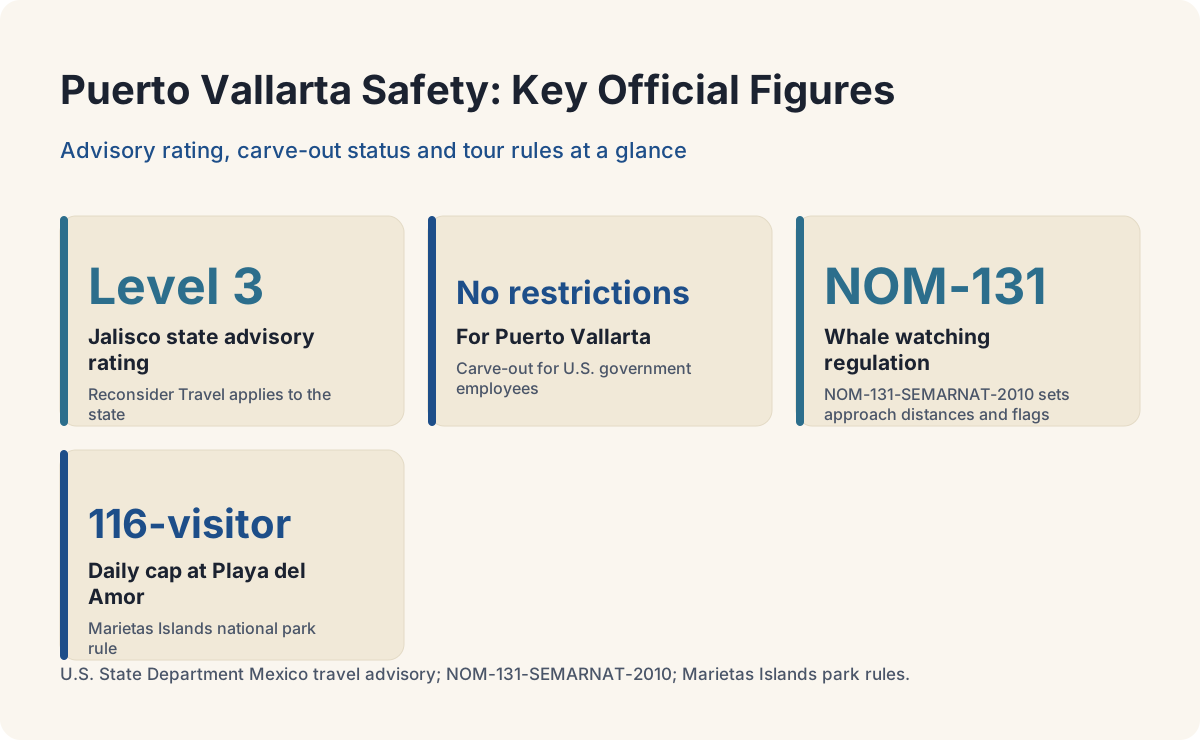
The carve-out is not a loophole or a marketing spin. It is the advisory's own language, updated through at least mid-2026. When a government document that restricts its own employees' movements across most of a state declines to restrict them in your destination, that is the strongest official signal available short of a lower state-wide rating, which Jalisco's interior problems make unlikely.
If you are planning a wider trip, the best time to visit Puerto Vallarta for tours matters for weather and seasonality, and safety conditions pair with it when choosing dates. Tours in Puerto Vallarta run year-round, and licensed operators are a large part of why the tourist experience stays orderly even when state-level headlines look alarming.
What Happened In Puerto Vallarta In February 2026?
In February 2026, the killing of CJNG leader Nemesio "El Mencho" Oseguera Cervantes by Mexican forces triggered retaliatory disruption in Puerto Vallarta: arson at businesses and vehicles, road blockages, flight delays and cancellations at the PV and Guadalajara airports, a temporary U.S. Embassy shelter-in-place advisory, and halted rideshare and transport. The situation calmed within days.
The February 2026 incident is the one most often raised in safety questions, and it deserves a full, unvarnished account. On the ground, tourists reported smoke, shuttered stores, empty streets, and a city that went quiet overnight. Flights were delayed or cancelled at both Puerto Vallarta and Guadalajara airports. Rideshares and public transport stopped running during the peak of the disruption, which left some visitors walking or waiting in hotels. The U.S. Embassy issued a temporary shelter-in-place advisory for the area.
Then, within days, the situation calmed. By late February 2026, operations had returned toward normal: flights resumed, businesses reopened, tours ran again, and the streets filled back up. The state-level Level 3 advisory remained in place, as it had before, but the acute disruption ended. Tourists who were in the city during those days described unease and inconvenience more than direct danger, though some reported being near incidents.
Four points from that record, stated plainly, because a safety page that omits any of them is dishonest in one direction or the other:
- The violence was real. Arson, blockages and transport halts happened, and tourists experienced them.
- It was a targeted, retaliatory response to a specific event, not a spontaneous wave of attacks on visitors.
- It calmed within days, and operations returned toward normal by late February 2026.
- The state's Level 3 rating remained afterward, unchanged by the incident.
The honest takeaway is not "nothing happened" and not "Puerto Vallarta is dangerous." It is that a rare, fast-moving disruption occurred, the city absorbed it, and within a week the tourist economy was running again. No equivalent major tourist-impacting incident is on the record for Sayulita or the Riviera Nayarit side of the bay, which is described as low-risk with standard petty-crime precautions.
If a similar event occurred during your trip, the playbook is the same one residents followed: stay indoors, follow embassy and hotel guidance, keep a buffer of food and water, and wait. Travel insurance that covers disruption is worth having for exactly this kind of week.
Is Puerto Vallarta Safe From Cartel Violence?
For tourists, the sourced record shows no campaign of cartel violence targeting visitors. The February 2026 disruption was retaliatory, brief and not aimed at tourists, though some were caught near it. The State Department's carve-out for Puerto Vallarta reflects this assessment. Tourists are far more likely to encounter petty crime than organized violence.
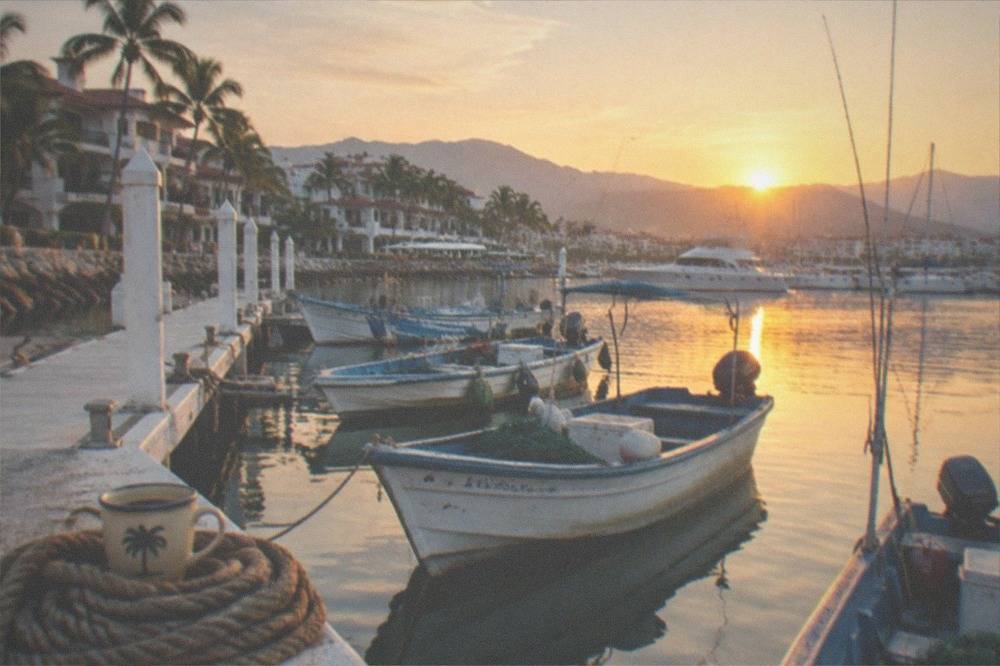
Cartel presence in Jalisco is a fact of state-level life, and pretending otherwise would be dishonest. What the record supports is a clear separation between that presence and the tourist experience in Puerto Vallarta. The violence that drives Jalisco's Level 3 rating happens overwhelmingly in areas the advisory itself restricts, away from the bay's hotel zones, marinas and old town. The February incident was the exception, and its rapid resolution is the reason it did not change the city's standing in the advisory.
The economic logic is worth understanding because it explains the pattern. Puerto Vallarta's economy runs on tourism, and sustained disruption to it costs every stakeholder in the region, licit and otherwise. The February retaliation was directed at infrastructure and businesses as a signal, not at visitors. Once the signal was sent, the pressure to return the city to normal was immediate and effective.
None of this is a guarantee, and no honest writer offers one. What it means practically is that your realistic risk profile in Puerto Vallarta looks like a mid-sized tourist city: watch your phone on the beach, use registered transport at night, don't leave drinks unattended, and keep valuables in the hotel safe. The getting around Puerto Vallarta transport guide covers which transport options are the reliable ones.
For travelers comparing Pacific coast destinations, the Cabo versus Puerto Vallarta comparison weighs safety alongside cost and atmosphere, and the Riviera Maya versus Puerto Vallarta piece does the same for the Caribbean side.
Are The Beaches, Boats And Tours Safe?
Yes, with licensed operators. Boat tours in Banderas Bay run under federal regulation, whale watching is governed by NOM-131-SEMARNAT-2010 with minimum approach distances and certified flags, and the Marietas Islands national park enforces mandatory life jackets and a 116-visitor daily cap at Playa del Amor. Choose operators with permits and the rules do most of the safety work.
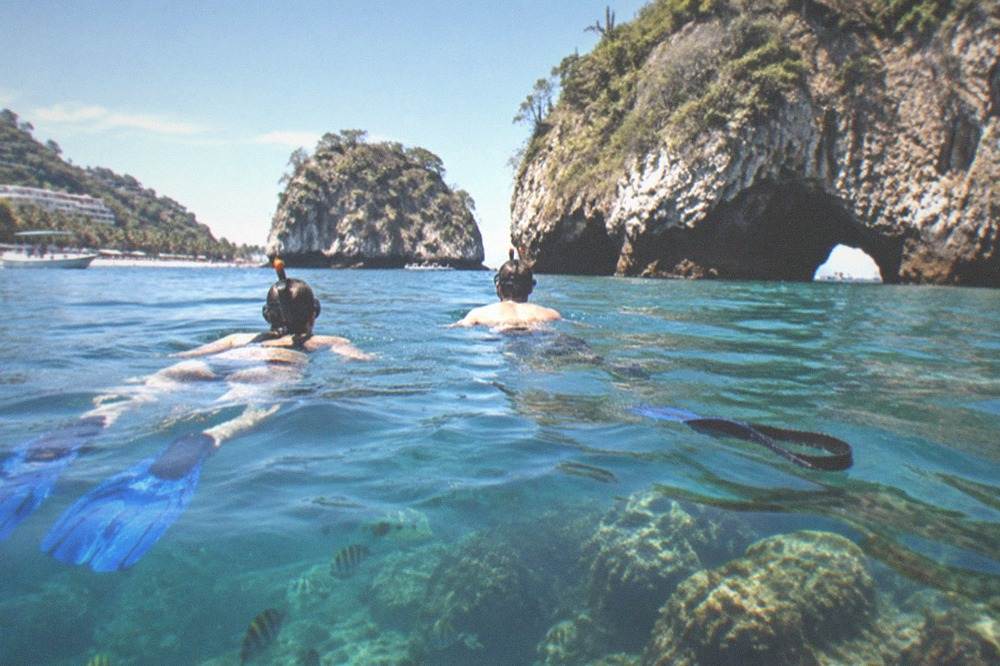
Water safety in the bay is regulated more tightly than most tourists realize. Whale watching, which runs roughly December 8 to March 23, operates under NOM-131-SEMARNAT-2010, the federal standard that sets minimum approach distances of 60 meters for small boats and 80 meters for larger ones, a 240-meter standoff for unauthorized vessels, a speed limit under 5 knots on approach, and a 30-minute maximum observation window per whale or pod. Certified operators display an official whale-watching flag with identification numbers. If a boat does not fly one during whale season, that is your cue to book elsewhere.
The Marietas Islands, home of the famous Hidden Beach, are a national park managed by CONANP. Entry requires the official "Brazalete de la Conservación" wristband at $125 MXN per person per day, life jackets are mandatory in the water, alcohol is prohibited inside the park, and Playa del Amor admits a maximum of 116 visitors per day with no more than 15 on the beach at once. These caps exist to protect the reef, and they have the side effect of keeping the experience uncrowded and controlled. The details are on the Marietas Islands tour guide.
| Activity | Main regulation or safeguard | What to check before booking |
|---|---|---|
| Whale watching | NOM-131-SEMARNAT-2010, certified flag, approach distances | Operator flies the official flag |
| Marietas Islands park | CONANP wristband, life jackets, visitor caps | Operator is licensed for the park |
| Los Arcos snorkeling | Federally protected marine park, no anchoring on reefs | Small-group boat, morning departure |
| Zipline and ATV tours | Helmets, safety briefings, guided routes | Reviews mention briefings and gear |
| Beach time | Lifeguard presence varies by beach | Swim near flagged zones |
For snorkeling, visibility at Los Arcos is best November through May, sometimes reaching 15 meters or more, and mornings are the calmest window. A per-person marine park fee of 41 Mexican pesos applies, usually collected by the operator in cash. The Los Arcos snorkeling tour guide covers the site in depth, and the Puerto Vallarta snorkeling tours overview compares the bay's options.
The Los Arcos 5 Islands boat tour, rated 4.6 from 389 reviews and priced from $48, is a good example of the regulated end of the market: a small-group snorkeling trip inside the marine park with gear included. The rest of the planning pages sit on Tours in Puerto Vallarta.
What Petty Crime Should Tourists Watch For?
Petty theft is the most common tourist-facing crime in Puerto Vallarta: bag and phone snatching on the beach and malecon, drink spiking in bars, and opportunistic theft from unattended belongings. Violent crime against tourists is rare by comparison. Basic precautions, the same ones you would take in any mid-sized tourist city, cover most of the risk.
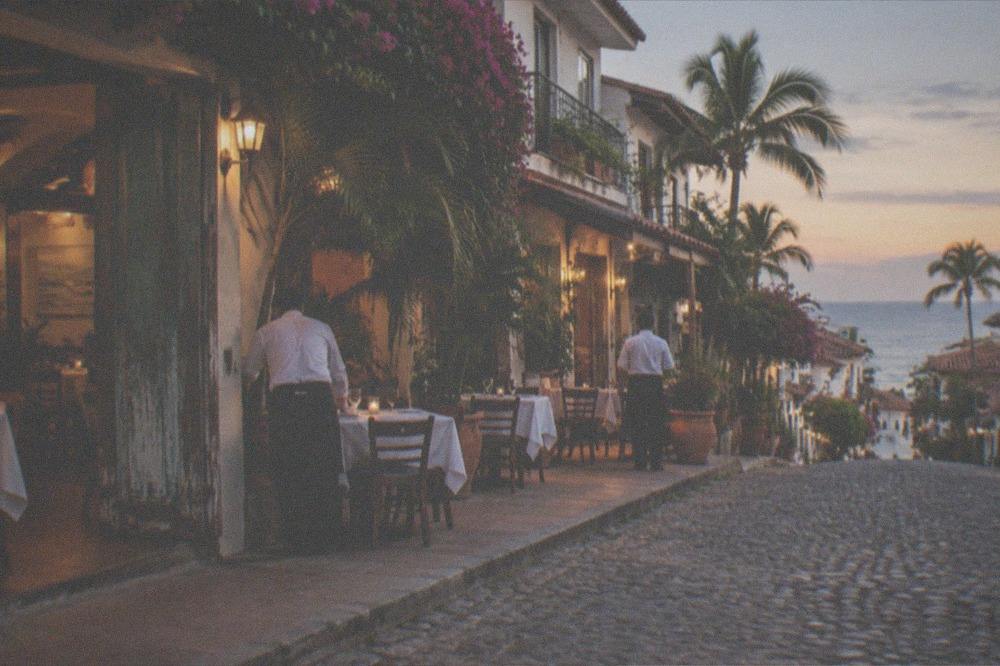
The pattern is consistent across the sourced record. Phones vanish from beach towels. Bags left on the back of a chair at a café walk away. Drinks left unattended get tampered with. Rental-car break-ins happen in unlit lots. None of it is unique to Puerto Vallarta, and all of it is preventable with habits you already have at home.
The precautions that matter most, in rough order of impact:
| Situation | Risk | The habit that prevents it |
|---|---|---|
| Beach day | Phone and bag theft | Take only what you'll carry in the water |
| Night out in Zona Romantica | Drink spiking | Buy your own drinks, keep them in hand |
| Walking the malecon at night | Snatch theft | Phone in front pocket, no visible cash |
| Rental car | Break-ins | Nothing visible in the cabin, park in lit lots |
| ATMs | Card skimming | Use bank ATMs inside lobbies, check the reader |
| Tours and transport | Unlicensed operators | Book licensed operators, verify pickup details |
Two Puerto Vallarta specifics are worth adding. First, the malecon and the Zona Romantica are heavily walked at night and generally feel safe, but they are also where the largest concentrations of distracted tourists and opportunistic thieves overlap, so the phone-in-pocket rule earns its keep there specifically. Second, unlicensed beach vendors and "tour sellers" offering cut-rate excursions are best declined, not because they are dangerous but because unlicensed boats skip the safety and insurance standards that the regulated fleet carries. The private versus shared tours comparison explains how to tell a legitimate listing from a beach-pitch.
Solo travelers and families ask versions of the same question, and the answer converges: the tourist core of Puerto Vallarta behaves like a tourist city, with the ordinary risk profile that implies. Solo women report the same mix as in comparable destinations, with harassment on the street being the most common complaint and violence being rare. Families find the beach clubs, tour operators and hotel zones well set up for kids, and the things to do in Puerto Vallarta roundup is organized with family-friendly options in mind.
Does Weather Or Season Affect Safety?
Yes, timing matters. The Eastern Pacific hurricane season runs May 15 through November 30, with peak risk August to October, and August and September are the rainiest months. The dry season, roughly November to May, brings calmer seas and the best snorkeling visibility. Booking outside the peak-risk window removes most weather-related disruption from the equation.
The official season window comes from NOAA's tropical cyclone climatology, and the seasonal rainfall analysis for the region is summarized at bestdateweather.com's Puerto Vallarta seasonal breakdown. August scores lowest of the year in climate terms, with a high probability of rain on any given day, and September is close behind. That does not make those months unsafe, but it does make tour disruption and boat-trip cancellations more likely.
Direct hits on Puerto Vallarta by major hurricanes are historically uncommon, and the bay's geography blunts many systems. The practical risks of the wet season are mundane: cancelled boat departures, muddy jungle trails on ATV and zipline tours, and reduced underwater visibility after rain. Operators cancel or reschedule when conditions warrant, and reputable listings make rescheduling painless. The what happens if it rains on a tour post covers the mechanics of cancellations and refunds.
The dry season, November through May, is when the bay is at its most predictable: calm water, clear visibility at Los Arcos, and whale season beginning in early December. If safety-minded planning means picking the window where the fewest things can go wrong, that is it. The trade-off is crowds and higher prices, which the how many days in Puerto Vallarta is enough piece helps you budget around.
For a full-day option on the water, the Marietas Islands all-inclusive tour, rated 4.8 from 771 reviews and priced from $120, runs with a licensed operator inside the national park, and the downtown food tour, rated 5.0 from 3,943 reviews and from $59, keeps you in the walkable, well-trafficked core of the city.
What Should You Actually Do Differently In Puerto Vallarta?
Very little beyond your normal travel habits. Book licensed tour operators, use bank ATMs, keep your phone secured on the malecon, decline beach-pitch tour sellers, and consider travel insurance that covers disruption. Read the Jalisco section of the State Department advisory yourself rather than relying on headlines. Beyond that, Puerto Vallarta asks for ordinary city caution, not special measures.
The honest close of a safety page is anticlimactic by design. The scary version of Puerto Vallarta, the one implied by a bare "Level 3" headline, does not match the city the advisory itself describes. The real version is a heavily touristed bay where the U.S. government permits its own staff to move freely, where one brief disruption in early 2026 ended within days, and where the risks that actually reach tourists are the same ones they face at home: theft, spiked drinks, and carelessness.
A short checklist for the trip itself:
- Save the State Department advisory and your embassy's contact page before you fly
- Book tours through listings with clear cancellation terms rather than beach vendors
- Carry the day's cash only, and use bank ATMs inside lobbies
- Swim at beaches with lifeguards, and swim near flagged zones
- During whale season, book operators flying the certified whale-watching flag
For the food-focused half of your trip, the downtown food tour holds the strongest review record on the entire roster, 5.0 from 3,943 reviews, from $59, and it is a good way to eat well in the city core with a guide who knows the neighborhoods.
Between the licensed-boat rules, the national park caps and the advisory's own carve-out, the structure of tourism in this bay is built to keep visitors inside a well-regulated bubble. The three options above cover the water, the islands and the food, and each runs with an operator whose listing carries the cancellation terms worth checking before you commit.
Common Questions About Is Puerto Vallarta Safe For Tourists
Is Puerto Vallarta safe for tourists?
Yes, under the advisory's own terms. Jalisco is rated Level 3, but Puerto Vallarta, Riviera Nayarit, Guadalajara, Chapala and Ajijic are explicitly carved out with no restrictions. Standard city precautions against petty crime still apply.
Is Puerto Vallarta safe from cartel violence?
The sourced record shows no campaign of violence targeting tourists. The February 2026 retaliatory disruption after the killing of a CJNG leader was brief, not aimed at visitors, and calmed within days, though some tourists were caught near incidents.
What does the Level 3 Jalisco advisory mean for my trip?
It means restrictions apply to parts of Jalisco outside the tourist zones. Puerto Vallarta itself is exempt, with no restrictions for U.S. government employees. Read the Jalisco section of the advisory directly to see which areas and highways are flagged.
What happened in Puerto Vallarta in February 2026?
Retaliatory arson, road blockages, airport disruption and a temporary shelter-in-place advisory followed the killing of CJNG leader "El Mencho." The situation calmed within days and operations returned toward normal by late February 2026.
Is it safe to book boat and snorkeling tours in Puerto Vallarta?
Yes, with licensed operators. Whale watching is federally regulated under NOM-131-SEMARNAT-2010, the Marietas park enforces life jackets and visitor caps, and Los Arcos is a protected marine park. Look for certified flags and permitted operators.
When is the safest time of year to visit Puerto Vallarta?
The dry season, roughly November to May, brings calmer seas and fewer disruptions. Hurricane season runs May 15 to November 30 with peak risk August to October, and August and September are the rainiest months.