Which Is Nicer, Cabo Or Puerto Vallarta?
An honest comparison of Cabo San Lucas and Puerto Vallarta on beaches, tours, food, cost and safety, so you can decide which resort town actually suits your trip.
Which Is Nicer, Cabo Or Puerto Vallarta?
Neither is objectively nicer, and any article that declares a winner is guessing at your taste. Cabo is a desert-and-rock playground built around sportfishing, luxury resorts and nightlife, while Puerto Vallarta is a greener, older, more Mexican town wrapped around a large protected bay with whale watching, island snorkeling and jungle tours. The honest answer is that Cabo suits resort-first travelers and Puerto Vallarta suits travelers who want variety beyond the hotel gate.
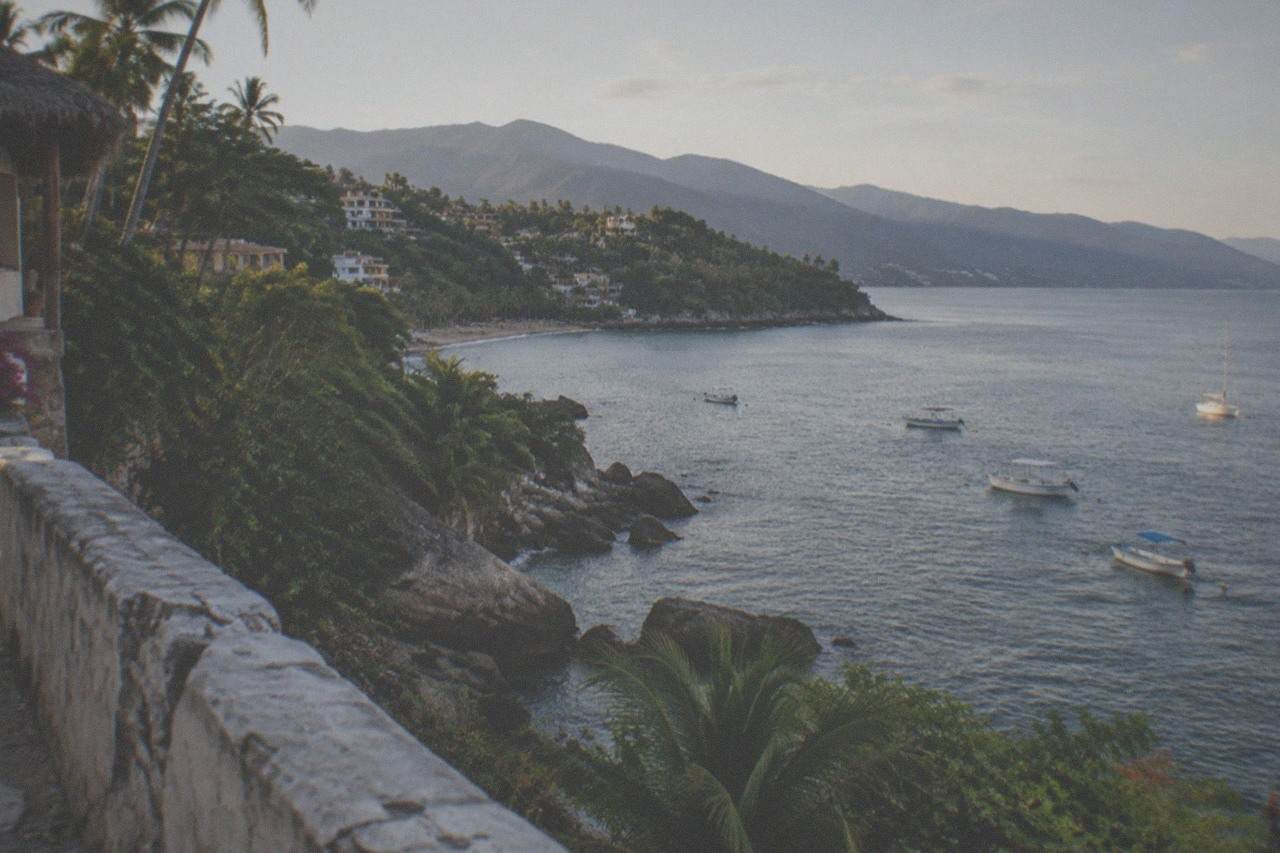
That split is not a compliment or an insult to either place. It is a description of geography. Cabo San Lucas sits at the tip of the Baja California peninsula, where the desert meets the sea at the famous granite arch of El Arco. The landscape is dramatic, dry and stark, the water is deep blue, and several of the most photographed beaches are on the Pacific side where swimming is dangerous because of strong currents. Puerto Vallarta sits on Banderas Bay, one of the largest natural bays in Mexico, backed by the green folds of the Sierra Madre. The bay shelters its beaches, which means calmer water for swimming and snorkeling, and the mountains squeeze rain and jungle into the backdrop.
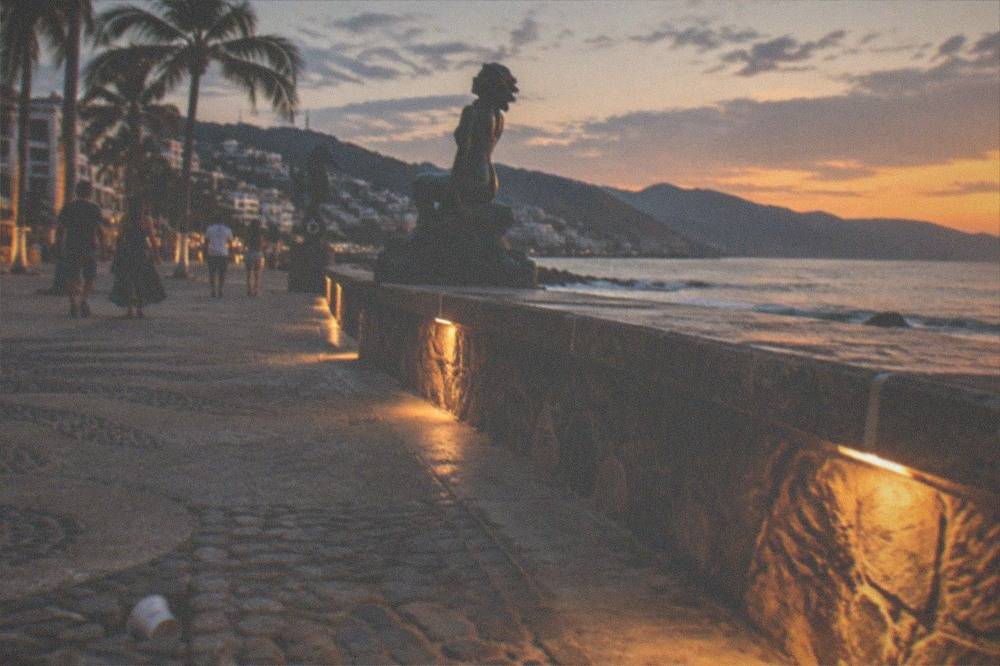
The towns themselves differ just as much. Cabo grew around tourism and still feels like it: a marina, a strip of clubs, resort towers, and a downtown that exists to serve visitors. Puerto Vallarta has a 100-year-old old town of cobblestone streets, a working malecón, family-run taco stands, and a church that predates most of the hotels. If the question "which is nicer" secretly means "which feels more like Mexico," Puerto Vallarta has the stronger claim. If it means "which has the more polished resort experience," Cabo usually wins.
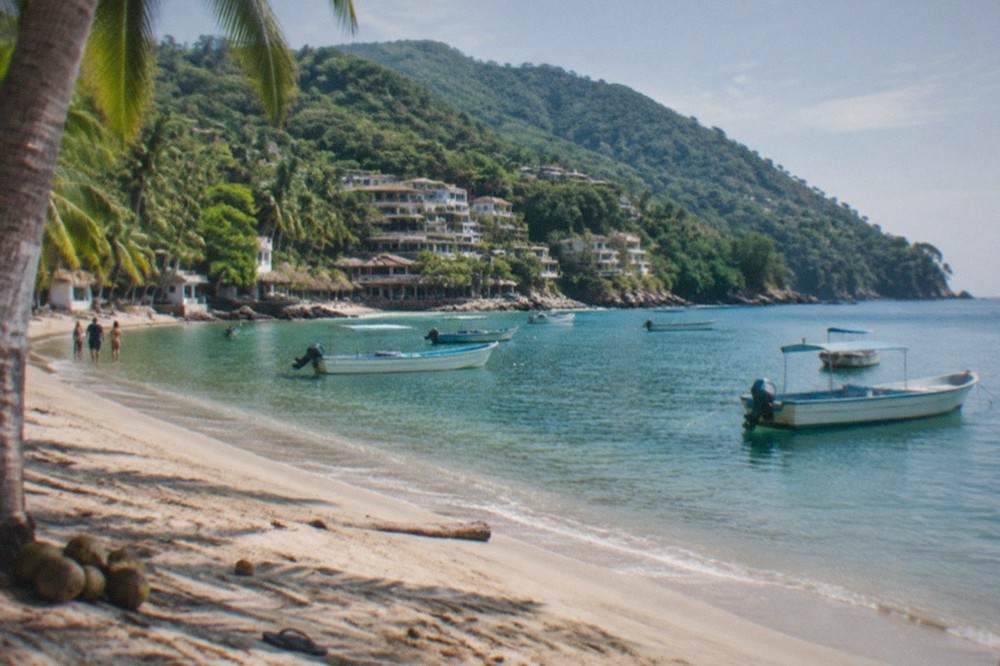
For tour-focused travelers, the comparison tilts toward Puerto Vallarta in one specific way: the bay concentrates a remarkable range of half-day and full-day trips within a short boat ride of the marina. That range runs from the Marietas Islands National Park tour (4.8) to the Los Arcos snorkel trips (4.9). National Park full-day all-inclusive boat tour by Chica Locca, 4.8 from 771 reviews and from $120, to the Los Arcos 5-Islands Snorkeling, Cliff Jumping & Hidden Beach trip at 4.9 from 477 reviews and from $51.
What Do The Beaches And Scenery Actually Look Like?
Cabo's signature scenery is arid and rocky: the El Arco arch, desert scrub, and coves where the Pacific and the Sea of Cortez meet, with swimming-safe beaches concentrated on the calmer bay side. Puerto Vallarta's scenery is tropical and green, with a long sheltered bay, jungle-covered hills, and swimmable beaches along the coast south of town. Cabo photographs more dramatically, Puerto Vallarta spends more of the year actually in the water.
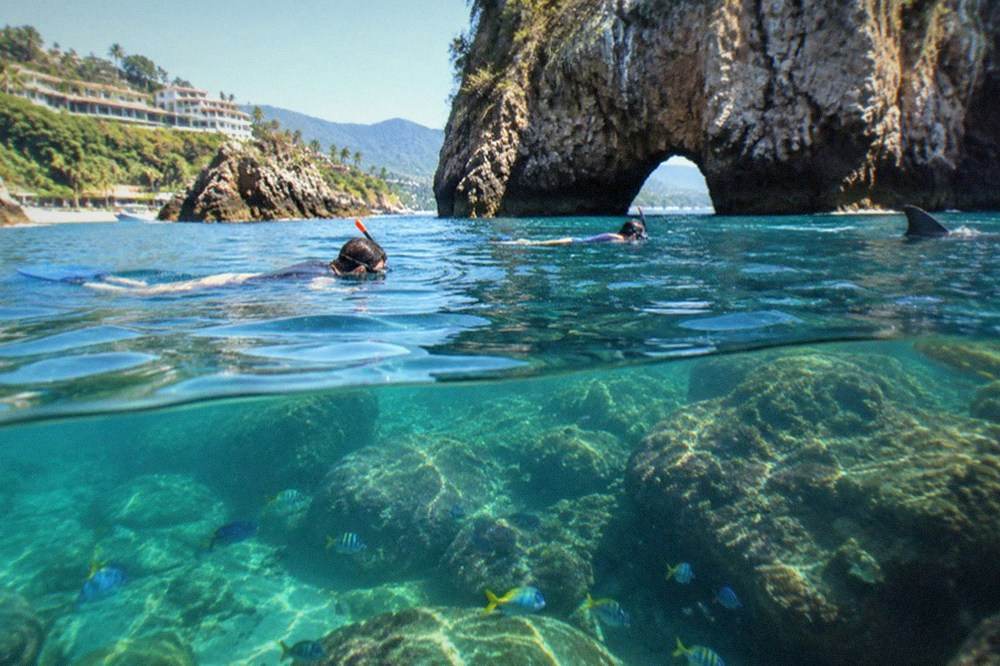
The swimming difference matters more than most comparison articles admit. Cabo's most famous stretch, including the beaches near the arch, faces open Pacific water where waves and rip currents make swimming hazardous for much of the year. The swimmable beaches sit mainly on the Sea of Cortez side, and even there conditions vary. Puerto Vallarta's main beaches, from the hotel zone through Playa Los Muertos and down toward Mismaloya and Boca de Tomatlán, sit inside Banderas Bay, which blocks the open-ocean swell. That is also why snorkeling is a bigger part of the local culture here: sites like Los Arcos, a federally protected marine park a short boat ride south of town, hold fish and coral in water calm enough for casual swimmers.
South of the bay, the coastline changes character again. Yelapa, a village with no road access, reachable only by water taxi or panga from Boca de Tomatlán or Los Muertos Pier, is the kind of place that has no Cabo equivalent at all: a car-free beach town at the foot of a waterfall trail. If your version of "nicer" includes places without valet parking, that is worth weighing.
| Category | Cabo San Lucas | Puerto Vallarta |
|---|---|---|
| Signature landscape | Desert headland, granite arch, deep blue water | Green bay, jungle hills, river mouths |
| Swimming conditions | Good on Sea of Cortez side; Pacific beaches often hazardous | Sheltered bay water, swimmable most of the year |
| Snorkeling from town | Boat-dependent, Sea of Cortez sites | Los Arcos marine park, short boat rides |
| Walkable old town | Compact tourist downtown | Yes, cobblestone centro and Romantic Zone |
| Nearby car-free village | None comparable | Yelapa, boat access only |
Which Destination Has Better Tours And Activities?
Puerto Vallarta offers a wider spread of tour types in a smaller radius: whale watching on a federally regulated season, island and reef snorkeling, jungle ziplines and ATV routes in the Sierra Madre, and food tours in a real old town. Cabo is stronger in its own specialties, mainly sportfishing, which is world-class, plus sunset cruises past the arch and desert-side ATV routes. Neither place is thin on things to do, but the variety favors the bay.
Whale watching is the clearest example. Humpback whales winter in Banderas Bay on a regulated season that runs approximately December 8 to March 23, governed under NOM-131-SEMARNAT-2010, with minimum approach distances of 60 meters for small boats and 80 meters for larger ones, and a 240-meter standoff for non-authorized vessels. Operators must be certified, and the roster's Mega Yacht Whale Watching & Sunset Cruise by Chica Locca Tours, 4.7 from 103 reviews and from $110, is one example of the format. Cabo also gets humpbacks in winter, plus gray whales on the Pacific side, so both towns can honestly sell whale season, but Banderas Bay's whale watching is unusually accessible because the bay concentrates the animals close to port.
The island trips are where the bay pulls ahead. The Marietas Islands National Park, a protected archipelago on the north side of Banderas Bay, charges a $125 MXN per person per day conservation fee via the official "Brazalete de la Conservación" wristband, and the park is open Tuesday through Sunday from 8:00 to 18:00. The flagship way to see it is the Marietas Islands National Park Full-Day All-Inclusive tour by Chica Locca, 4.8 from 771 reviews and from $120, the site's flagship product and a fair stand-in for what a full bay day costs. Closer to town, the Los Arcos 5-Islands Snorkeling, Cliff Jumping & Hidden Beach tour, 4.9 from 477 reviews and from $51, covers the marine park most visitors actually snorkel.
Inland, the comparison flips back to even. Cabo runs desert ATV and camel-safari routes along dry arroyos, while Puerto Vallarta runs jungle ATVs and ziplines in the Sierra Madre foothills along the Cuale River, past El Jorullo and its long vehicular suspension bridge. The roster's ATV/RZR Jorullo Bridge Experience, 4.7 from 555 reviews and from $169, and the Private ATV Tour, Waterfall & Tequila Tasting, 4.9 from 977 reviews and from $94, show the range. Cabo's fishing fleet remains the single strongest activity either town can claim, if deep-sea fishing is your thing. For a broader look at the local menu, the things to do in Puerto Vallarta guide breaks the options down by category.
| Tour type | Cabo San Lucas | Puerto Vallarta |
|---|---|---|
| Sportfishing | World-class, the town's core activity | Available, smaller scale |
| Whale watching | Winter humpbacks and gray whales | Regulated bay season, Dec 8 to Mar 23 |
| Island snorkeling | Sea of Cortez sites by boat | Marietas Islands and Los Arcos marine park |
| Jungle/zipline | Desert ATV routes instead | Sierra Madre ziplines and ATV trails |
| Food tours | Limited, resort-heavy dining | Old town walking food tours, strong scene |
Which One Is Cheaper To Visit?
Puerto Vallarta is generally the cheaper destination across hotels, food and tours, with entry-level boat tours on the local roster starting around $38 to $48 per person and food tours from $59, while Cabo skews toward the luxury end on lodging and dining. Neither town is budget-hostile, but the same week usually costs more in Cabo.
The tour prices are the easiest comparison because they are printed. On the Puerto Vallarta roster, a full-day trail and hidden-beaches trip with snorkeling starts from $38, the Los Arcos snorkeling runs from $48 to $51 depending on the operator, and the flagship Marietas all-inclusive day starts from $120. The Downtown Vallarta Food Tour, 5.0 from 3,943 reviews and from $59, is the roster's strongest single review record and a good measure of what an old-town eating afternoon costs. Cabo's equivalent boat and sunset trips price out higher on average, and its restaurant scene is built around a higher check.
Accommodation follows the same pattern. Cabo's resort corridor concentrates four- and five-star properties with prices to match, while Puerto Vallarta offers everything from $40-a-night old-town guesthouses to luxury hotels on the marina. Food is the bigger gap: Puerto Vallarta's street taco and birria scene is genuinely cheap and genuinely good, and it exists because locals eat there too, not only visitors.
Timing affects the bill in both places. Hurricane season on Mexico's Pacific coast runs from May 15 to November 30, with peak risk in August through October, and August and September are the rainiest months in Puerto Vallarta. Travelers who can tolerate afternoon showers find the lowest hotel rates in that window in both towns. The dry season, roughly November through May, is when both destinations hit their peak prices.
Which Has Better Food, Culture And Nightlife?
Cabo wins on concentrated nightlife and upscale dining, while Puerto Vallarta wins on everyday Mexican food culture: street stands, family restaurants, a walkable old town, and a food-tour scene built on neighborhoods rather than hotel zones. Culture here is not a show put on for visitors, it is the town's actual fabric.
Puerto Vallarta's old town is the difference. The Romantic Zone and the centro around the malecón hold taco stands, birrierías, mezcalerías and seafood counters that serve locals first, and a walking food tour through them, typically three to four hours with multiple tasting stops paired with tequila, mezcal or agave cocktails, is one of the most reliable ways to eat well on a first visit. The Downtown Vallarta Food Tour's 5.0 rating from 3,943 reviews reflects how consistently that format delivers. Cabo has good restaurants, some of them excellent, but the eating is concentrated in the marina and resort zones at prices aimed at visitors.
Nightlife is the reverse. Cabo's club strip is famous for a reason, and the party runs later and louder than anything in Puerto Vallarta. Puerto Vallarta's nightlife is real but smaller, spread between the malecón, the Romantic Zone and a bar scene that leans mixed and local. If a trip is built around dancing until 3 a.m., Cabo is the safer bet.
Is Either Destination Safer For Tourists?
Both are mainstream resort towns with heavy tourist traffic, and both are covered by the same U.S. State Department advisory system, which rates Jalisco, Puerto Vallarta's state, at Level 3 overall but explicitly carves out Puerto Vallarta itself with no restrictions for government employees. Baja California Sur, where Cabo sits, has carried lower advisory levels in recent years. The practical safety difference between the two, for ordinary visitors, is small.
The Jalisco rating deserves its full context, because a headline "Level 3" without the carve-out misrepresents the situation. The advisory places no restrictions on Puerto Vallarta, the Riviera Nayarit, the Guadalajara metro area, Chapala or Ajijic, with restrictions applying to other parts of the state. In February 2026, the killing of CJNG leader "El Mencho" triggered retaliatory disruption in Puerto Vallarta, including arson at businesses and vehicles, road blockages, flight delays and cancellations at the local airports, a temporary shelter-in-place advisory from the U.S. Embassy, and halted rideshare service. The situation calmed within days and operations returned toward normal by late February, though the state-level Level 3 advisory remained in place. That incident is part of the honest record, and so is its quick resolution. For a fuller treatment, the Cabo San Lucas vs Puerto Vallarta safety comparison covers both towns in detail.
Day to day, the risks in both towns are the ordinary ones: petty theft, unlicensed taxis, and alcohol-related incidents. Visitors who use booked tours with licensed operators, as this Tours in Puerto Vallarta site exists to help with, avoid most of the avoidable trouble in either destination.
So Which One Should You Actually Pick?
Pick Cabo if the trip is about a resort, sportfishing, dramatic desert scenery and big nightlife, and you are happy to pay resort-town prices. Pick Puerto Vallarta if you want swimmable water, a regulated whale season, island snorkeling, jungle tours, a real old town and cheaper eating, all inside one bay. Travelers who want variety per day, rather than polish per dollar, will find Puerto Vallarta the more rewarding base.
A useful tiebreaker is how you like to spend a day. If the ideal day is a lounger, a spa and a sunset cruise, Cabo delivers that at a high standard. If the ideal day is a morning boat to a marine park, tacos at a street counter, and a jungle zipline before dinner, the bay delivers that at a lower price. Many first-time visitors to Mexico's Pacific coast assume the two towns are interchangeable, and they are not, and knowing which day you prefer settles the question faster than any ranking.
Length of stay matters too. Cabo can be fully experienced in a long weekend built around a hotel. Puerto Vallarta rewards a week, because the bay's tour inventory, from whale watching in season to food tours to Yelapa, does not compress well. The how many days in Puerto Vallarta is enough question gets its own treatment, and the short answer is that four days is a floor, not a target.
If Puerto Vallarta wins your comparison, the three trips below are the ones past readers most often start with: the flagship Marietas all-inclusive day, the whale-watching sunset cruise, and the Los Arcos snorkeling trip with cliff jumping and the hidden beach.
Common Questions About Cabo Vs Puerto Vallarta
Which Is Nicer, Cabo Or Puerto Vallarta?
It depends on what "nicer" means to you. Cabo is nicer for resort luxury, sportfishing and nightlife; Puerto Vallarta is nicer for swimmable beaches, whale watching, island snorkeling, jungle tours and everyday Mexican food culture, usually at lower prices.
Is Puerto Vallarta cheaper than Cabo San Lucas?
Generally yes. Puerto Vallarta's tour prices start lower, with boat trips from around $38 to $48 and food tours from $59, and its old town has cheap, good street food. Cabo skews toward luxury lodging and higher restaurant checks.
Which has better beaches for swimming?
Puerto Vallarta. Banderas Bay blocks the open-ocean swell, so its main beaches stay swimmable most of the year, while several of Cabo's most famous Pacific-side beaches are hazardous for swimming due to strong currents.
Can you see whales in both places?
Yes. Both towns get winter humpbacks. Puerto Vallarta's season is federally regulated, running approximately December 8 to March 23 in Banderas Bay, with certified operators holding to set approach distances. Cabo also offers gray whale trips on the Pacific side.
Which destination is safer?
Both are heavily touristed and, for ordinary visitors, comparable in day-to-day risk. The U.S. State Department rates Jalisco at Level 3 overall but places no restrictions on Puerto Vallarta itself. Baja California Sur has generally carried lower advisory levels. Standard precautions apply in both.
How many days do you need in Puerto Vallarta?
Four days is a sensible minimum and a week is comfortable. The bay's tour inventory, including island trips, whale watching in season, jungle ziplines and food tours, does not compress well into a weekend.