Is Sayulita Too Touristy?
An honest look at Sayulita's crowds: when the town is packed, when it is quiet, and how a day trip from Puerto Vallarta can dodge the worst of it.
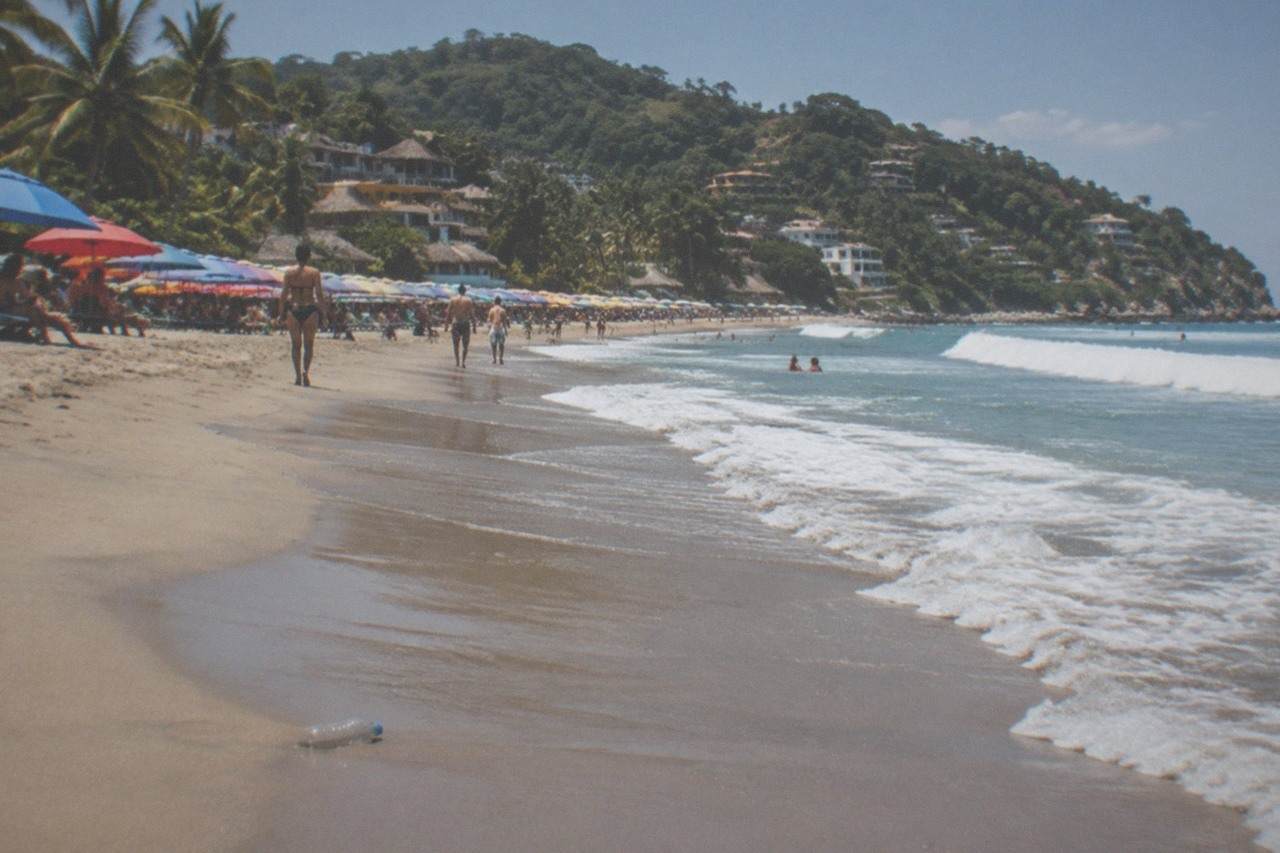
Sayulita sits about 29 to 42 km north of Puerto Vallarta, a 28 to 40 minute drive along the coast, and in the last decade it has gone from a fishing village with a surf school to one of Mexico's most recognizable small beach towns. That fame brought crowds, and the crowds brought a fair question. This page takes the objection seriously: yes, Sayulita gets genuinely packed at certain times, and anyone who tells you otherwise is selling something. The useful conversation is about when it is packed, which parts of town absorb the crowds, and how a visitor from Puerto Vallarta can structure a day that sees the town at its best instead of its worst.
Is Sayulita Too Touristy?
Yes at peak times, no the rest of the week, and the difference is dramatic. On weekend afternoons in high season the beach and the town's few central streets fill almost completely, while weekday mornings in the same season can feel like a relaxed village with open tables and empty sand. Roughly, Sayulita is too touristy during peak weekend and holiday hours and pleasant for most of the rest.
The honest framing matters here. Sayulita is touristy in the way any place becomes touristy when it is small, beautiful, and famous. The town's permanent population is modest, its street grid is compact, and almost everything a visitor wants to see sits within a five minute walk of the plaza. That concentration is the whole problem: the same footprint that makes Sayulita easy to explore makes it easy to fill.
What the crowds have not done is erase the town. The surf still works for beginners, the taco stands still outnumber the smoothie bars by a healthy margin, and the side streets two blocks back from the beach still feel like a Mexican town rather than a theme park. Visitors who arrive early, walk one street off the main drag, and leave before the late-afternoon rush consistently report a completely different town from those who show up at 2 p.m. on a Saturday.
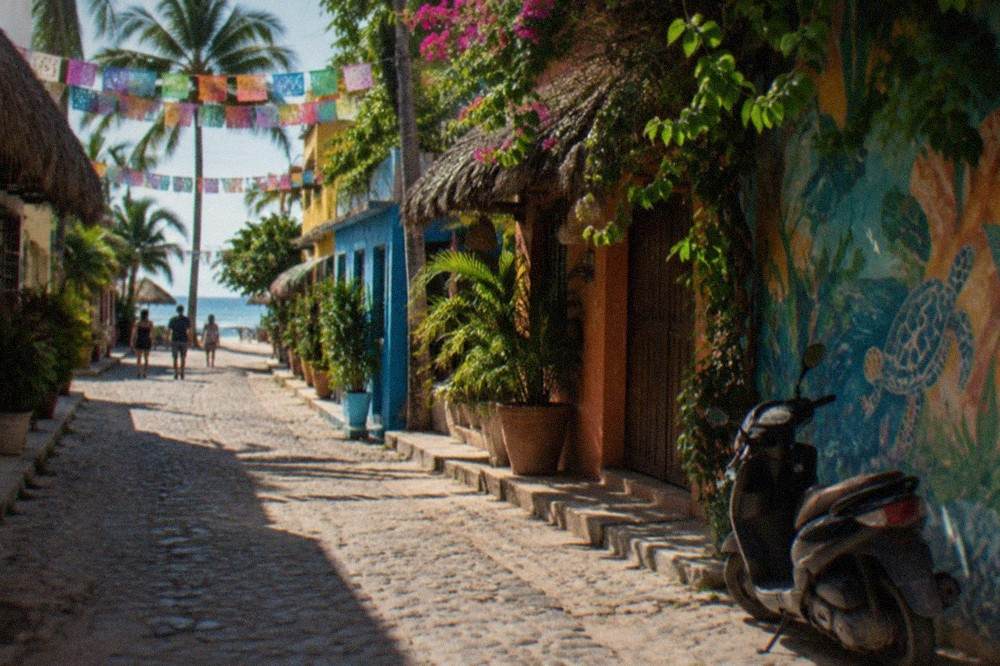
For travelers basing themselves in Puerto Vallarta, the practical version of the question is not "is Sayulita ruined" but "how do I day-trip there without catching it at its worst." A structured day trip, like the Sayulita day trip from Puerto Vallarta covered in our planning guide, solves most of the crowding problem by controlling arrival time, which is the single biggest variable in how touristy Sayulita feels.
When Is Sayulita Most Crowded?
Weekends, holidays, and the December-through-April high season are the pressure points, with Saturday and Sunday afternoons as the single worst window. December and January around the holidays see the year's biggest surges. Weekday mornings in the rainy season, June through October, are the quietest realistic visiting windows, trading thinner crowds for a chance of afternoon showers.
The seasonal rhythm follows the regional weather pattern closely. The dry season, roughly November through May, is when an ERA5-based climate analysis scores the coast at its best, and it is also when Sayulita's beaches fill with winter visitors. August and September are the rainiest months on the coast, with rain probabilities above 80 percent on average days, and that is precisely when the town empties out. A visitor who genuinely hates crowds and does not mind a possible afternoon downpour can have near-empty streets in September.
Within any given week, the pattern repeats in miniature. Day-trippers from Puerto Vallarta and Riviera Nayarit resorts tend to arrive late morning and stay through the afternoon, so the town swells from around 11 a.m. and thins after 5 p.m. Surfers go out early, which means the beach itself is often at its calmest before 10 a.m. even in high season. Mexican national holidays and long weekends change everything: on those dates the town fills with domestic tourism, which is a different, livelier, and much denser crowd than the usual mix.
A planning table makes the tradeoffs easier to read:
| Period | Crowd level | What you trade | Best strategy |
|---|---|---|---|
| December-January holidays | Very high | Peak weather, peak prices | Arrive before 10 a.m., leave by 2 p.m. |
| February-April weekdays | High but manageable | Excellent weather | Morning visit, lunch off the main street |
| Weekend afternoons, any season | Very high | Nothing worth keeping | Avoid, or come only for evening |
| May, late dry season | Moderate | Warming weather, hazier surf | Flexible timing works |
| June-October weekdays | Low | Afternoon rain risk | Arrive early, plan indoor backup |
The one-line version: the crowd problem is a scheduling problem. If your only window is a Saturday afternoon in January, the honest answer to this page's question is yes, it is too touristy for you that day. If you can move your visit to a weekday morning, the objection mostly dissolves. If you would rather compare the two towns head to head before deciding, our Sayulita versus Puerto Vallarta comparison breaks down pace, beaches, and cost.
What The Crowds Are Actually Like On The Ground
The crowding concentrates in three small zones: the main beach in front of the plaza, the short commercial street running inland from the beach, and the surfboard rental strip. Two blocks in any direction the density drops sharply, and the eastern residential streets stay quiet even on busy days. Sayulita's problem is a funnel, not a blanket.
Visitors expecting wall-to-wall development are usually surprised by Sayulita's physical size. The walkable core takes about ten minutes to cross end to end. That means the entire day-trip population of a busy Saturday, plus weekenders, plus surf students, is compressed into a few blocks, and the perceived crowding is far worse than the raw visitor numbers would suggest. The same number of people spread through, say, Puerto Vallarta's Zona Romantica would barely register.
The beach itself splits by activity. The central stretch in front of the restaurants carries the umbrellas, the vendors, and the bulk of the swimmers, and this is the zone that earns Sayulita its "too touristy" reputation. Walk five minutes north toward the cemetery hill or south toward the quieter end of the bay and the umbrella rows thin out quickly. The surf break sits off to the side, and the water there belongs mostly to surfers and boogie boarders rather than beach clubs.
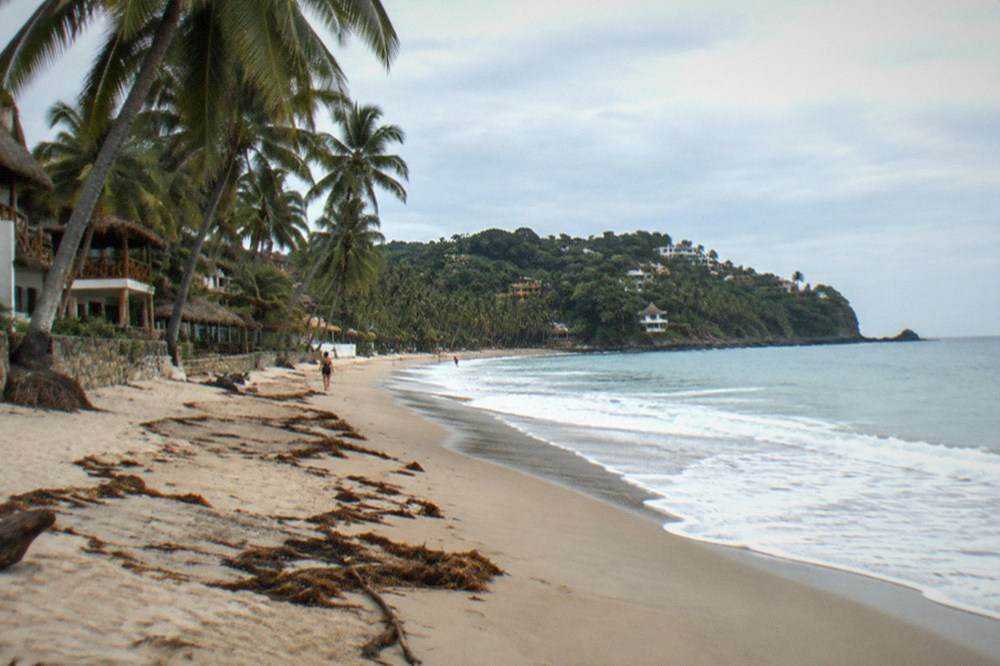
The commercial street tells a similar story. The blocks nearest the beach hold the smoothie bars, souvenir shops, and the famous coffee and churro lines. One street over, the town reverts to hardware stores, tortillerias, and families sitting on stoops. This is not hidden knowledge, it is a two-minute walk, yet a large share of day visitors never take it. A skeptical reader should treat that as the practical test of the whole "too touristy" question: if you are willing to walk two blocks, you largely opt out of the crowd.
How To Do Sayulita Without The Worst Of The Crowds
The reliable formula is early arrival, a midday exit, and one street of displacement. Arriving by 9 or 10 a.m. on a weekday puts you in the town before the tour buses and resort day-trippers, and leaving by early afternoon removes you from the peak. Add a lunch spot off the main drag and you have seen the real Sayulita while the crowds were still on the highway.
Early arrival is the lever that moves everything else. The drive from Puerto Vallarta is short enough that a 7:30 a.m. departure is not painful, and the reward is a town still owned by surfers, dog walkers, and locals buying breakfast. The beach is at its cleanest and emptiest, the surf schools have open slots, and photographs of the famous colorful umbrellas are possible without strangers in every frame. By the time the main wave of visitors lands around 11 a.m., an early arriver has already done the beach, had a proper taco breakfast, and moved on.
The second lever is displacement. Eat on a side street rather than the beachfront row. Walk north past the cemetery hill for a quieter stretch of sand. Shop where the shopkeepers are not standing in doorways calling to passersby, because those are the businesses built around turnover rather than the ones locals use. None of this requires insider knowledge; it requires a willingness to walk one block past the first thing you see.
The third lever is letting someone else handle the logistics. A structured day trip controls timing by design, which is exactly why it answers the crowding question so well. The Sayulita & San Pancho Day Trip run by ParaViajantes is a brand-new listing, so it has no review history yet and the price, from $90, is on the live listing. What it offers in exchange is a fixed early schedule and a second stop in San Pancho, a town that has most of Sayulita's charm at a fraction of its traffic. You can Check availability on the operator's listing, and free-cancellation terms there let you shift the date if the forecast turns.
Quieter Alternatives: San Pancho And Yelapa
If Sayulita's peak-season density is a dealbreaker, two nearby alternatives deliver the same coast with a fraction of the people: San Pancho, 15 minutes north by road, is a quieter town with the same bohemian character, and Yelapa, reachable only by boat, has no road access at all and no vehicle traffic whatsoever.
San Pancho is the natural pressure valve. It sits just up the coast, shares Sayulita's jungle-backed beach setting, and has consciously stayed smaller: fewer bars, fewer surf schools, a slower main street. Travelers who find Sayulita overwhelming on a Saturday often describe San Pancho as the town they expected Sayulita to be. Pairing both in one day, which the day trip above does, effectively lets you sample the famous town in the morning and decompress in the quiet one at midday.
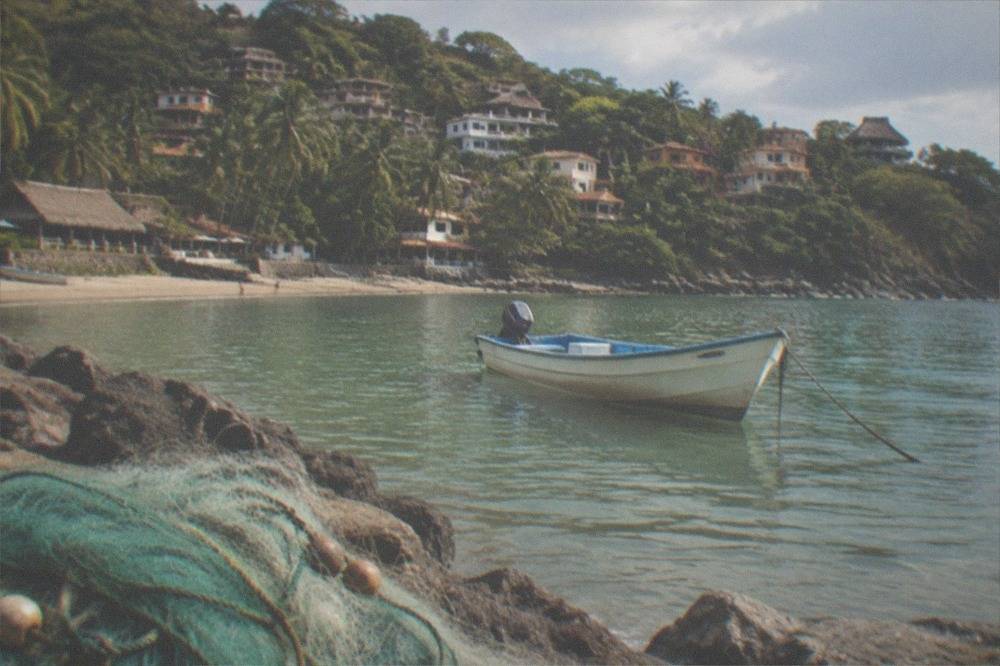
Yelapa is the stronger medicine. It has no road access, so everything and everyone arrives by water taxi or panga from Boca de Tomatlán or Los Muertos Pier, with multiple departures daily and a crossing of roughly 30 minutes from Boca or 55 from Los Muertos, per the published boat schedule. There are no tour buses in Yelapa because there are no roads for them. The town is a waterfall-hike, beach-chair, do-almost-nothing place, and our full Yelapa tour from Puerto Vallarta guide covers the logistics in detail.
For visitors who want the water-taxi experience with more structure, a boat-based tour handles the schedule. The Yelapa Waterfall, BBQ, Open Bar & Majahuitas tour by Vallarta Adventures, 4.4 from 792 reviews and from $79, bundles Yelapa's waterfall with a beach stop and food, trading independence for convenience. It is a different product from the water taxi, aimed at people who want the day assembled for them.
Is Sayulita Safe For Visitors?
Sayulita is described in current safety reporting as low-risk for tourists, with ordinary petty-crime precautions the main requirement. The U.S. State Department rates Jalisco state at Level 3, Reconsider Travel, but explicitly carves out no restrictions for Puerto Vallarta and the Riviera Nayarit, which includes Sayulita. A February 2026 incident in the region disrupted travel for days, then calmed.
The state-level rating needs the full context, because a bare "Level 3" headline misrepresents the actual situation on the coast. The advisory places restrictions on parts of Jalisco, but Puerto Vallarta, the Riviera Nayarit, the Guadalajara metro area, Chapala, and Ajijic are explicitly excluded, per the official Mexico travel advisory. Sayulita sits inside the excluded Riviera Nayarit zone, on the Nayarit side of the bay.
The February 2026 events are the honest footnote. Following the killing of CJNG leader "El Mencho," retaliatory disruption hit the broader Puerto Vallarta area: arson at businesses and vehicles, road blockages, flight delays and cancellations at the Puerto Vallarta and Guadalajara airports, a temporary shelter-in-place advisory from the U.S. Embassy, and halted rideshare and transport. Stores in Sayulita shuttered briefly and visitors were advised to stay indoors. The situation calmed within days and operations returned toward normal by late February, though the state-level Level 3 advisory remained in place. No equivalent major tourist-impacting incident is on record for Sayulita itself, and later 2026 reporting describes the town as moderate overall risk, primarily petty theft.
Practical takeaway: the crowding question and the safety question have opposite answers. Sayulita is more touristy than its neighbors but not meaningfully less safe for ordinary visitors. The standard precautions, watching belongings on the beach, not leaving valuables in a parked car, using licensed transport, are the same ones that apply anywhere on the coast.
So Is Sayulita Worth Visiting Despite The Crowds?
For most visitors doing a day trip from Puerto Vallarta, yes, because the crowding is time-boxed and avoidable with an early start. The town's core experiences, beginner surf, cheap excellent food, a photogenic compact center, all survive the tourism. Visitors who cannot avoid weekend or holiday timing should substitute San Pancho or Yelapa and save Sayulita for a better window.
The fairest verdict is that Sayulita is a victim of its own success at specific, predictable moments, and a normal, pleasant small town the rest of the time. The traveler who gets up early owns the town; the traveler who arrives with the afternoon rush owns a queue. That is not a defense of over-tourism, it is a description of a place whose carrying capacity is exceeded for perhaps a dozen hours a week and respected the rest of the week.
It also helps to be honest about what Sayulita is not. It is not a secret, it is not untouched, and it is not the place for a traveler seeking solitude at any cost. That traveler should go to Yelapa, or to one of the hidden coves in our hidden gems near Puerto Vallarta roundup. Sayulita is the place for a traveler who wants a lively, walkable, food-rich surf town and is willing to schedule around everyone else who wants the same thing.
For the day-tripper from Puerto Vallarta, the decision rarely needs to be either-or. A guided structure can cover Sayulita at its quietest, add San Pancho for contrast, and be back in Vallarta for dinner. The three options below are the ones that fit that brief, and the site's full Tours in Puerto Vallarta roster covers every other category if the coast's smaller towns are not the priority this trip.
Common Questions About Sayulita Tourism
Is Sayulita Too Touristy?
At peak times, yes: weekend afternoons and holiday periods in the December-through-April high season pack the central beach and main street. At most other times, especially weekday mornings, the town is relaxed and easily enjoyable. Timing, more than the town itself, determines the answer.
What is the busiest time of year in Sayulita?
December and January around the holidays see the largest surges, followed by weekends through April. Mexican national holidays and long weekends also bring dense domestic crowds regardless of season.
How do I avoid crowds in Sayulita?
Arrive by 9 or 10 a.m. on a weekday, eat one street off the main drag, walk north of the cemetery hill for quieter sand, and leave before the mid-afternoon peak. An early structured day trip handles most of this automatically.
Is San Pancho quieter than Sayulita?
Yes. San Pancho sits about 15 minutes north by road, shares the same jungle-backed coastline, and has far less traffic, fewer bars, and a slower main street. It is the standard alternative when Sayulita feels overwhelming.
Is Sayulita safe for tourists?
Current reporting describes Sayulita and the Riviera Nayarit as low-risk with standard petty-crime precautions. The U.S. State Department rates Jalisco at Level 3 overall but explicitly places no restrictions on Puerto Vallarta or the Riviera Nayarit. A February 2026 disruption in the region calmed within days.
How far is Sayulita from Puerto Vallarta?
Roughly 18 to 26 miles, or 29 to 42 km, depending on the route. Driving takes about 28 to 40 minutes in typical conditions, and buses take slightly longer, around 38 to 46 minutes or more.