What Food Is Puerto Vallarta Famous For?
Puerto Vallarta is famous for fresh Banderas Bay seafood, street tacos, birria, and agave spirits like tequila, mezcal and raicilla. Here is what to eat and how to taste it.
What Food Is Puerto Vallarta Famous For?
Puerto Vallarta is famous for fresh seafood from Banderas Bay, especially fish tacos, ceviche and grilled mahi mahi, plus street tacos, birria and tlayudas from open-air stands, and an agave-spirits scene built on tequila, mezcal and the region's own raicilla. The Romantic Zone and the Malecon concentrate the best of it within walking distance.
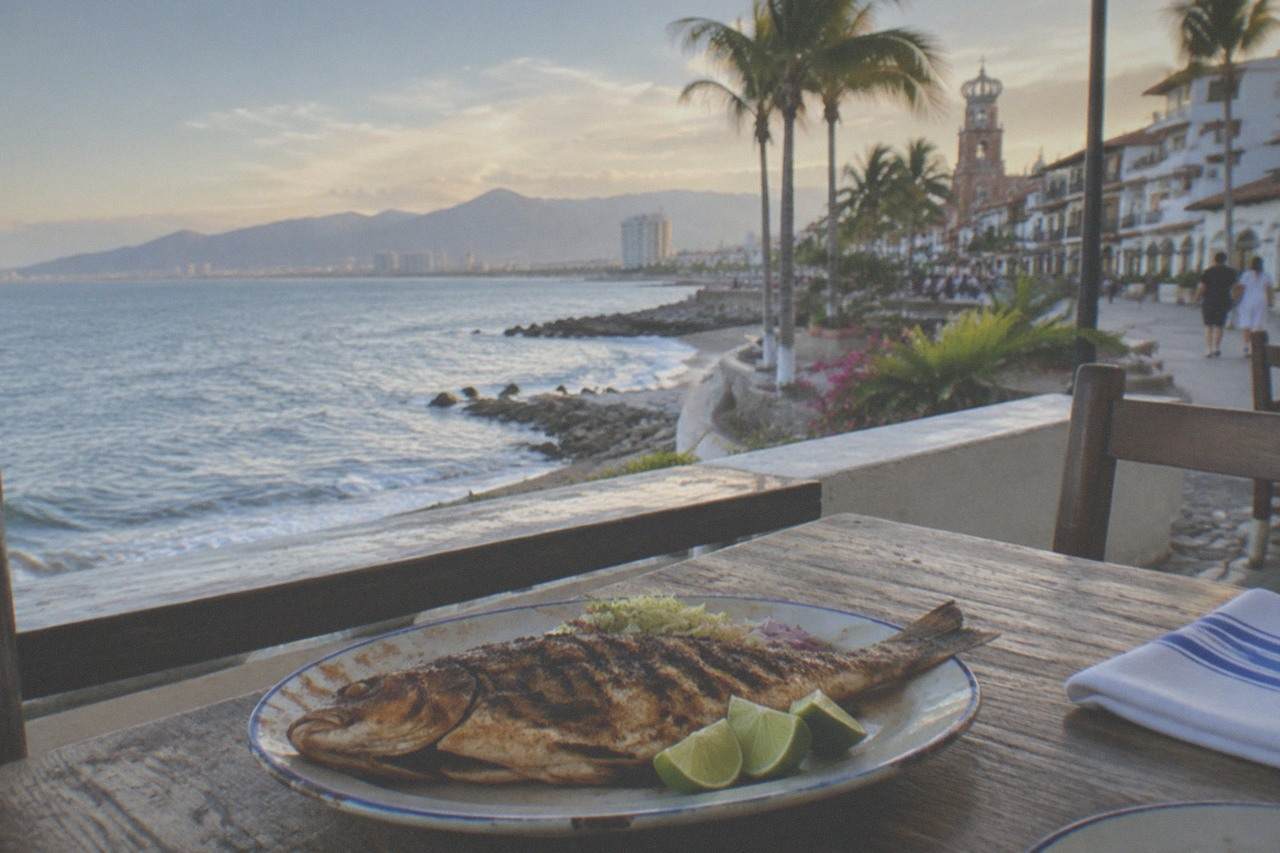
The short answer is mariscos. Puerto Vallarta sits on one of Mexico's largest natural bays, and the city's restaurant culture has grown up around what the pangas bring in each morning. Grilled snapper, garlic shrimp, ceviche dressed with lime and cucumber, and fish tacos served on corn tortillas with cabbage and cream are the dishes you will see on nearly every beachfront menu, because they are the dishes the city itself eats. A fish taco in Vallarta is not a tourist invention; it is a coastal Jalisco staple, and the versions closest to the Malecon are often the least expensive on the whole trip.
The second half of the answer is agave. Jalisco is the birthplace of tequila, the town of the same name sits a few hours inland, and the Sierra Madre foothills above Puerto Vallarta produce raicilla, a smoky local agave spirit that most visitors have never heard of before arriving. Mezcal, tequila's better-known cousin, shares shelf space with both. This is why food and drink blur together here: a taco crawl and a tasting flight are often the same evening.
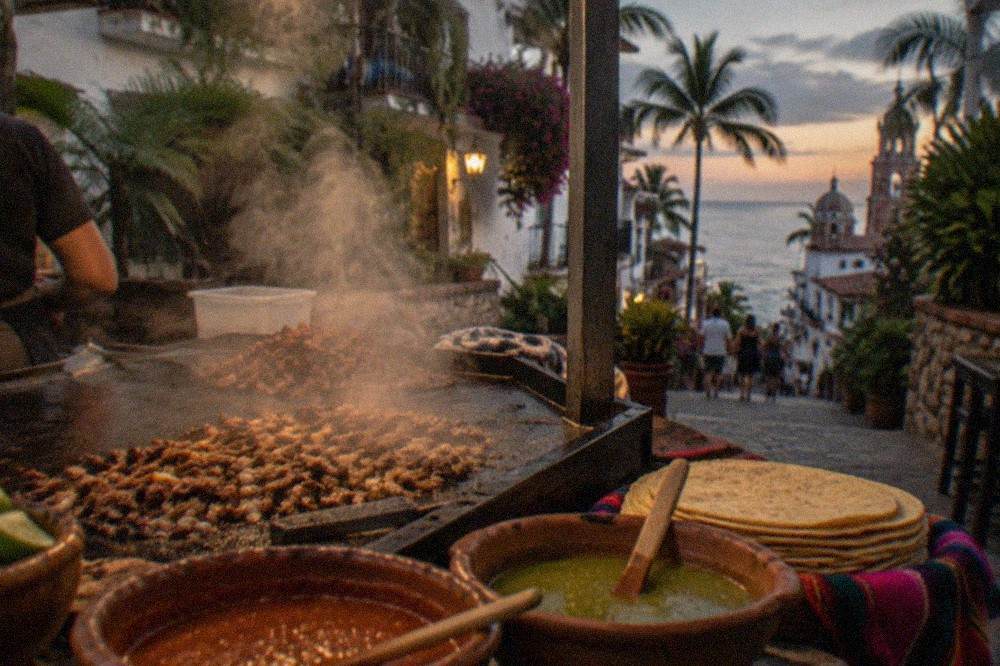
Street food carries as much weight as the restaurants. In the evening the stands around the Zona Romantica and along the Malecon sell tacos al pastor carved from the trompo, birria simmered until the consommé is spoonable, elotes and esquites, and churros for the walk home. Current guided food walks in the city typically run three to four hours, start near Lázaro Cárdenas Park in the Romantic Zone, and cover five to nine tastings paired with five or six agave-based drinks, with all food and beverages included in the ticket price.
Eating well here needs no guide in the strict sense, because the city rewards wandering. But pairing the plates with the right days matters, and the rest of Tours in Puerto Vallarta covers the boat, jungle and sunset outings that fill the non-eating hours, so the dinner plan and the day plan can be built together.
If you want the full picture in one evening rather than assembling it stand by stand, the three options below cover the two main angles: a guided walk through the city's core, and jungle-side tours that pair tequila tasting with ATV riding.
Where Should You Eat Each Signature Dish?
Eat mariscos at the beachfront palapas south of the Cuale River, tacos al pastor at the evening stands in the Zona Romantica, birria at morning-only stalls before they sell out, and agave spirits at dedicated tasting rooms in the Romantic Zone. The Downtown Vallarta Food Tour compresses all of it into one guided walk.
The city's geography does half the planning for you. The Zona Romantica, the old-town neighborhood south of the Río Cuale, holds the densest concentration of stands, cenadillos and mezcalerías, and most food walks start within a few blocks of Lázaro Cárdenas Park. The Malecon, the bayfront boardwalk to the north, adds the view and the larger mariscos restaurants where a whole grilled fish and a michelada make a reasonable lunch. Between the two, the small streets around Basilio Badillo have become the city's informal restaurant row.
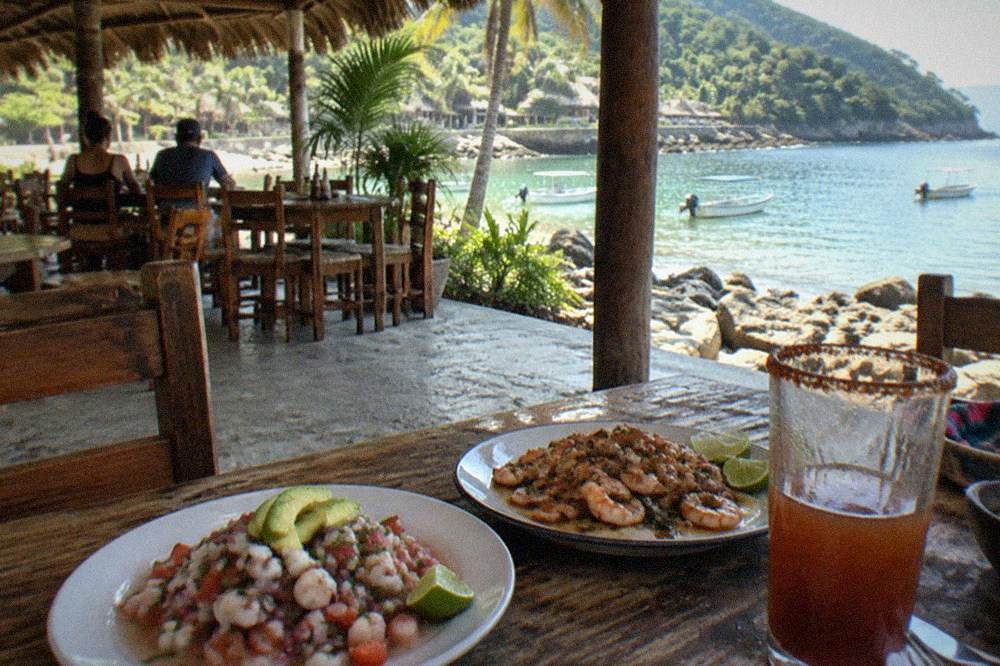
A dish-by-dish map of what to order where:
| Dish | What it is | Where it is best |
|---|---|---|
| Fish tacos | Battered or grilled fish, cabbage, cream, corn tortilla | Beach palapas in the Zona Romantica and south shore villages |
| Ceviche and aguachile | Raw fish or shrimp cured in lime, cucumber, chile | Malecon mariscos restaurants, order early in the day |
| Tacos al pastor | Marinated pork carved from the trompo, pineapple on top | Evening street stands, Zona Romantica side streets |
| Birria | Slow-braised beef or goat served with consommé for dipping | Morning stalls that close when the pot empties |
| Tlayudas and enchiladas | Grilled tortilla plates and sauced enchiladas from central Mexico | Family-run cenadorios open evenings only |
| Tequila, mezcal, raicilla | Agave spirits, raicilla is the local Jalisco coast version | Tasting rooms and mezcalerías around Basilio Badillo |
Two practical notes. First, the stands that look busiest are the ones to join; turnover is the best guarantee of freshness at a taco stand, and a line of locals is a stronger recommendation than any review. Second, tasting fees and stand prices move around, so treat any peso figure you read as a planning range and check the stand itself.
For a deeper run at the restaurant side, the companion guide to must-try restaurants in Puerto Vallarta goes dish by dish through specific kitchens, and the Puerto Vallarta food tours overview compares every guided eating format in the city, from taco walks to market visits.
The guided walk worth knowing about here is the Downtown Vallarta Food Tour, run by Vallarta Food Tours. It holds a 5.0 rating from 3,943 reviews, the strongest review record of any product on this site's roster, and starts from $59. It is the fastest way to eat the whole city list above without guessing which stand to trust.
For anyone weighing the walking format against a restaurant night, the arithmetic is simple: the tour covers five to nine food tastings across downtown in one evening, moving between family-run spots. The guides also handle the language and ordering side of street food, which matters if your Spanish is thin and your tolerance for pointing at other people's plates is lower than you would like to admit. Vegetarian substitutions are common on request, and the meeting point sits in the middle of the Romantic Zone, a short walk from most lodgings in the neighborhood.
Why Does Tequila Tasting Belong On A Food Trip?
Tequila tasting belongs on a Puerto Vallarta food trip because Jalisco is tequila's legally defined home region, and the local spirit raicilla is nearly impossible to find outside the state. Food tours here routinely pair tacos with tequila, mezcal and agave cocktails, and jungle tours add tastings at mountain distilleries.
This is the part visitors most often underestimate. Tequila has a protected denomination of origin, and the entire state of Jalisco falls inside the sanctioned growing zone, which means the bottles on a Vallarta backbar are frequently fresher and cheaper than the same labels at home. Raicilla, the coastal Jalisco agave spirit, is the one to hunt: it is produced in the Sierra Madre foothills behind the city, runs smokier and more herbal than tequila, and appears on local menus at a fraction of the price it would command if it were exported at scale. Mezcal rounds out the trio with its roasted-agave intensity.
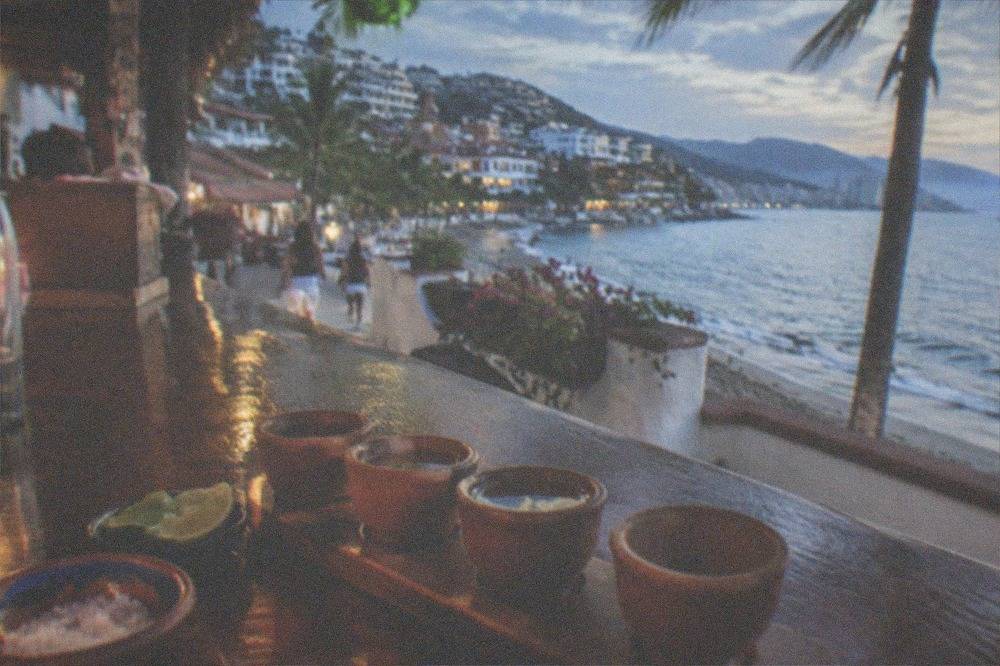
The tasting culture is also genuinely social rather than ceremonial. Current food-and-spirits walks in the city pair tastings with cocktails like jalapeño margaritas and pineapple mezcalinis rather than pouring neat flights in silence, and the guides treat the agave education as part of the meal. A typical evening includes five or six drinks total across the stops, alongside the food, so plan to walk home.
A note on how to taste, since the city's bartenders will tell you the same: neat, in a small caballito glass, no lime and no salt. Those are for shooting, not tasting, and shooting an aged añejo wastes good agave. Start with blanco expressions to judge a distillery's raw material, move to reposado for the oak, and ask for raicilla anywhere you see it listed by name rather than by brand. Small producers dominate that list, and most of them sell nowhere outside the state.
The agave tradition also reaches inland. Sierra Madre tours commonly follow the Cuale River into the foothills, past the Jorullo Bridge, and finish with tequila tasting at mountain outposts, which turns the spirit into a landscape experience rather than a bar order. One strong example is the Private ATV Tour with Waterfall and Tequila Tasting, which holds a 4.9 rating from 977 reviews and starts from $94; it pairs river crossings and a waterfall stop with a tasting at the far end.
What Should You Actually Order At A Street Stand?
Order tacos al pastor with pineapple, birria with its consommé for dipping, fish tacos with cabbage and cream, esquites in a cup rather than corn on the cob, and whatever the stand is grilling in the largest volume. Salsa first, a small spoonful, then commit.
The street stands are where Puerto Vallarta's food reputation was actually built, and they reward a few simple rules. Watch the trompo: if the pastor spit is turning and the meat is being carved to order, that stand is doing volume and the pork is fresh. Order birria early, since the best stalls open in the morning and close when the pot is empty, and always take the consommé; the broth is half the dish. Esquites, corn cut into a cup with mayo, lime, chile and cotija, is easier to eat while walking than a whole elote.
Salsa deserves respect. Every stand runs its own house salsa, and the green one is not reliably milder than the red. Taste a small amount before dressing a whole taco. This is standard practice among locals, not timidity.
The drinks at a good stand deserve equal attention. Agua fresca rotates by the day: horchata, jamaica, tamarind, and whatever fruit the vendor overbought at the market that morning, served over ice in a plastic cup. For something stronger, the michelada, beer in a chile-and-lime rimmed glass with clamato and soy, is the local companion to mariscos, and a stand's michelada often reveals more about its character than its salsa does. Order one of each and pace yourself through the evening.
When Is The Best Time Of Year To Eat In Puerto Vallarta?
The dry season from November to May is the best time for eating your way around Puerto Vallarta, since cool evenings suit street-stand crawling and the dry weather keeps open-air kitchens comfortable. August and September are the rainiest months, which pushes dining indoors in the afternoons.
The food is good year-round, but the experience of eating it changes with the weather. Dry season, roughly November through May, means evening stands stay busy past midnight and the walk between the Malecon and the Romantic Zone is pleasant rather than a dash between awnings. Rainy season, June through October, brings the heaviest rain in August and September, and an afternoon downpour can shut a street stand for two hours. The plus side of the green season is that it is the slow season, so tables at the best mariscos rooms are easier to get. A seasonal climate analysis of the city scores August as the most difficult month of the year, with rain probability around 85 percent, while the dry months sit near the top of the scale; the month-by-month breakdown is worth a look if your dates are flexible.
The shoulder edges of the dry season deserve more attention than they get. November and late April still count as dry on paper, but the crowds thin, high-season table reservations loosen, and the street stands keep their full evening schedule. If your dates land between seasons, aim for the dry edge rather than the wet one: late October can still catch afternoon storms, while early November more often settles into clear mornings and warm nights. Pack a light rain layer either way and keep dinner plans flexible.
Hurricane season on the Pacific coast runs May 15 through November 30, with the highest risk in August through October, per the NOAA seasonal climatology. Direct hits on Banderas Bay are rare, but a distant storm can churn up the water, and when the bay is rough the day-boat catch thins out. That is the one food consequence worth knowing: after a stormy week, the ceviche is still on the menu, but it may be frozen rather than that morning's catch.
Can You Combine Food With The Beach Towns Nearby?
Yes, and the two best combinations are Yelapa, a car-free fishing village reachable only by water taxi where beach restaurants grill the morning catch, and Sayulita, a surf town north of the bay with its own street-food scene. Both work as day trips from Puerto Vallarta.
Yelapa is the purist's version of coastal Jalisco eating. The village has no road access, so everything arrives by panga, and the beachfront restaurants at the water's edge grill fish that was swimming that morning. The water taxi runs several times a day from Boca de Tomatlán and Los Muertos Pier, roughly a 30-minute crossing from Boca and closer to 55 minutes from Los Muertos; the current departure schedule lists the named boats and times, though schedules shift with weather. Fares run around 550 pesos round trip from Los Muertos and about half that from Boca, and tickets can often be bought right on the boat. Bring cash, since the village runs on it.
Boca de Tomatlán itself is worth the ride even if you never board the boat. The village sits where the Cuale River meets the bay, a short drive south of the Romantic Zone, and its beach kitchens grill whole fish for a mostly Mexican weekend crowd, at prices below the city's beachfront strip. Arrive late morning, eat at the water's edge, then take the panga to Yelapa for the afternoon and work off lunch on the waterfall trail.
Sayulita, 28 to 40 minutes north by road, adds a bohemian surf-town layer: fish tacos eaten between sessions, chilaquiles brunches, and a small but serious coffee scene. The trade-off is crowds; the question of whether the town has outgrown its charm is covered in the Sayulita versus Puerto Vallarta comparison, which weighs food, beaches and pace of life side by side.
If a day trip with food at the center appeals, the Sayulita and San Pancho Day Trip is the roster's dedicated option, priced from $90 with no reviews published yet, so read the itinerary carefully before booking.
However you split the week, the food and the agave belong together in Vallarta, and the three products below are the shortest routes into both. The downtown walk covers the city plates; the two tequila-side tours take the tasting into the Sierra Madre with a waterfall or an ATV trail attached. Pick by appetite and energy level, not by price alone.
Common Questions About Puerto Vallarta Food
What Food Is Puerto Vallarta Famous For?
Puerto Vallarta is famous for Banderas Bay seafood, above all fish tacos, ceviche and grilled snapper, plus street tacos al pastor, birria with consommé, and the agave spirits of Jalisco: tequila, mezcal and the local raicilla. The Romantic Zone and the Malecon hold the densest concentration of places to try all of it.
Is Puerto Vallarta good for food tours?
Yes, and the format suits the city. Guided walks typically run three to four hours through the Romantic Zone, include five to nine tastings and five or six drinks, and cost from $59 with the market leader. A walk solves the two real problems a visitor faces: knowing which stand to trust and finding raicilla without a guide.
What is raicilla and why is it special to this region?
Raicilla is an agave spirit produced in the Sierra Madre foothills of coastal Jalisco, behind Puerto Vallarta. It is smokier and more herbal than tequila, made from wild and semi-cultivated agave varieties, and it is rarely exported, so tasting it here is one of the few places in the world you can.
Are the street food stands in Puerto Vallarta safe to eat at?
Generally yes, with the usual rules: join stands with fast turnover and a local crowd, watch food being cooked to order, and taste the house salsa before committing a whole taco to it. The busiest stands in the Zona Romantica turn inventory fast enough that freshness is rarely a problem.
What should you eat on the Malecon?
Mariscos. The boardwalk's restaurants are the place for ceviche, garlic shrimp and whole grilled fish with a bay view, while the taco stands cluster a few blocks south in the Romantic Zone. Splitting the day, seafood on the Malecon at lunch and street tacos in the Zona Romantica at dinner, is the local rhythm.
Do you need to book a food tour in advance?
In high season, from December through March, yes: the best-reviewed walks sell out days ahead. In the green season you can often book a day or two out. Most listings on this site's roster carry free cancellation, so booking early and adjusting later costs nothing if plans shift.