Puerto Vallarta ATV Tours
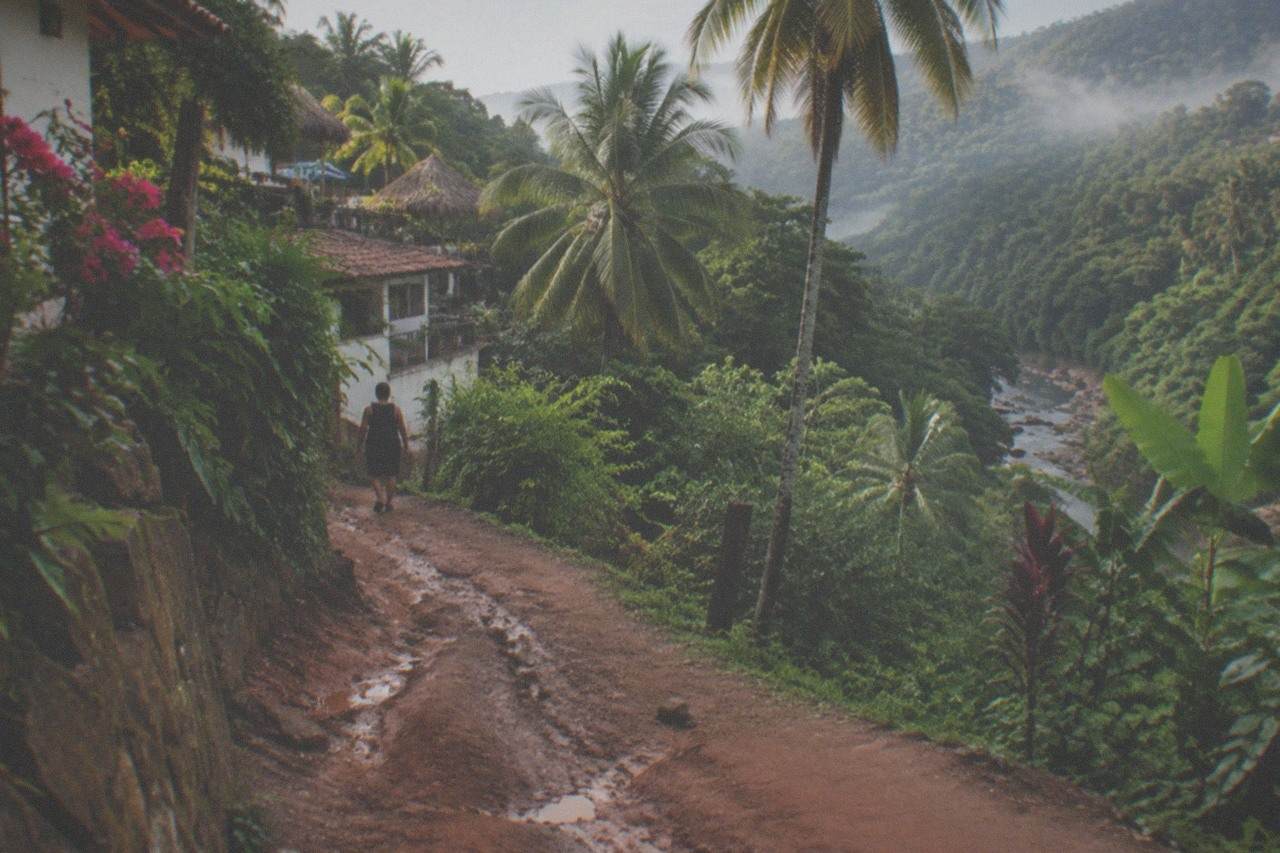
ATV tours out of Puerto Vallarta leave the beach behind within minutes and climb into the Sierra Madre foothills along the Cuale River, with the Jorullo Bridge as the headline landmark.
Short answer
Most Puerto Vallarta ATV tours are half-day guided rides of roughly 3 to 3.5 hours, following the Cuale River into the Sierra Madre foothills past El Jorullo and its suspension bridge, which hangs about 150 meters above the river. Prices on the current roster run from $94 to $169 per person, and the strongest review record belongs to a private ATV tour with waterfall and tequila stops at 4.9 from 977 reviews.
The road out of Puerto Vallarta's hotel strip disappears fast. Within half an hour of the marina, tour vans are unloading riders at bases in the Sierra Madre foothills, where dirt tracks follow the Cuale River into the mountains and the pavement ends for good. That is the product almost every ATV tour in the region sells, and the differences between them come down to vehicle type, group size, and which stops get folded into the ride.
This guide lays out what the routes actually look like, what the Jorullo Bridge is and how the crossing works, how ATV and RZR products differ, and how the main bookable options compare on price and review record. Ratings, review counts and prices below are drawn straight from the live operator listings so you can judge the evidence, not just the number.
What Is A Puerto Vallarta ATV Tour, Really?
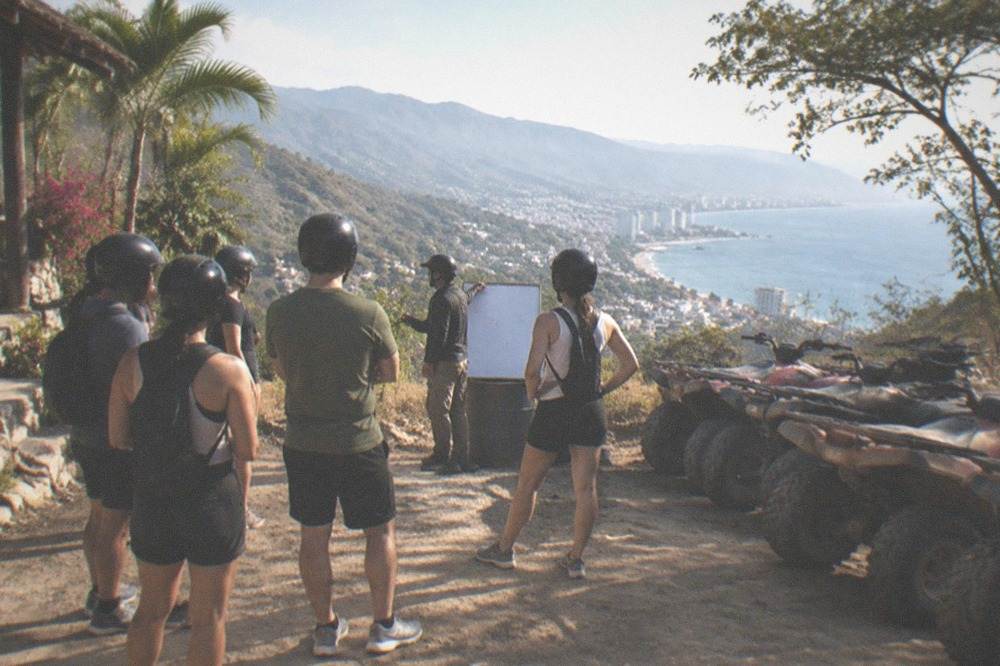
A Puerto Vallarta ATV tour is a guided, half-day off-road ride, typically around 3 to 3.5 hours door to door, that starts from a base in the Sierra Madre foothills and follows dirt roads, jungle trails and river crossings along the Cuale River. Most include a safety briefing and helmet, cater to beginners, and add stops at viewpoints, waterfalls or small villages before returning to base. Combos with ziplines, rappelling or tequila tastings are common.
The standard shape of the day is consistent across operators. You get picked up or meet at a foothills base, sit through a briefing on the machine and the route, and then ride in a guided convoy with a lead and a sweep. The terrain is a mix of dirt and terrace roads, puddles, river splashes and steeper climbs, which is why the briefing matters even for riders who have driven quads before: the machines here are automatic, but the ground under them is not flat.
Small groups are the norm on the better-run products, and helmets are standard across the board. What separates one tour from another is less the driving and more the stops. Some rides pause at El Salto waterfall, where swimming is sometimes possible depending on conditions. Others swing through small ranchos and villages, which is where the tour stops feeling like an amusement park ride and starts feeling like a look at the rural side of Jalisco that most visitors never see.
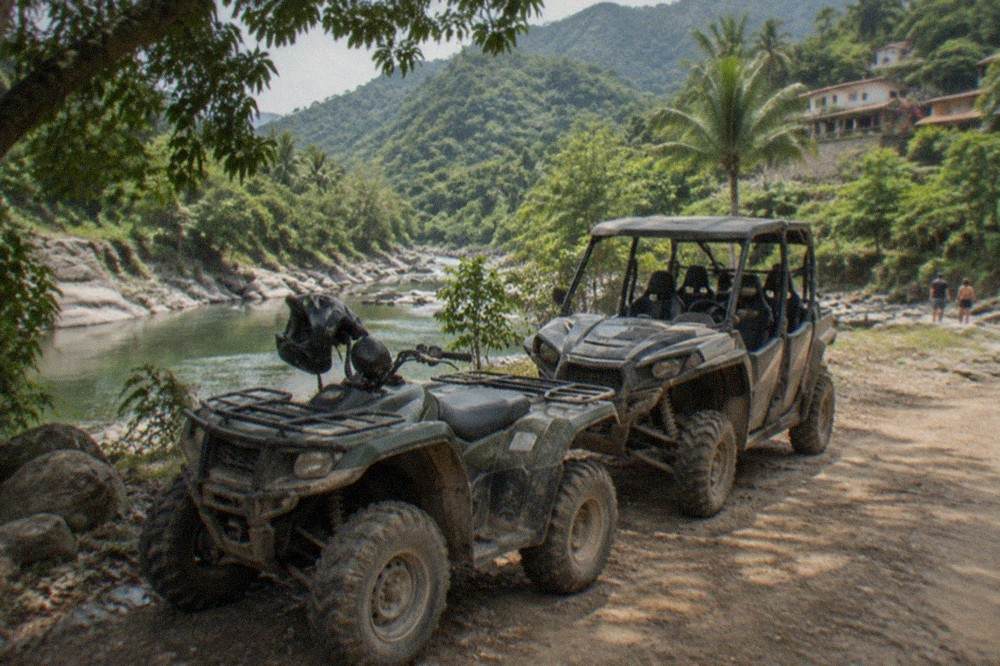
The other big variable is the vehicle. "ATV" on a listing usually means a single-rider quad, while "RZR" means a two- or four-seat side-by-side buggy with a roll cage, which lets a passenger ride along and lets drivers who want less physical balancing do the same route. Several products let you choose between the two at booking, sometimes with a price difference, so read the listing carefully before assuming what you are getting.
Where Do The ATV Routes Go? The Cuale River And The Sierra Madre Foothills
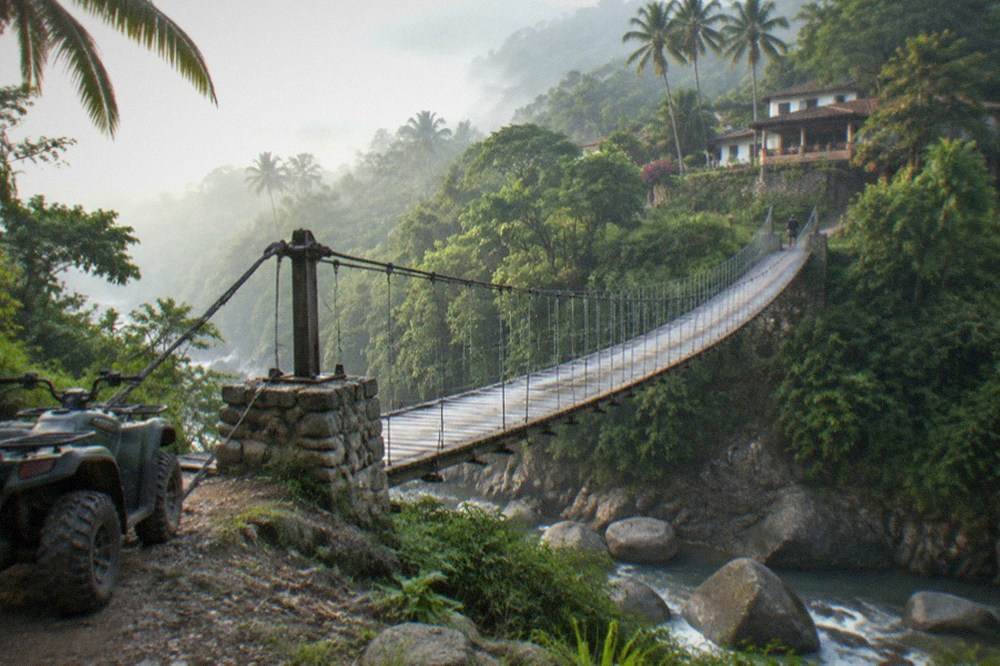
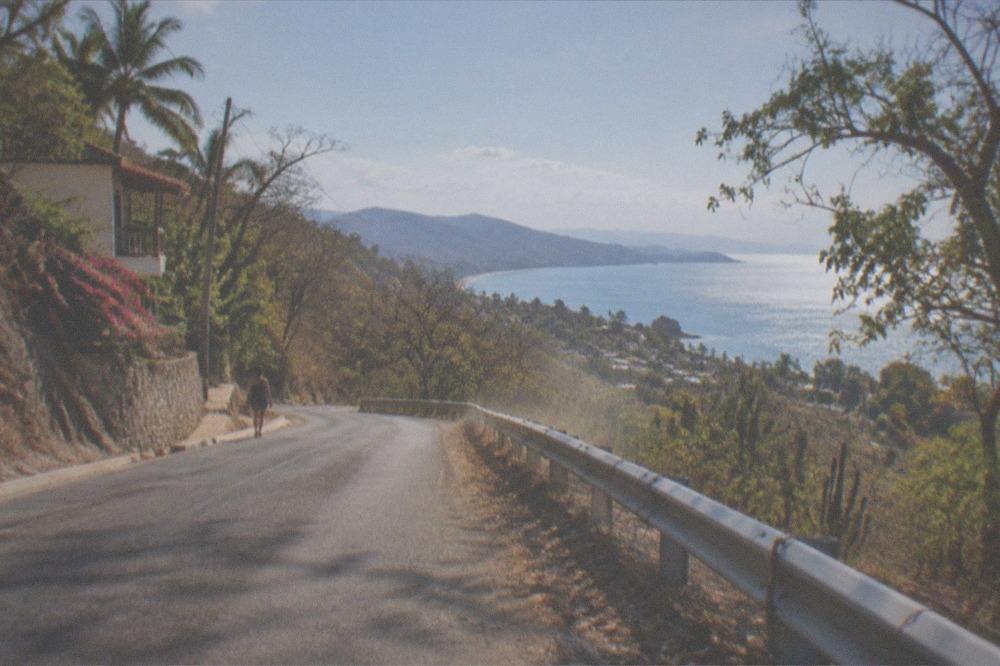
Nearly all Puerto Vallarta ATV routes follow the Cuale River corridor out of the foothills and into the Sierra Madre Occidental, past named landmarks including El Jorullo and the Jorullo Bridge, Cerro de Vallejo, the El Coyote viewpoint and El Salto waterfall. The Jorullo Bridge, described in tour listings as the longest vehicular suspension bridge in Latin America, is suspended roughly 150 meters above the Cuale River and is the signature crossing of the category.
The Cuale is the same river that runs through downtown Puerto Vallarta's Isla Cuale, but up in the foothills it becomes a mountain stream corridor, and the tracks beside it are the backbone of the route network. Listings for current tours describe bases in the foothills east and south of the city, with the riding split between riverside stretches and climbs onto terrace roads with viewpoints over the valley. River crossings and splash sections are a deliberate feature, not an obstacle: getting wet is part of the pitch, and operators warn you to expect it.
The named stops recur across operators because they are fixed geography, not marketing. El Jorullo is the small community at the heart of the riding area, and the bridge named for it is the one landmark every rider photographs. El Salto waterfall appears on itineraries with a swimming possibility, weather permitting. The El Coyote viewpoint and Cerro de Vallejo show up as photo pauses on the longer routes. Some tours also route through or near old town and the Malecon before or after the mountain sections, which blurs the line between a pure off-road product and a city-plus-jungle combo.
For a full picture of how these routes overlap with the zipline and canopy products that operate in the same jungle corridor, see the companion Sierra Madre jungle and zipline guide, which covers the canopy side of the same foothills. If your interest in the region is as much about eating as riding, the small villages these rides pass through are the same interior Jalisco food culture covered in what Puerto Vallarta food is famous for.
Here is how the main route landmarks break down:
| Landmark | What it is | Role on the tour |
|---|---|---|
| Jorullo Bridge | Vehicular suspension bridge, longest of its kind in Latin America per tour listings, about 150 m above the Cuale River | The signature crossing and photo stop |
| El Jorullo | Small community in the riding area | Route hub and rest stop |
| Cuale River corridor | Mountain stream and dirt tracks beside it | The main riding terrain, with crossings and splashes |
| El Salto waterfall | Waterfall stop with possible swimming | Swim and photo break, conditions permitting |
| El Coyote viewpoint | Elevated lookout over the valley | Photo pause on longer routes |
| Cerro de Vallejo | Hill on the route network | Scenic pass between sections |
Three products anchor the category on the current roster, and the trio below spans the main decision: the RZR-and-bridge experience, a private ATV ride with waterfall and tequila stops, and a zipline-plus-speedboat combo for riders who want water in the mix.
ATV Or RZR: Which Vehicle Should You Book?
Book an ATV if you want the classic single-rider quad experience and are comfortable balancing a machine on uneven ground; book a RZR if you want a seated, roll-caged buggy that carries a driver plus passenger, needs less physical effort, and suits families or nervous first-timers. Many listings sell both on the same route, so the choice is about comfort and who rides with whom, not about seeing different scenery.
The practical differences matter more than the brochures suggest. A quad puts you alone on the machine, exposed to dust and spray, and physically working the whole time. That is exactly what many riders want, and it is the cheaper base price on several products. A RZR side-by-side cages you in, seats two to four people, and lets a non-driving companion share the experience instead of riding as a passenger on the back of a quad. For couples with one enthusiastic driver and one reluctant one, the RZR solves a real problem.
RZRs also change the group dynamic. Convoying in buggies keeps pairs together through the whole ride instead of splitting them across two single machines, and the cage reduces the stakes of a slip on wet dirt. The tradeoff is price: side-by-side products and upgrades generally cost more than the quad base rate, and on the roster here the dedicated RZR-and-bridge product is the premium option at from $169.
The route is the same either way, so do not let a listing's vehicle photos drive a scenery decision. Choose on who is riding, how confident they are, and budget. If anyone in your group would rather not drive at all, the RZR passenger seat is the honest answer, not a quad with a reluctant driver behind the wheel.
| Factor | ATV (quad) | RZR (side-by-side) |
|---|---|---|
| Riders per vehicle | 1 | 2-4, driver plus passengers |
| Physical effort | High, constant balancing | Low, seated and caged |
| Best for | Solo riders, confident drivers | Couples, families, first-timers |
| Exposure to dust and spray | Full | Partially shielded by the cage |
| Typical price position | Lower base rate | Higher, often a paid upgrade |
The dedicated product here is the ATV/RZR Jorullo Bridge Experience, which runs from $169 and carries a 4.7 rating from 555 reviews, a solid mid-size review pool for this category. It pairs the vehicle choice with the bridge crossing as the centerpiece of the route.
How Long Does It Take To Cross Jorullo Bridge?
No operator publishes a fixed crossing time for the Jorullo Bridge, and there is no verified figure to quote. The crossing itself is a slow, guided drive across a vehicular suspension bridge suspended roughly 150 meters above the Cuale River, and listings treat it as a photo and viewpoint moment rather than a timed segment. What takes time on these tours is the full route around it, not the span itself.
The reason the question has no clean answer is that the bridge is a working road, not an attraction queue. Vehicles cross at reduced speed, in convoy order, and the pause on or around the bridge is where the photography happens. Tour descriptions frame it as the emotional high point of the ride, the moment the jungle opens up over the river canyon, rather than as a segment with a duration attached. If a listing or a sales chat quotes you a precise crossing time, treat it as an estimate, not a fact.
What you can plan around is the total half-day shape of the product. With around 3 to 3.5 hours of riding and stops in the typical itinerary, the bridge sits in the middle of the route as the turnaround landmark, and the time spent on it is measured in minutes, not hours. Riders who want maximum bridge time should look at the products that name it in the title, since those build the route around the crossing, with the ATV/RZR Jorullo Bridge Experience being the clearest example on the roster.
One planning note: the bridge is a suspension structure and sways by design, which is normal and safe for vehicular use, but it is worth knowing before you stand on it expecting stillness. If anyone in your group has real trouble with heights, the viewing areas near the bridge ends let them see the canyon without being over the middle of the span.
What Is The Best ATV Tour In Puerto Vallarta?
On the evidence of review records, the strongest ATV product in Puerto Vallarta is the Private ATV Tour with Waterfall and Tequila Tasting, at 4.9 from 977 reviews and from $94, which combines the largest review pool in the category with the highest rating. The ATV/RZR Jorullo Bridge Experience, at 4.7 from 555 reviews and from $169, is the strongest choice specifically for the bridge and vehicle flexibility.
The word "best" needs unpacking, because the two leaders win on different axes. The private ATV tour wins on the numbers: no other ATV product on the roster comes close to a thousand reviews, and a 4.9 across that pool is a genuinely strong signal rather than a small-sample fluke. It also undercuts the RZR product on price while adding a waterfall stop and a tequila tasting, which is why it is the default recommendation for most riders. More of these guides are collected on Tours in Puerto Vallarta.
The RZR product wins on fit. If the bridge crossing is the reason you are booking, or if you need the side-by-side format for a passenger, the Jorullo Bridge Experience is the better product for you despite costing more and rating slightly lower across a smaller but still substantial pool. A 4.7 from 555 reviews is a healthy record, not a compromise.
Two other products deserve honest framing rather than hype. The Zip Line, Jorullo Bridge and Tequila Tour carries a confirmed 4.8, but from only 39 reviews, so treat the rating as promising rather than proven. And several newer listings on the roster, including the ATV Adventure and Tequila Tasting, the Jungle ATV or Razer Adventure, and the Sierra Madre Hike and Tequila Tasting, have no rating or review data yet at all. That is not a knock on them; it simply means there is no evidence base to recommend them on, and early bookers are taking a small chance in exchange for a fresh product.
Here is how the category's main products compare on the numbers that matter:
| Tour | Format | Rating and reviews | Price |
|---|---|---|---|
| Private ATV Tour, Waterfall & Tequila Tasting | Private ATV, waterfall and tequila stops | 4.9 from 977 reviews | from $94 |
| ATV/RZR Jorullo Bridge Experience | ATV or RZR, bridge-focused route | 4.7 from 555 reviews | from $169 |
| Zip Line, Jorullo Bridge & Tequila Tour | Zipline combo with bridge | 4.8 from 39 reviews | from $122 |
| Jungle ATV or Razer Adventure | ATV or RZR, newer listing | Rating on the listing | from $132 |
| ATV Adventure & Tequila Tasting | ATV with tasting, newer listing | Rating on the listing | from $115 |
| Sierra Madre Hike & Tequila Tasting | Hike-based, newer listing | Rating on the listing | from $167 |
A note on reading those numbers: the review pools behind them differ enormously, from 977 reviews on the private tour down to none at all on the newest listings, so the ratings do not carry equal weight. A 4.9 from 977 reviews is a settled verdict; a 4.8 from 39 is a promising early signal; a blank cell is an honest unknown. Price tracks format and inclusions rather than quality, which is why the cheapest established product on the table is also the best reviewed one.
ATV Tours Versus Zipline Combos: Which Is Right For You?
Pick a pure ATV or RZR tour if the driving itself is the point, and pick a zipline combo if you want air time over ground time, since combos split the half-day between canopy and trail and give you less of each. The Canopy Tour with Zipline and Speedboat Ride, at 4.7 from 56 reviews and from $120, trades ride depth for variety, including a boat segment no pure ATV tour offers.
The honest tradeoff is time. A 3.5-hour pure ATV product spends nearly all of it on the route and its stops. A combo splits the day, so you drive less, zip less, and see more kinds of things. For travelers with one free half-day and no strong preference, that variety is a rational choice, and the speedboat segment on the canopy combo adds a water element the mountain products cannot match.
For travelers who know they want to ride, the combo is a dilution. The driving sections on combo days tend to be shorter and tamer, because the operator is managing a bigger group through more transitions. If you have already decided the quad or buggy is the memory you want to bring home, book the pure product and skip the compromise.
There is also a middle path worth naming: the zipline-focused products covered in the Sierra Madre jungle and zipline guide run in the same corridor, so a two-day stay can do a full ride one day and a full canopy day the next, rather than half of each on one. The Zipline Canopy Tour product on the roster, at 4.8 from 51 reviews and from $128, is the canopy-only alternative if you go that way.
What Should You Expect On The Day? Safety, Gear And Group Size
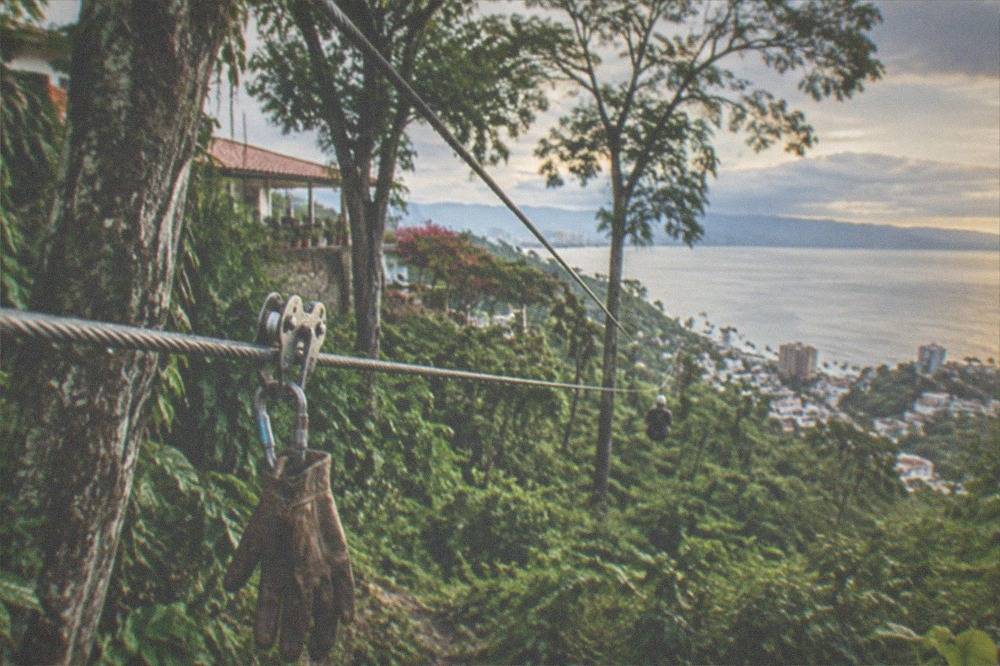
Expect a briefing and helmet before any riding, a guided convoy with a lead and sweep vehicle, small-group operation on the better products, and a genuine chance of getting dusty, muddy and wet. Beginners are explicitly catered for across the category, machines are automatic, and no tour on the roster requires prior off-road experience. What you should not expect is a solo, unsupervised ride: these are guided experiences throughout.
The briefing is not a formality. Operators run through the machine's controls, the convoy rules, and the hand signals used on the route, because the single biggest risk on these rides is rider error on terrain that punishes overconfidence. Helmets are standard, and closed shoes are the one piece of gear you should bring yourself, since sandals on dirt, rocks and pedals are a bad combination. Clothes you do not mind ruining are the other prerequisite: between dust, puddles and river splashes, anything nice you wear will stop being nice.
Group size is where the products differentiate. The private ATV product's format keeps your party to itself, which changes the pace entirely, since the convoy moves at your comfort level instead of the slowest stranger's. Group products manage this with small-group caps and a sweep rider who keeps the tail together. If you are booking a group product, check the listing's stated cap, because the difference between 8 riders and 20 riders is the difference between a ride and a procession.
On safety record, the honest statement is that recent searches turned up no verifiable reports of incidents or safety issues specific to these Sierra Madre operators, which means there is no pattern of trouble to warn you about, and also no basis for grand claims in the other direction. The category's basics, briefing, helmet, guide, are consistent across the listings, and the terrain, while genuinely off-road, is ridden daily by beginners.
When Is The Best Time Of Year For An ATV Tour?
The dry season, roughly November through May, is the best time for ATV touring in Puerto Vallarta, with minimal rain and firmer trails. August and September are the wettest months, with rain probabilities above 80 percent in the peak of the rainy season, and the Eastern Pacific hurricane window runs from May 15 to November 30 with peak risk in August through October. Rain does not cancel the category, but it changes the mud math.
The seasonal case is straightforward. Dry season means dry trails, clear viewpoints and a ride that is dusty instead of slippery. The rainy season, June through October, turns the same routes into a different product: deeper puddles, slicker climbs and river crossings that are more dramatic and less predictable. Some riders actively prefer that version, and operators run through the wet months, but if your priority is the photo at the bridge rather than the splash, book between November and May.
The official hurricane window for the Eastern Pacific runs May 15 to November 30, per NOAA's tropical cyclone climatology, with the region's peak risk in August through October. A hurricane does not mean your ATV day is doomed; it means the odds of a washed-out booking are highest then, and a flexible cancellation policy is worth more than a marginal price. One climate analysis of the region's month-by-month scores puts August lowest, with an 85 percent rain probability, per the bestdateweather.com seasonal breakdown for Puerto Vallarta.
The broader timing question, which months balance weather against crowds and whale season, is covered in full in the site's best-time-to-visit planning material, and the same dry-season logic applies to almost every outdoor product in the region.
| Season | Months | Trail conditions | Rain probability |
|---|---|---|---|
| Dry season | November-May | Firm, dusty, clear viewpoints | Minimal, often under 8 percent |
| Early rainy season | June-July | Wetter, greener, bigger puddles | Rising through the period |
| Peak wet | August-September | Muddy, slick, swollen crossings | Above 80 percent |
| Late rainy season | October-November | Improving as rains taper | Falling toward dry season |
Is It Safe To Book An ATV Tour In Puerto Vallarta Right Now?
Yes, with the standard caveats. The U.S. State Department rates Jalisco at Level 3, Reconsider Travel, but explicitly carves out Puerto Vallarta, Riviera Nayarit and the Guadalajara metro area with no restrictions, and the tour corridor sits inside that carve-out. A February 2026 episode of cartel-related disruption in the city, following the killing of a CJNG leader, calmed within days, and operations returned toward normal by late February.
The full picture is worth stating plainly rather than softening. In February 2026, the killing of CJNG leader "El Mencho" by Mexican forces triggered retaliatory disruption in Puerto Vallarta: arson at businesses and vehicles, road blockages, flight delays and cancellations at the Puerto Vallarta and Guadalajara airports, a temporary shelter-in-place advisory from the U.S. Embassy, and halted rideshare and transport. Tourists in the city at the time reported smoke and unease. The situation calmed within days, and operations returned toward normal by late February, though the state-level Level 3 advisory remained in place.
What that means for an ATV booking is context, not alarm. The advisory structure itself distinguishes Puerto Vallarta from the parts of Jalisco where restrictions apply, per the U.S. State Department's Mexico travel advisory, and the tour corridor is in the hills immediately behind the city, inside the carved-out zone. The practical safeguards are the ones that always apply: book with a cancellation policy, keep an eye on the advisory in the week before you travel, and treat any operator who dismisses the question out of hand as a weaker bet than one who answers it straight.
The site's dedicated safety page covers this in more depth for travelers weighing the whole region, and the same facts apply there: name the Level 3 rating, name the carve-out, and name the February incident honestly rather than in either direction.
How The Category Compares: Price, Reviews And Formats
The ATV category in Puerto Vallarta spans from $94 to $169 per person across the established products, with the private ATV tour holding the strongest review record at 4.9 from 977 reviews and the RZR bridge experience as the premium flagship at from $169. Newer listings sit between $115 and $167 with no review data yet, and zipline combos run from $120 to $128. Format choice, private versus group, ATV versus RZR, moves the price more than scenery does.
The infographic below summarizes the spread across the category's main products.
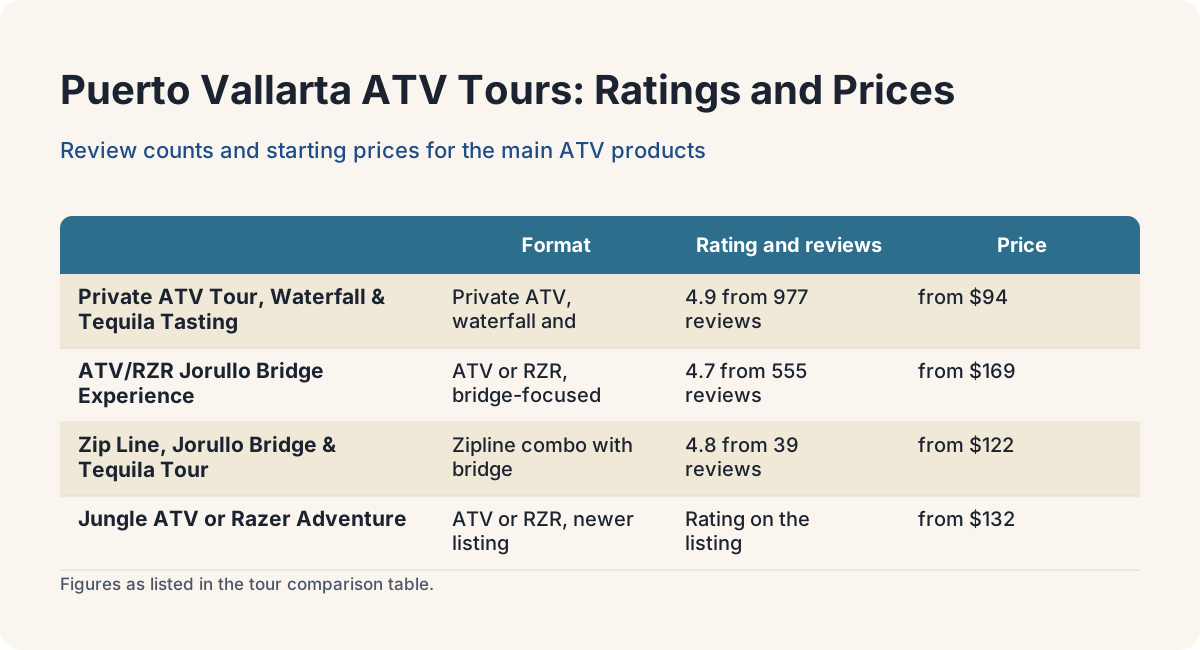
Reading the spread, three patterns stand out. First, price does not track review strength: the cheapest established product is also the best reviewed, which makes the private ATV tour the value pick by a wide margin. Second, the premium end is defined by format, not luxury: you pay more for the RZR and the bridge-focused route, not for a fancier day. Third, the unrated new listings cluster in the middle of the price range, which means paying full price for an unproven product; if you try one, do it with a cancellation policy and modest expectations.
For travelers assembling more than one activity, the planning questions around combining products are covered in the site's tour packages guide, and the food-and-tequila angle that several of these rides touch on gets a full treatment in the Puerto Vallarta food tours guide.
Whichever product fits, the same booking logic applies across the category: the live listing carries the current price, the current departure options and the cancellation terms, and checking availability early costs nothing. You can Check availability on the bridge experience alongside this guide's other recommendations.
If you are still choosing between the leaders, the trio below restates the category's three anchors side by side.
Common Questions About Puerto Vallarta ATV Tours
How long does it take to cross Jorullo Bridge?
There is no published or verified crossing time. The bridge is a slow, guided vehicular crossing suspended roughly 150 meters above the Cuale River, treated by tours as a photo and viewpoint moment rather than a timed segment. The full half-day route around it, typically 3 to 3.5 hours, is what fills the itinerary.
What is the best ATV tour in Puerto Vallarta?
On review evidence, the Private ATV Tour with Waterfall and Tequila Tasting leads the category at 4.9 from 977 reviews, from $94. If the Jorullo Bridge or a side-by-side vehicle is your priority, the ATV/RZR Jorullo Bridge Experience at 4.7 from 555 reviews, from $169, is the stronger fit despite the higher price.
Do I need off-road experience for an ATV tour?
No. The category explicitly caters to beginners, machines are automatic, and every product includes a safety briefing and helmet with a guided convoy. What you do need is closed shoes, clothes you do not mind getting dirty, and a willingness to follow the guide's pace rather than set your own.
What is the difference between ATV and RZR tours?
An ATV is a single-rider quad you balance and steer yourself. A RZR is a two- to four-seat side-by-side buggy with a roll cage, where a passenger can ride along and the driver works less physically. The route is the same either way; the choice is about comfort, confidence and who rides with whom.
When is the best time of year for ATV tours in Puerto Vallarta?
The dry season, roughly November through May, offers firm trails and clear viewpoints with minimal rain. August and September are the wettest months, with rain probabilities above 80 percent, and the Eastern Pacific hurricane window runs May 15 to November 30 with peak risk from August through October.
Are ATV tours in Puerto Vallarta safe?
The basics are consistent across the category: safety briefing, helmet, guided convoy, small groups. No verifiable reports of operator incidents surfaced in recent searches. The U.S. State Department rates Jalisco at Level 3 but carves out Puerto Vallarta with no restrictions, and the February 2026 disruption in the city calmed within days.