Is Yelapa Worth Going To?
An honest look at whether Yelapa is worth the boat trip from Puerto Vallarta: the waterfall, the beach, the no-road-access logistics, and who should skip it.
Is Yelapa Worth Going To?
For most visitors with a half or full day to spare, yes: Yelapa is worth going to. It is one of the few places on Banderas Bay where a waterfall, a car-free village, and a swimmable beach sit within a 30 to 55 minute boat ride of a major resort city. The catch is that the village has no road access, so every visit costs a water-taxi fare, fixed departure times, and some weather risk.
The honest framing matters here, because Yelapa is marketed as a paradise and experienced as a logistics exercise. The village sits at the southern edge of Banderas Bay, hemmed in by jungle and reachable only by water taxi or panga from Boca de Tomatlán or Los Muertos Pier. There are no cars, no roads in, and no schedule that bends to your plans. What you get in exchange is a beach town that still functions the way fishing villages on this coast functioned decades ago: slow, small, and dependent on the sea for everything.
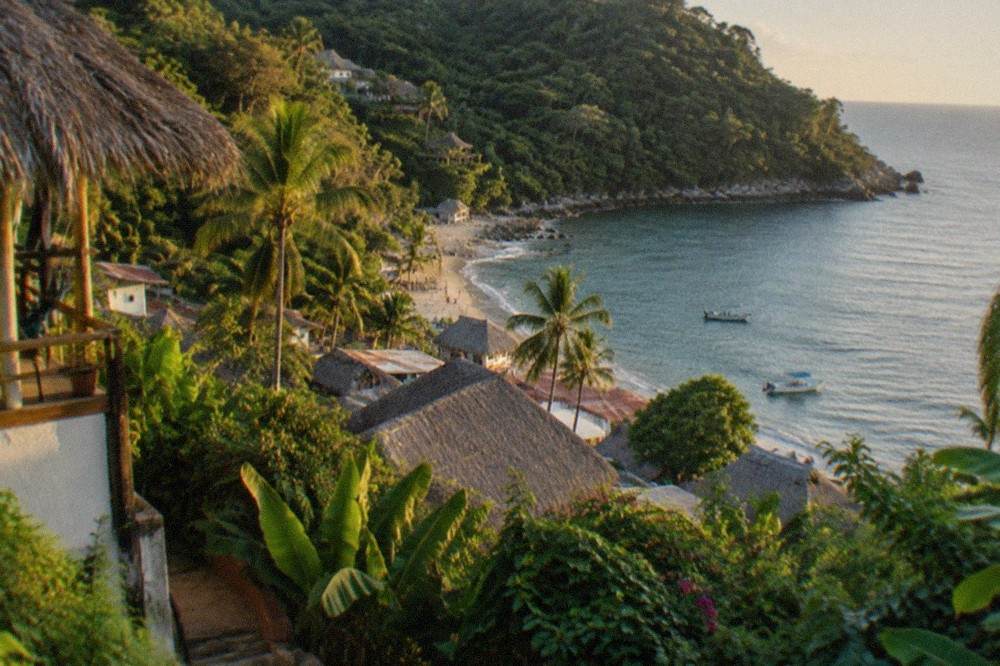
That trade, a real place in exchange for real constraints, is the whole decision. A reader who finds fixed boat times annoying will find Yelapa annoying. A reader who wants to see the coast before it looked like everywhere else will consider the boat ride part of the point. If you are still building the larger itinerary, our guide to Yelapa tours from Puerto Vallarta covers the full range of ways to get there, from independent water taxis to all-inclusive catamarans.
What Makes Yelapa Different From Every Other Beach Near Puerto Vallarta?
Three things set Yelapa apart: it has no road access at all, it has a walkable waterfall a short hike from the beach, and it retains a resident community rather than existing purely as a tourist zone. The village is a functioning settlement of locals and long-term expats, not a beach club with a gift shop. The waterfall, the car-free streets, and the boat-only arrival combine into something no drive-to beach in the bay can replicate.
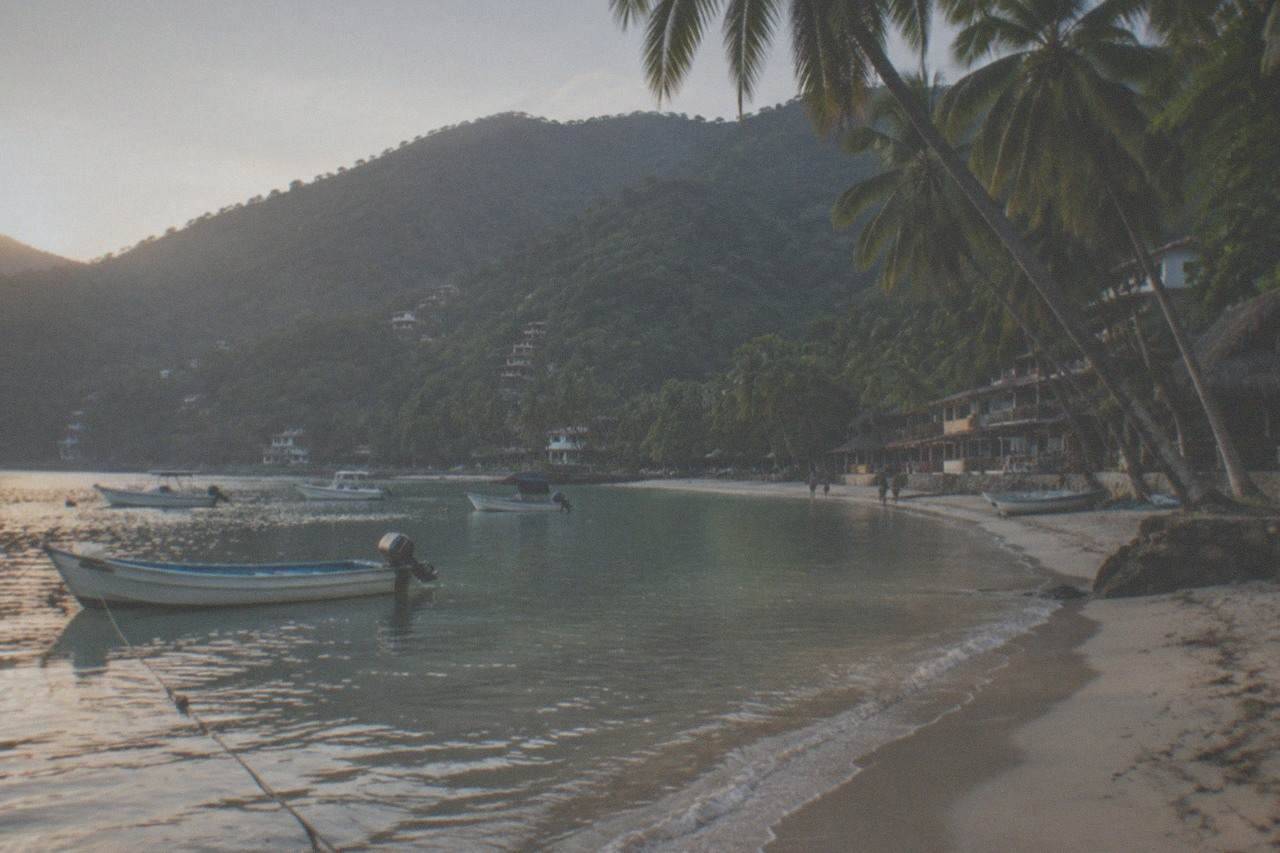
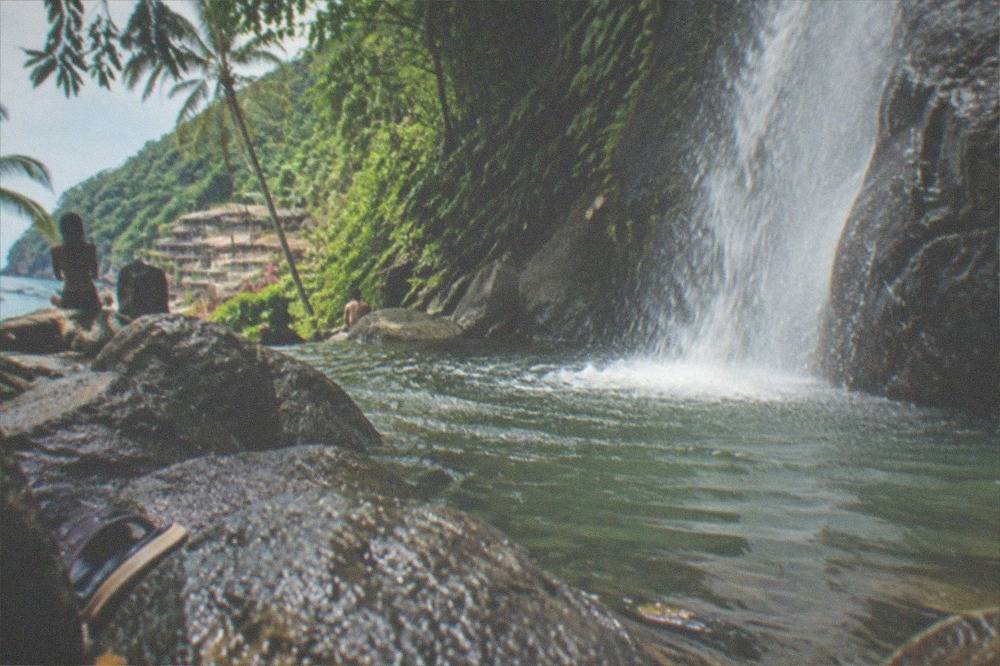
Start with the waterfall, because it is the single feature that shows up in nearly every description of the town. A trail from the beach leads up through the jungle to the falls, and the walk is short enough that most visitors do it in regular sandals or sneakers. It is a swimming-possible waterfall in a tropical setting, which is rare this close to a city of Puerto Vallarta's size. The beach itself is a crescent of sand with palapa restaurants along it, calm enough for swimming on most days, with small boats pulled up at the waterline.
The car-free character is not a gimmick. Because nothing bigger than a panga can arrive, there is no parking lot, no traffic noise, and no strip of chain storefronts. Donkeys still carry goods up the paths. The pace of the town is set by the water taxi schedule, and everyone in it, resident and visitor alike, moves at that pace. That is precisely what some travelers are hunting for and precisely what bores others within an hour.
It is also worth being honest about what Yelapa is not. It is not undiscovered. The beach fills with day-trippers from mid-morning to mid-afternoon, especially when a catamaran or two is in the cove. The restaurants are tourist-priced relative to Puerto Vallarta, because everything arrives by boat. And the "remote paradise" pitch oversells the isolation: you can see the lights of the Vallarta hotel zone across the water at night. Remote is relative. What Yelapa offers is not wilderness, it is a different tempo, and that distinction decides whether the day feels magical or underwhelming.
For context on the alternative, our comparison of Sayulita versus Puerto Vallarta covers the other famous day-trip town on the north side of the bay, which trades Yelapa's boat-only access for a drive-to surf scene with a much busier main street.
How Do You Actually Get To Yelapa?
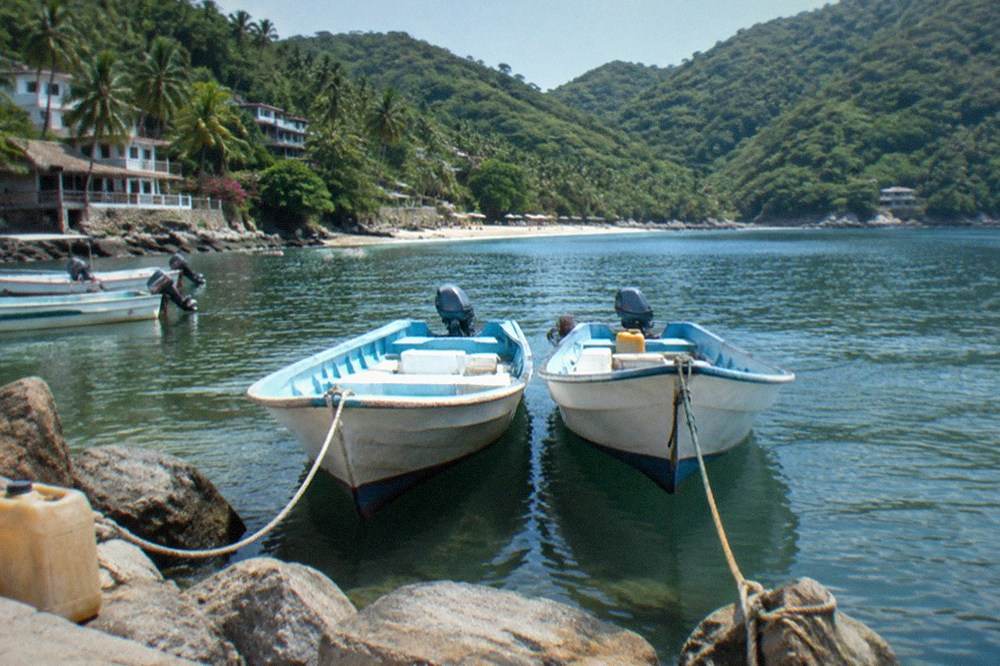
You get to Yelapa by water taxi or panga, from either Boca de Tomatlán (about 30 minutes, 130 MXN one way, 260 MXN round trip) or Los Muertos Pier in Puerto Vallarta (about 55 minutes, 350 MXN one way, 550 MXN round trip). Multiple boats run daily from both points, roughly 8:00 a.m. to 6:45 p.m. out of Boca, with fewer departures from Los Muertos. There is no road, no bus, and no walking in.
The two departure points suit two kinds of travelers. Boca de Tomatlán is the practical choice: it is a short bus or taxi ride south from the Romantic Zone, the crossing is quick, the fares are low, and departures are frequent through the day. Los Muertos Pier is the convenient choice if you are staying in Old Town and want to board in walking distance, but you pay roughly double and the ride is nearly twice as long. Schedules shift with weather and demand, so treat published times as a strong pattern rather than a guarantee.
The current departure and fare details are maintained by Go 2 Yelapa, which publishes the water taxi schedule and prices from both piers. Tickets can generally be bought on the boat or in advance, and private panga charters exist if your group wants to set its own times. Whatever you book, keep the return schedule in mind: the last boats leave in the early evening, and missing one means either an expensive private charter or an unplanned night in the village.
| Departure point | Crossing time | One-way fare (tourist) | Round-trip fare (tourist) | Notes |
|---|---|---|---|---|
| Boca de Tomatlán | ~30 min | 130 MXN | 260 MXN | Frequent departures, ~8:00 a.m. to 6:45 p.m. |
| Los Muertos Pier | ~55 min | 350 MXN | 550 MXN | Fewer departures, walkable from Old Town hotels |
Who Should Skip Yelapa?
Skip Yelapa if you need schedule flexibility, if boats make you seasick, if you are traveling with someone who cannot manage a beach landing, or if your goal is active sightseeing rather than slow time in one place. The village rewards lingering and punishes rushing. A visitor with only a restless half-day, strong motion sensitivity, or mobility limits on uneven sand and wet boat ramps will get more from a different stop on the bay.
The seasickness point deserves more weight than most guides give it. The crossing is short, but the southerly stretch of Banderas Bay can chop up in the afternoon, and pangas are open boats that take spray. If anyone in your party is prone to motion sickness, take a morning boat, sit toward the stern, and medicate beforehand, or pick a larger catamaran tour where the ride is steadier. Weather cancellations happen, and they are not negotiable: the boat is the only road. The rest of the planning pages sit on Tours in Puerto Vallarta.
The second honest skip case is the fast-paced traveler. If your instinct is to see four places in a day, Yelapa will frustrate you, because the round trip consumes the middle of the day and the village itself is small. You walk to the waterfall, you eat under a palapa, you swim, and that is the itinerary. Readers comparing day trips should also weigh the north side of the bay: Sayulita is a completely different proposition, a bohemian surf town you reach by road in under an hour, and it suits travelers who want shops, surf lessons, and a lively main street rather than a quiet cove.
The third case is practical. The beach landing involves stepping off a boat into shallow water, sometimes onto wet sand, sometimes with a surge. Older travelers and anyone unsteady on their feet should ask the boat crew about conditions before committing, and know that the waterfall trail, while short, is unpaved and can be slick after rain.
What Does A Yelapa Tour Include Versus Going Independently?
Going independently costs roughly 260 to 550 MXN per person round trip in water-taxi fares plus whatever you spend on food, and you manage your own timing. A structured tour, from $79 for the Yelapa Waterfall, BBQ, Open Bar & Majahuitas outing at 4.4 from 792 reviews, bundles the boat, a meal, drinks, and often a second beach stop, at the price of a fixed group schedule. The independent route buys freedom; the tour buys zero logistics.
The independent route is genuinely easy, and pretending otherwise would be dishonest. You get yourself to Boca de Tomatlán, you buy a ticket, you ride. The village is walkable, the waterfall trail is obvious, and palapa restaurants line the beach. What you carry is the return-time math, the cash question (small vendors and boats prefer pesos), and the responsibility for your own day. For confident travelers this is half the appeal.
The tour route earns its keep differently. The flagship Yelapa outing from Vallarta Adventures pairs the village with Majahuitas, a cove further up the coast, and includes a beach BBQ and open bar, which means no hunting for lunch or counting pesos. Its 4.4 rating from 792 reviews is solid rather than spectacular, and the honest read is that reviewers love the day and occasionally ding the crowds and the timing. If your group would rather not think about boats, fares, or food, that is the trade you are making, and it is a fair one.
There is also a middle path worth naming: the premium boat option. The Mega Catamarans All-Inclusive Remote Paradise Beach tour, 4.8 from 541 reviews and from $120, reaches a remote beach in the same southern stretch of the bay on a larger vessel with an open bar, which suits travelers who want the scenery and the swimming without the village-walk portion. It is not Yelapa, but it solves the same craving with steadier logistics.
What Is The Best Time Of Year For Yelapa?
The best months for Yelapa are November through May, the dry season, when rain is minimal, the jungle trails to the waterfall are firm, and bay conditions are calmest. August and September are the rainiest months on this coast, with rain probabilities above 80 percent, and the Eastern Pacific hurricane window runs May 15 through November 30 with peak risk in August through October. Morning boats beat afternoon boats in every season.
The seasonal pattern on this coast is consistent and worth planning around. A long-range climate analysis of Puerto Vallarta month-by-month conditions scores August as the worst month of the year for weather, with September close behind, while the November-to-May dry window sees minimal rain. For Yelapa specifically, rain matters twice: once for the boat ride, and once for the waterfall trail, which turns muddy quickly in wet weather. The waterfall itself is more dramatic in and just after the rainy months, so there is a genuine argument for an early-rainy-season visit if you accept the mud.
Mornings matter more than months. Banderas Bay is calmest before the afternoon wind fills in, the water taxi ride is smoother, and the village is at its quietest before the day-trip boats arrive. An 8:00 or 9:00 a.m. boat from Boca puts you on the beach before the crowds, gives you the waterfall trail in cooler air, and leaves the whole afternoon for swimming and lunch before a mid-afternoon return. The same logic applies to tours: departures early in the day consistently get the better crossing.
One seasonal caution: if you are booking anything on the water between June and October, build a plan B into your day. Cancellations for weather are rare in the dry season and routine in the wet one, and a Yelapa plan is entirely boat-dependent. If seeing the bay by water is the priority rather than Yelapa specifically, a snorkeling-focused day on the bay is more weather-resilient, since Los Arcos sits much closer to the departure marinas and the crossing is short.
The Verdict On Yelapa
Yelapa is worth it for travelers who want a slow, car-free beach day with a waterfall and are comfortable with boat schedules and fixed return times. It is not worth it for fast-paced sightseers, the motion-sensitive, or anyone who will resent the two-way fare and the middle-of-the-day commitment. The village earns its reputation honestly, but only for visitors whose definition of a good day includes doing very little in a beautiful place.
The deciding question is not whether Yelapa is beautiful, it is. It is whether your travel style absorbs friction in exchange for character. The readers who report the best days there are the ones who booked a morning boat, walked to the falls, ate a long lunch under a palapa, swam, and took a late-afternoon return without checking their watch. The readers who report disappointment are the ones who squeezed it between two other activities, arrived at noon with the crowd, and spent the day watching the clock for the return boat.
If you go, go with a plan that fits the place: one day, no rush, morning boat, cash in pesos, and a willingness to let the schedule belong to the water. If that sounds like a waste of a vacation day, Yelapa will confirm your suspicion. If it sounds like the point, you will understand why people keep making the crossing.
Common Questions About Yelapa
Is Yelapa Worth Going To?
For most travelers with a half or full day available, yes. The waterfall, the car-free village, and the boat-only arrival add up to an experience no drive-to beach near Puerto Vallarta can match. The cost is fixed water-taxi schedules and fares of roughly 260 to 550 MXN round trip, so it suits slow travelers far better than fast-paced ones.
How do I get to Yelapa from Puerto Vallarta?
By water taxi or panga only, from Boca de Tomatlán (about 30 minutes, 260 MXN round trip) or Los Muertos Pier (about 55 minutes, 550 MXN round trip). Boats run multiple times daily from both points, roughly 8:00 a.m. to 6:45 p.m. out of Boca. There is no road access.
Can you walk to the Yelapa waterfall?
Yes. The trail starts near the beach and climbs a short distance through the jungle to the falls. It is unpaved and can be muddy or slick after rain, so wear shoes with grip rather than flip-flops. Swimming at the base is possible when conditions allow.
Is there a tour that includes Yelapa?
Yes. The Yelapa Waterfall, BBQ, Open Bar & Majahuitas tour from Vallarta Adventures, 4.4 from 792 reviews and from $79, bundles the boat transfers, a beach BBQ, an open bar, and a stop at Majahuitas. It trades the freedom of the independent water taxi for zero logistics.
What is the best month to visit Yelapa?
November through May, the dry season, when rain is minimal and the bay is calmest. August and September are the rainiest months on this coast, and the Pacific hurricane window runs May 15 through November 30 with peak risk from August to October. Morning boats are the best choice in every season.