Los Arcos National Marine Park Snorkeling Tour
Los Arcos is the closest thing Puerto Vallarta has to a sure-thing snorkel: a cluster of protected granite islands twenty minutes south of the city, where fishing is banned, boats follow set routes, and the water over the reef holds thick schools of fish, protected inside the national park.
Short answer
Los Arcos snorkeling tours run from $48 to $51 per person for the standard group trips, plus a 41 peso per-person marine park fee usually collected by the operator. Visibility is best November through May, sometimes reaching 15 meters, and morning departures get the calmest water. Three Los Arcos-named products cover the same reef at slightly different prices.
What Is Los Arcos National Marine Park?
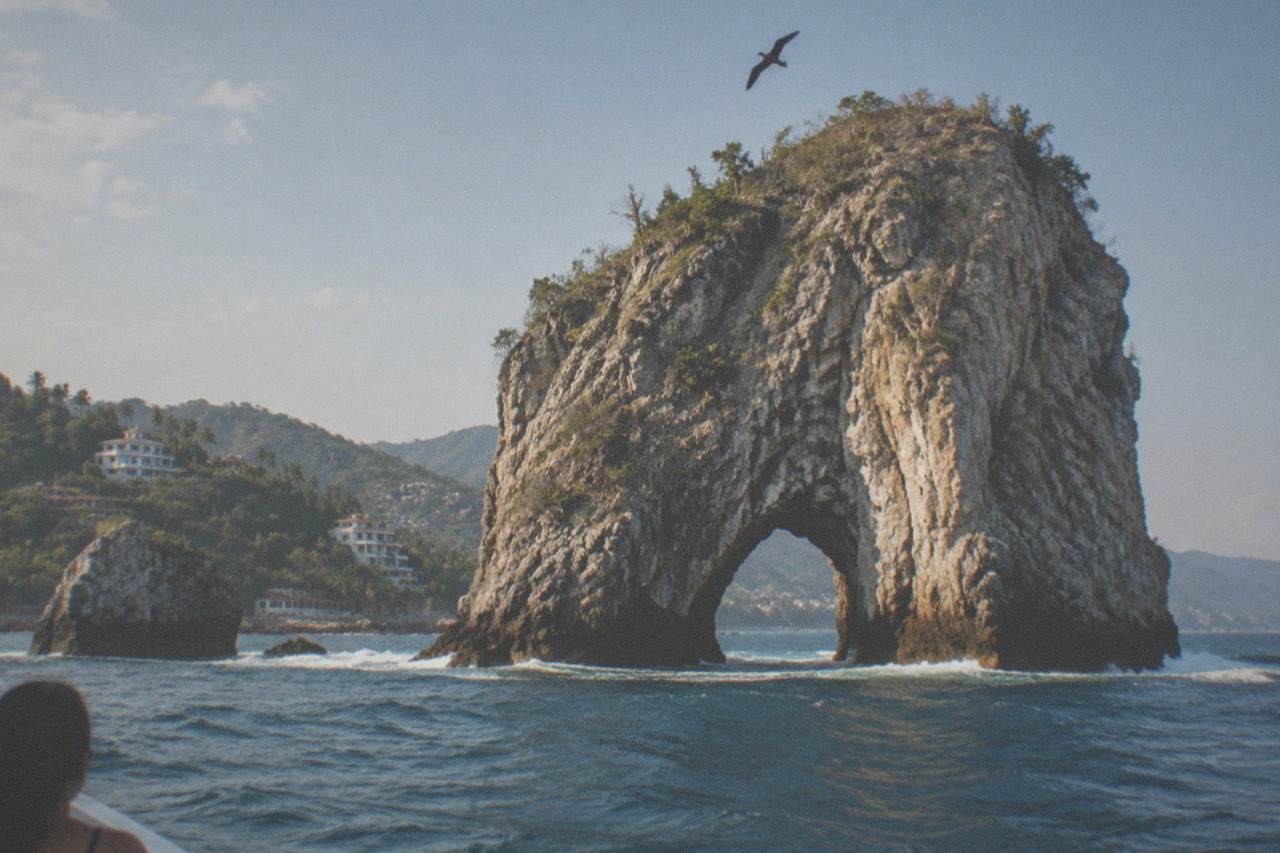
Los Arcos is a federally protected marine park made up of five small granite islands sitting just offshore between Mismaloya and Boca de Tomatlán, roughly twenty minutes by boat from Puerto Vallarta. The park bans fishing, anchoring on reefs, and removing anything from the water, which is exactly why the snorkeling here outperforms the rest of Banderas Bay. The name comes from the massive sea arch carved through the largest island.
The islands are small, and that is the point. What looks like a modest cluster of rocks from the beach is a protected reef system where the fish population has been left alone for decades. Boats must use designated navigation and mooring routes rather than dropping anchor on coral, and nobody is allowed to touch, chase, or feed the marine life. Snorkelers see the direct result of those rules within minutes of getting in the water: dense schools of sergeant majors, parrotfish grazing the rock, and reef structure that still looks like reef rather than rubble.
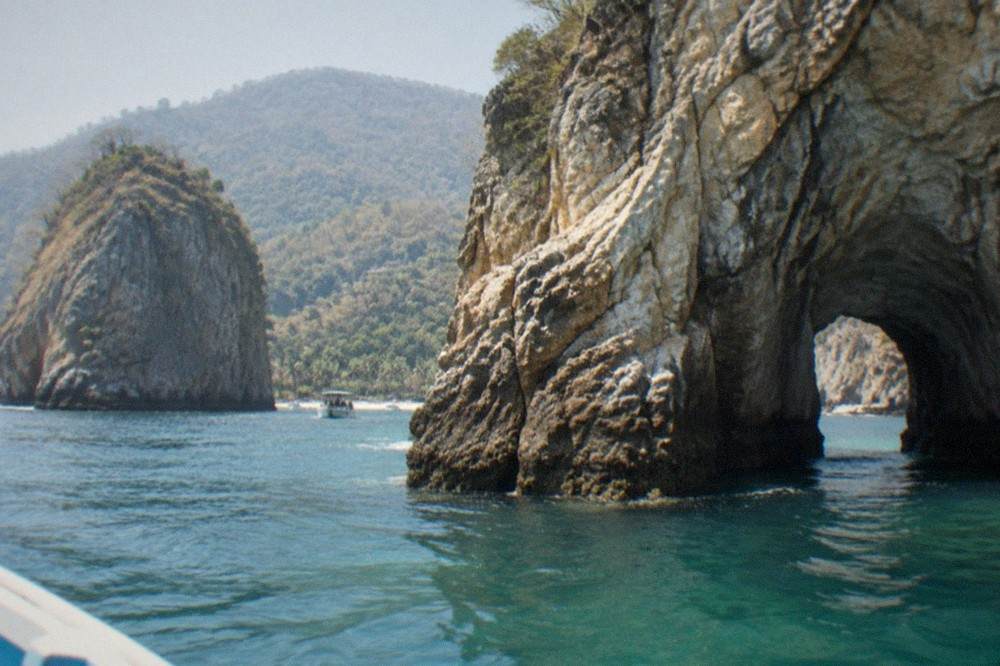
The arch itself is the postcard. Boats pass through or beside the opening on nearly every trip, and the cliffs above hold frigatebirds and blue-footed boobies, one of the few places on the Pacific coast of Mexico where the boobies nest in accessible view. Underwater, the walls of the arch drop into deeper channels where larger fish and occasionally rays pass through, which is why most tours snorkel two or three different spots around the islands rather than staying in one place.
Access is easy, and that shapes the whole market. Pangas leave from Boca de Tomatlán, Mismaloya, and Marina Vallarta, with the crossing from Boca taking around twenty minutes. That short hop keeps prices low compared with the all-day trips further up the bay, and it makes Los Arcos the natural choice for a first snorkel or a half-day plan. If you are weighing Los Arcos against the bigger boat options across the region, the Puerto Vallarta snorkeling tours guide compares the full field.
What Will You Actually See Underwater At Los Arcos?
Expect dense tropical reef fish in the shallows, dramatic rock walls and drop-offs around the islands, and occasional bigger visitors including rays, turtles, and, in season, dolphins or humpbacks passing the park's edges. Visibility runs best November through May, sometimes reaching 15 meters or more, while summer water is warmer but can cloud after rain. The fish density is the headline, not a single marquee species.
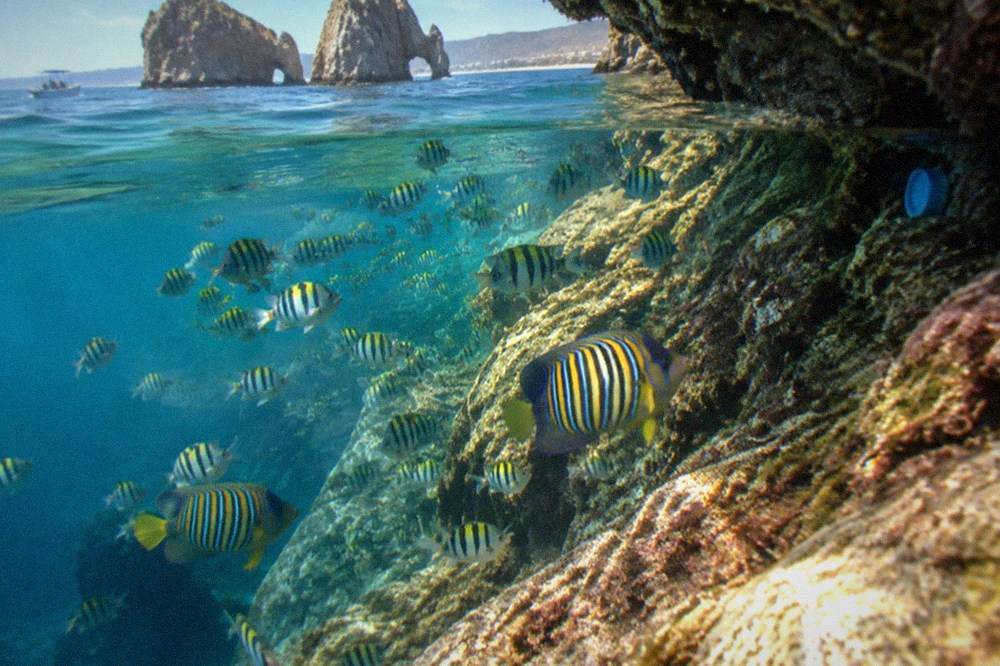
The core experience is quantity. Because the park has been closed to fishing for years, the reef fish population behaves the way reef fish behave when nothing hunts them: they school tightly, they ignore snorkelers, and they cover every surface. Sergeant majors, king angelfish, cornetfish, parrotfish, and puffers are routine sightings. Around the base of the islands the rock shelves drop quickly, and the transition from sunlit shallows to blue depth is what gives Los Arcos its reputation among local divers as well as snorkelers.
The five-islands structure matters for how tours are built. Operators typically structure the trip around the main arch, the protected cove areas on the leeward side, and one of the smaller islets, giving snorkelers a varied loop rather than one long swim. Small-group snorkel-focused trips usually cap at around 12 to 13 passengers, which keeps the water uncrowded. Bigger catamarans and yachts also stop here, but they anchor further out and send groups in by stages.
A realistic picture of what the water holds, trip by trip, looks like this:
| Likelihood | What snorkelers encounter |
|---|---|
| Every trip | Sergeant majors, king angelfish, parrotfish, puffers, cornetfish |
| Most trips | Dense schools holding over the rock shelves in the shallows |
| Regular but not guaranteed | Rays along the deeper walls at the base of the islands |
| Seasonal, December through March | Dolphins and humpback whales passing the park's edges |
| Not a feature of this site | Sharks; the reef fish are the show here |
One question that comes up constantly: sharks. The honest answer is that Los Arcos is not a shark site, and the reef fish are the show. For the real story on large sharks in the region, including why the bay's most famous shark species is almost never seen by snorkelers, see great white sharks near Puerto Vallarta.
For a first taste of what is on the water, these are the three Los Arcos-named snorkeling products worth comparing:
Which Los Arcos Snorkeling Tour Should You Book?
All three Los Arcos tours cover the same marine park at nearly the same price, from $48 to $51, so choose based on provider, review record, and extras. The cliff jumping tour rates highest at 4.9 from 477 reviews but starts at $51, the Boat & Snorkel Tour costs from $48 with the most reviews at 4.7 from 1,347, and the Vallarta Nature Trips 5 Islands tour runs from $48 at 4.6 from 389 reviews.
That is the whole decision space, and it is a narrow one, which is good news for anyone who hates comparing twenty near-identical listings. All three products put you in the water at Los Arcos with gear included. The differences worth paying attention to are group size, what else the itinerary packs in, and how much social proof sits behind each operator.
The Vallarta Nature Trips product is the straightforward one: five islands, boat, snorkeling, from $48. It suits travelers who want the reef without add-ons. The cliff jumping and hidden beach version at from $51 adds exactly what the name promises, and its 4.9 rating across 477 reviews is the strongest review record of the three relative to its size. The Boat & Snorkel Tour carries the largest review pool at 1,347 reviews with a 4.7 rating, which is meaningful if you want the reassurance of a heavily booked, heavily reviewed operation.
There is also a premium tier if the snorkeling is the occasion rather than the goal. A luxury yacht version with snorkeling, open bar, and lunch runs from $89 and is rated 4.6 from 786 reviews. That is a different product category, closer to a boat party that happens to snorkel Los Arcos than a snorkel trip, but for a celebration day it is the natural upgrade. Most readers planning around the reef itself will be happy in the $48 to $51 band.
When Is The Best Time Of Year To Snorkel Los Arcos?
Visibility is best November through May, the dry season, when calm seas and clear water sometimes deliver 15 meters or more of sight range. June through October brings warmer water but visibility can drop after rain and runoff. Morning departures beat afternoons on almost every day of the year, because wind and swell build through the day and the water is calmest early.
The seasonal pattern is driven by rain, not temperature. Banderas Bay stays warm enough to snorkel year-round, and summer water is arguably more comfortable. What changes is what the rain does to the bay: runoff from the hills clouds the water near river mouths and can push reduced visibility out toward the islands for days after a storm. In the dry season, from November to May, that input stops, and Los Arcos sits in some of the clearest water on the Mexican Pacific coast. One local operator breakdown puts January through April in the 15 to 40 foot range and May through December at 30 to 100 feet, so day-to-day conditions matter more than the month on the calendar, but the reliable floor is the dry season.
| Season | Months | Water and weather | Visibility pattern |
|---|---|---|---|
| Dry season | November-May | Minimal rain, calm mornings, the busiest tour months | Best of the year, sometimes 15m/50ft+ |
| Rainy season | June-October | Warmest water, afternoon storm build-up, hillside runoff | Clears between rains, drops for days after big storms |
| Whale overlap | December-March | Humpbacks active in the bay, boats often pause en route | Often some of the clearest water of the year |
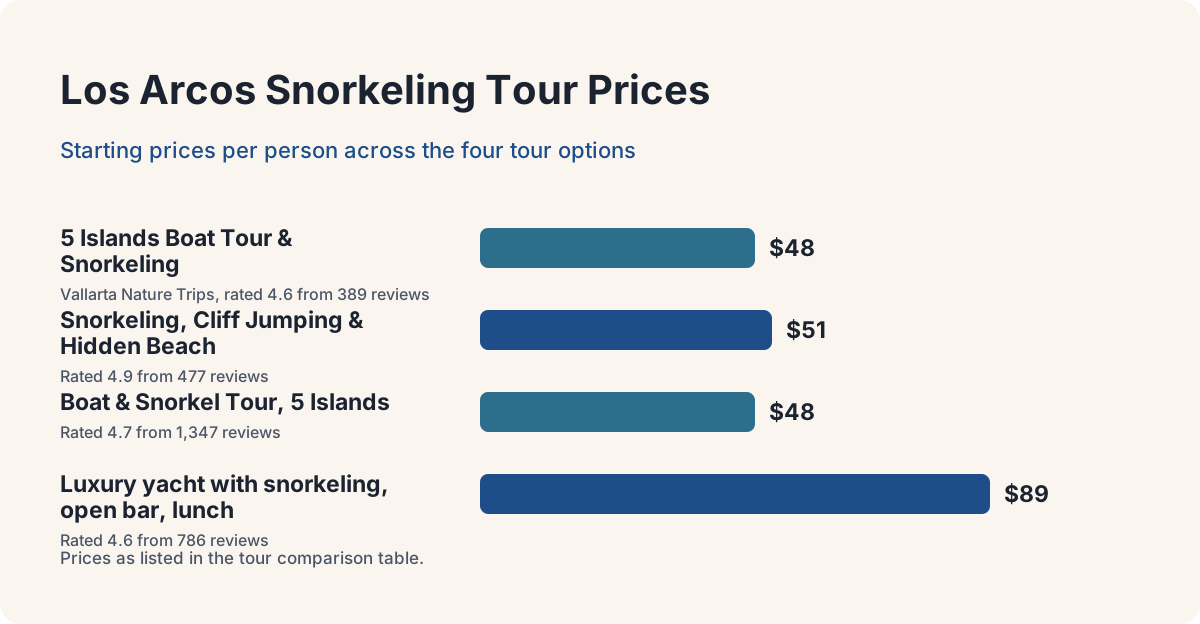
The time of day is the variable travelers most often get wrong. Almost every experienced operator recommends early departures, and the reason is mechanical: the bay is glassy in the morning, wind picks up around midday, and afternoon chop stirs the surface layer and cuts underwater sight range. If your schedule allows only one snorkel, take the earliest boat. The seasonal weather backdrop is documented in the best-date weather analysis for Puerto Vallarta, which scores August and September as the wettest, lowest-rated months of the year.
Hurricane season on the Eastern Pacific side runs May 15 through November 30, with peak risk in August through October, per the NOAA tropical cyclone climatology. Direct hits on Banderas Bay are rare, but a distant storm can mean a week of swelly, murky water, which is one more reason the dry season is the safe planning window. Whale season overlaps the best visibility window: humpbacks are in the bay from early December to late March, and a snorkel boat in those months frequently pauses for a passing pod on the way out.
How Much Does A Los Arcos Snorkeling Tour Cost?
The standard Los Arcos group snorkeling tours cost from $48 to $51 per person, with the premium yacht version at from $89. On top of the ticket, budget the 41 peso per-person marine park fee, usually collected in cash on the boat, and any gear upgrades or photos the operator sells separately. A realistic all-in planning figure for a standard trip is $55 to $65 per person.
The ticket price covers the boat, guide, and basic snorkel gear on all three Los Arcos-named products. What it does not cover is the park access fee, which is small but real: 41 Mexican pesos per person, cash-only, and in practice the crew collects it on board. Operators handle this differently, some folding it into the stated price and some collecting separately, so it is worth confirming on the listing before you board. Wetsuits are rarely needed in this water, but prescription masks and flotation vests are worth requesting in advance if you want them.
| Tour | Provider | Price from | Rating | Reviews | What it adds |
|---|---|---|---|---|---|
| 5 Islands of Los Arcos Boat Tour & Snorkeling | Vallarta Nature Trips | $48 | 4.6 | 389 | Straightforward reef snorkel, five islands |
| Los Arcos 5-Islands Snorkeling, Cliff Jumping & Hidden Beach | operator listing | $51 | 4.9 | 477 | Cliff jumping plus a hidden beach stop |
| Boat & Snorkel Tour, 5 Islands of Los Arcos | operator listing | $48 | 4.7 | 1,347 | Largest review pool of the three |
| Luxury Yacht Tour, Snorkeling, Open Bar & Lunch | operator listing | $89 | 4.6 | 786 | Premium boat, open bar, lunch service |
Two budget notes worth making. First, the price gap between the cheapest and most expensive standard Los Arcos tours is three dollars, so price should not be the deciding factor; the itinerary and the review record should. Second, the park fee is charged per person per day regardless of operator, so no listing dodges it. If you are building a multi-day plan, the Puerto Vallarta tour packages guide explains when bundling saves money and when it does not.
What Should You Bring On A Los Arcos Snorkeling Tour?
Bring a swimsuit already on, reef-safe sunscreen applied before boarding, a towel, cash for the 41 peso park fee and crew tip, and a dry bag or ziplock for your phone. Gear, mask, snorkel, and fins, is included on the standard tours, so the only real packing decisions are sun protection and cash. Water shoes help if your itinerary includes a beach landing.
The short version of the packing list looks like this:
| Item | Why it matters on this trip |
|---|---|
| Swimsuit worn under clothes | Changing space on a panga is minimal |
| Mineral-based sunscreen, applied before boarding | Protects your skin and the reef, and applies dry |
| Towel | You stay wet for the better part of three to four hours |
| Cash in small bills | The 41 peso park fee plus the crew tip |
| Dry bag or ziplock | Spray on the crossing is enough to kill a phone |
| Motion-sickness remedy, taken before departure | Boats roll at the snorkel stops while idling |
| Water shoes | Useful if your itinerary includes a beach landing |
The sun is the thing that ruins more Los Arcos trips than anything else. The boat ride out is short, but you are on open water in the tropics, often for three to four hours total, and the reflection off the surface doubles the exposure on your back and shoulders while you float. Mineral-based sunscreen applied before boarding is both more effective for you and better for the reef the park exists to protect. A rash guard solves the problem outright and is what many local guides wear themselves.
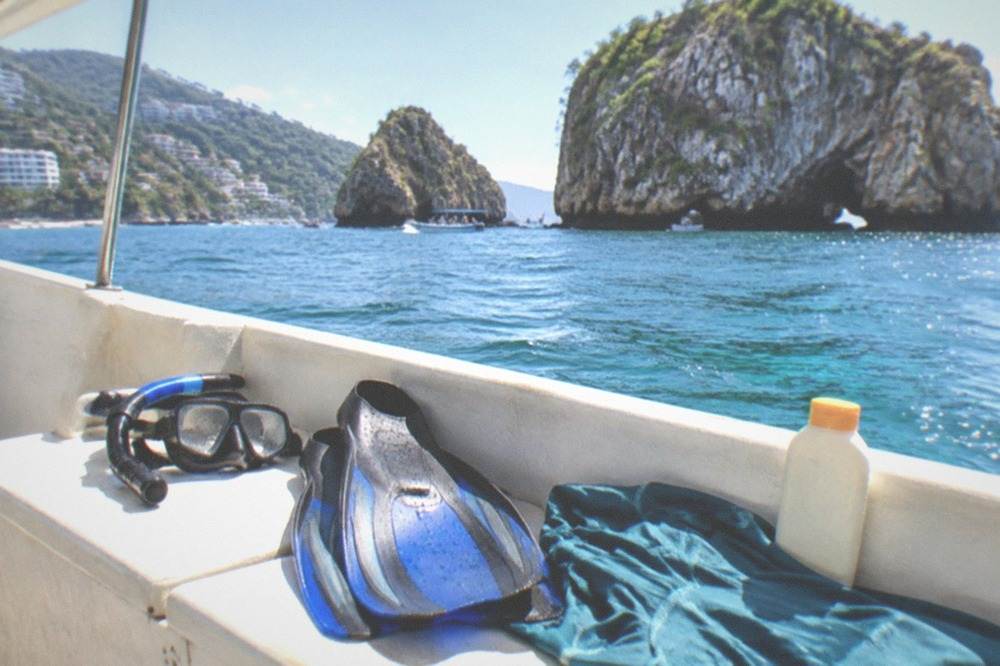
Cash deserves its own sentence. The park fee is cash-only, and tipping the crew is standard practice in Puerto Vallarta, typically 10 to 20 percent of the tour price for good service on a small boat. Cards are unreliable on pangas. A dry bag matters if you want photos from the boat; the spray on the crossing is enough to kill an unprotected phone, and every operator has a story about one.
Motion sickness is the last consideration. The crossing is short and usually calm, but the boats rock at the snorkel stops while idle, and that rolling is what turns stomachs. If you are prone to it, take something before departure, because the morning boats leave early and there is no pharmacy at the dock at 8 a.m. If weather looks doubtful, the guide on what happens if it rains on a tour covers cancellation and rebooking mechanics.
How Do You Get To Los Arcos And Plan The Day?
Most tours depart from Marina Vallarta, Mismaloya, or Boca de Tomatlán, with the Boca crossing the shortest at roughly twenty minutes. The operator's listing states your exact meeting point, and hotel pickup is offered on many products. Plan a half day: roughly 30 minutes out, two or three snorkel stops, and 30 minutes back, with the whole trip landing between three and four hours.
The departure point matters more than people expect, because it sets your morning schedule. Marina Vallarta departures mean a longer, more scenic run down the bay past the south shore developments; Boca de Tomatlán departures put you in the water fastest. If you are staying in the Romantic Zone or the south shore, a Boca departure can mean sleeping an hour later than a marina departure for the same reef. Check the meeting point on the listing before booking rather than assuming, and the guide on hotel pickup on Puerto Vallarta tours explains how transport is typically handled.
| Departure point | Where it sits | The run to Los Arcos | Best suited to |
|---|---|---|---|
| Boca de Tomatlán | South shore, end of the road | Roughly 20 minutes, fastest to the water | Shortest boat ride, earliest swim time |
| Mismaloya | South shore | Short hop south along the coast | Staying at south-shore hotels |
| Marina Vallarta | North end of the hotel zone | Longer run down the length of the bay | Travelers who want the scenic crossing |
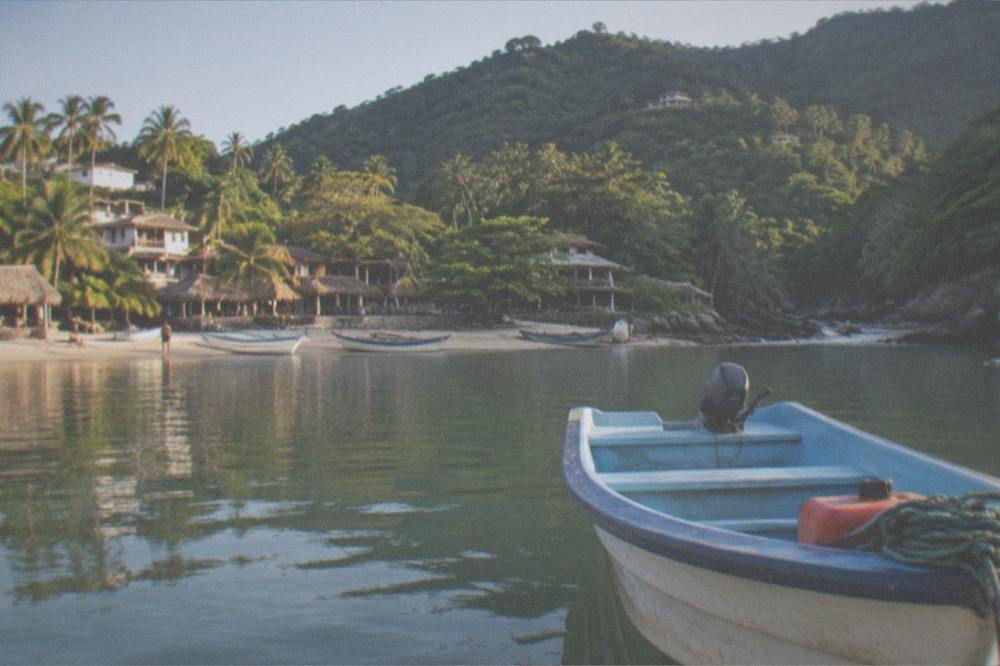
For travelers who prefer to arrange their own boat rather than join a scheduled tour, pangas can be chartered from Boca de Tomatlán independently, though only licensed operators may run the park's routes and collect the access fee properly. The licensed-tour route is simpler and, at $48 per person, rarely more expensive than a private charter split two ways. Solo travelers and couples weighing the private option should read booking a private tour with two people before paying the premium.
On safety, the standard framing applies to the whole region. The U.S. State Department rates Jalisco at Level 3 overall but explicitly places no restrictions on Puerto Vallarta or Riviera Nayarit, per the current Mexico travel advisory. Tour operators in the city run normally, and the practical risks on a Los Arcos trip are sun, seas, and jellyfish, not crime. This site, Tours in Puerto Vallarta, covers the safety picture in depth elsewhere; for the tour itself, normal precautions are enough.
If Los Arcos is your first booking of the trip, timing the reservation matters less than for the big all-day trips, since Los Arcos boats run daily and capacity is broad. Still, morning slots on the best-reviewed products fill first in high season, and the reasoning in how far in advance to book applies: book the morning slot early, keep the free cancellation, and adjust if your plans move.
Before you go, here are the three Los Arcos products one more time, side by side:
Common Questions About Los Arcos Snorkeling Tours
How much does a Los Arcos snorkeling tour cost?
Standard Los Arcos group tours run from $48 to $51 per person, with a luxury yacht version including open bar and lunch from $89. Add the 41 peso per-person marine park fee, usually collected in cash on the boat. A realistic all-in figure for a standard trip is $55 to $65 per person.
When is the best time to snorkel Los Arcos?
November through May, the dry season, delivers the best visibility, sometimes 15 meters or more, along with calmer seas. Within any day, morning departures are best because wind and swell build by afternoon. Summer trips are warmer but visibility can drop after rain.
Is Los Arcos good for beginner snorkelers?
Yes. The water is warm, the snorkel spots sit in relatively sheltered areas on the leeward side of the islands, and group tours include gear and a guide in the water. Small-group trips cap around 12 to 13 passengers, which keeps it manageable for first-timers.
What fish and animals will I see at Los Arcos?
Dense schools of sergeant majors, angelfish, parrotfish, puffers, and cornetfish are routine, with rays and occasionally turtles around the deeper rock walls. In whale season, roughly December through March, boats often pass humpbacks on the crossing. Sharks are not a feature of this site.
Do I need to pay the marine park fee separately?
Yes, a 41 peso per-person access fee applies for Los Arcos, cash-only, and it is normally collected by the operator on the boat. Some listings fold it into the ticket price and some collect it on board, so confirm on the listing before departure.
Can you visit Los Arcos without a tour?
Not practically. The islands sit offshore with no land access, boats must follow designated routes, and the access fee is collected through licensed operators. A few operators run small panga trips from Boca de Tomatlán, which is the closest thing to independent access, but the standard tour at from $48 is usually the simpler route.