Are There Great White Sharks Near Puerto Vallarta?
An honest, sourced look at whether great white sharks are a real concern for swimmers and snorkelers in Banderas Bay, and what marine life Los Arcos tours actually encounter.
Are There Great White Sharks Near Puerto Vallarta?
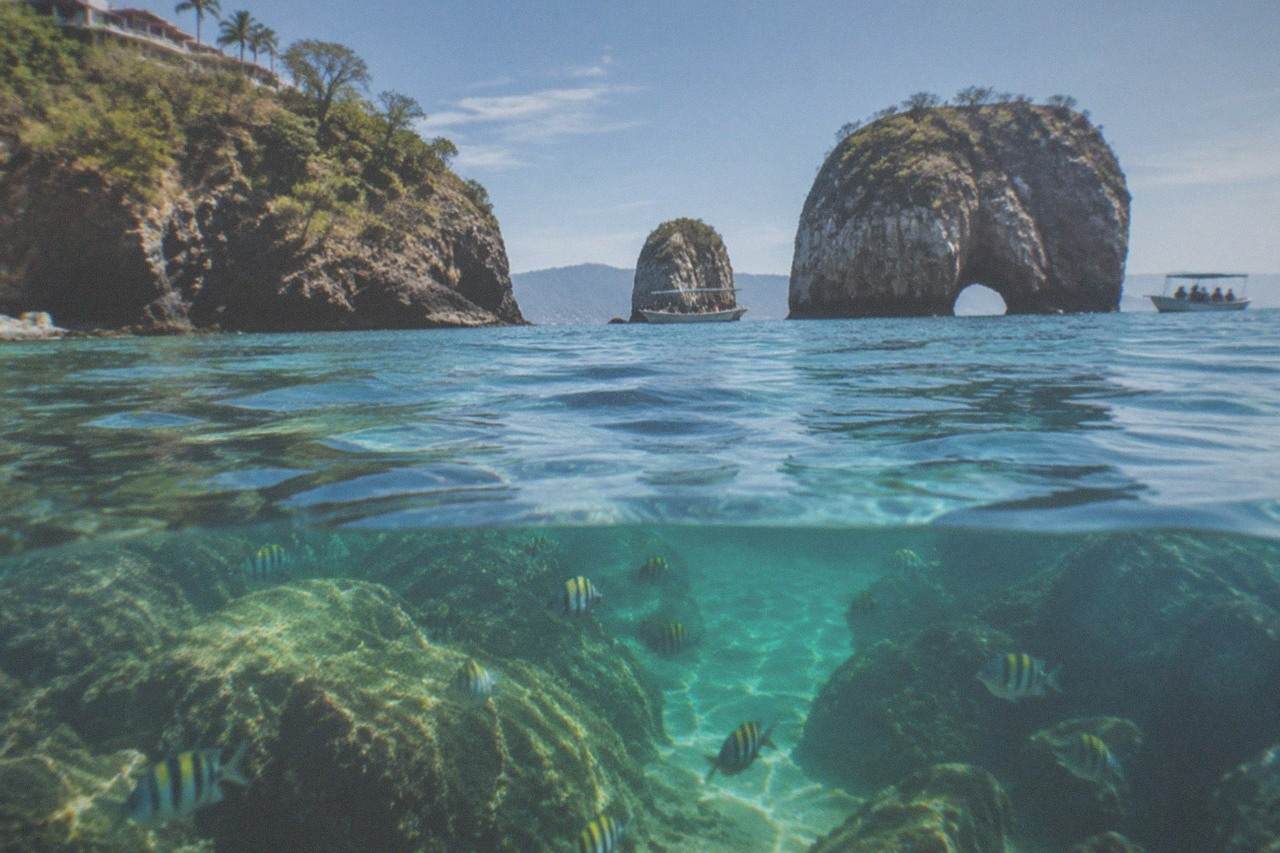
No verified record in this site's research points to great white sharks in Banderas Bay. The official park and federal sources behind this site, along with current tour listings and thousands of guest reviews, describe encounters with tropical reef fish, rays, sea turtles, and seasonal humpback whales, not great whites. The fear is understandable, but the documented picture of these waters does not support it.
That is the short version. Great whites are rare in Banderas Bay, where humpbacks, not sharks, are the famous winter visitors.: official federal notices, national park information, and the live listings and review records of the tour operators on its roster. None of that material records a great white shark presence in Banderas Bay, the broad, sheltered bay that Puerto Vallarta sits on. No tour listing mentions one. No review pool among the thousands of reviews attached to local snorkel and boat products describes one. The marine life that operators advertise, and that guests consistently report, is the standard tropical Pacific cast: reef fish around the volcanic formations of Los Arcos, rays on sandy bottoms, sea turtles in the warmer months, and humpback whales offshore between December and March.
Why does the question come up so often, then? Partly because shark content travels well. Documented great white hotspots in Mexican waters, such as the remote Guadalupe Island region off Baja California, get heavy media coverage, and that imagery gets mentally pasted onto any Mexican beach destination. Banderas Bay is a different body of water with a different ecology, and the tours sold here reflect that. A snorkel trip to Los Arcos is sold on water clarity, reef fish, and the odd cliff jump, not on any large predator, and the guest records bear that out.
It also helps to look at what people actually book. The most-reviewed snorkel products on this site's roster, with review pools in the hundreds and well past a thousand, describe reef snorkeling, hidden coves, and boat time. If large sharks were a recurring feature of these trips, it would show up somewhere in those records, in listing language, in review text, or in operator safety messaging. It does not. The strongest-reviewed Los Arcos product on the roster, at 4.9 from 477 reviews, markets cliff jumping and a hidden beach alongside its snorkel stops, which tells you the perceived risk profile of these waters is closer to "bring a waterproof camera" than "bring a shark cage."
If the shark question has been the one thing holding you back from booking a snorkel tour, these are the three Los Arcos options this site would put in front of you first:
What Marine Life Actually Swims In Banderas Bay?
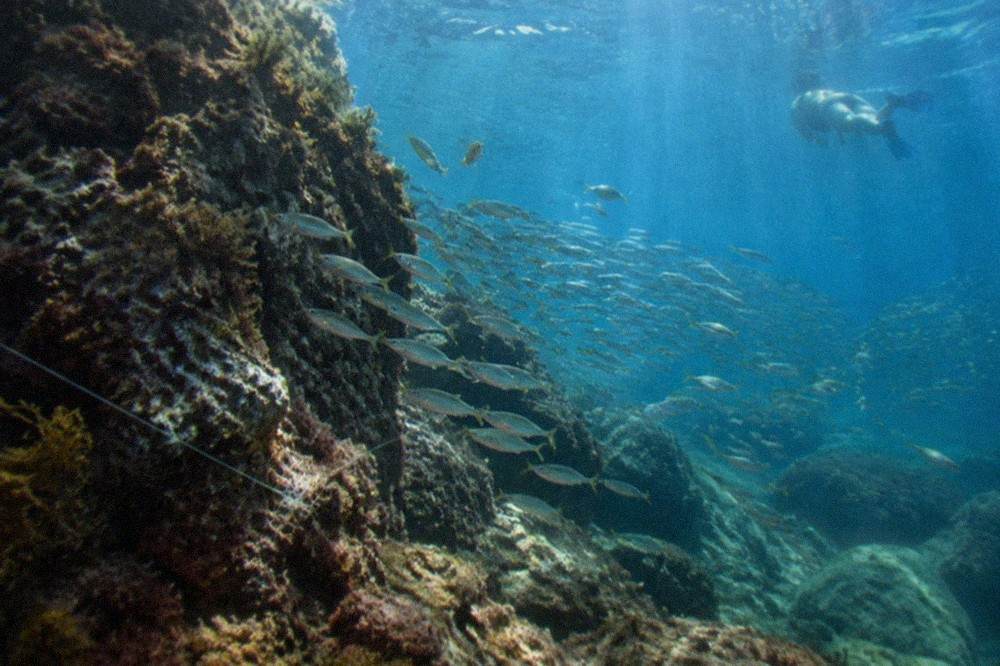
The documented marine life of Banderas Bay centers on tropical reef species at sites like Los Arcos, sea turtles and rays in warmer months, dolphins year-round, and humpback whales from early December through late March under federal regulation. Great whites do not appear anywhere in the verified record for these waters. Snorkelers here are far more likely to chase a school of sergeant majors than to see any shark at all.
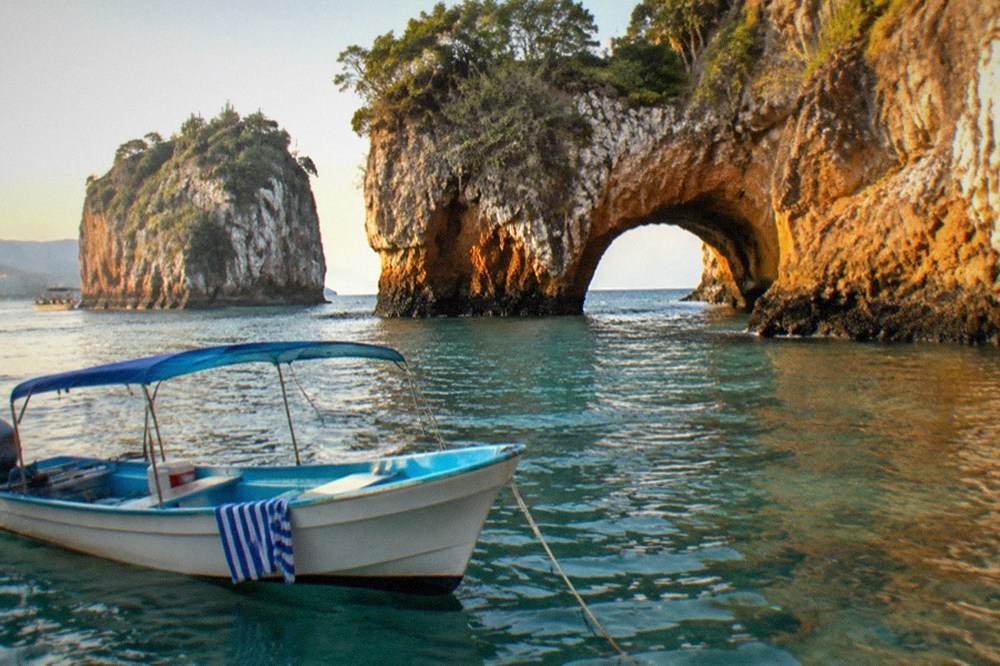
Los Arcos, the granite island cluster just south of the city, is the snorkeling centerpiece of the bay and a federally protected marine area. That protection status matters for the shark question in an indirect way: the rules that govern the site exist to shield a reef ecosystem, and the ecosystem they describe is a reef one. Federal protection covers the islands' waters, with restrictions on anchoring over reef, fishing, and touching or feeding marine life. The species that draw the protection and the visitors are reef species, and the tours built around them reflect that.
The seasonal overlay is the whales. Humpbacks arrive in the bay on a well-documented schedule, roughly December 8 to March 23, and their presence is regulated in detail, from minimum approach distances to time limits near any pod. Whale season is a headline attraction here, not a warning sign. If you are snorkeling between December and March, the large animal you might realistically spot from a boat is a humpback, at a respectful federal distance, and that is considered a highlight of a Banderas Bay day rather than a hazard.
For context, here is what the roster's three most relevant boat-and-snorkel products actually offer, with their verified review records. Note what is absent from every row: any shark-related selling point, warning, or incident language.
| Tour | Focus | Rating and reviews | Price from |
|---|---|---|---|
| Los Arcos 5-Islands Snorkeling, Cliff Jumping & Hidden Beach | Reef snorkeling, cliff jumping, hidden cove | 4.9 from 477 reviews | $51 |
| Boat & Snorkel Tour, 5 Islands of Los Arcos | Reef snorkeling across the five islands | 4.7 from 1,347 reviews | $48 |
| Luxury Yacht Tour, Snorkeling, Open Bar & Lunch | Snorkel stop plus yacht comfort, bar and lunch | 4.6 from 786 reviews | $89 |
The pattern across those thousands of combined reviews is reef snorkeling, boats, food, and crew quality. That is the demand side of the bay speaking, and it matches the supply side: operators here do not run shark tours, cage dives, or shark-watching products, because the waters do not offer one.
Is Snorkeling At Los Arcos Safe For Beginners?
Yes, and the review record supports it. Los Arcos snorkel tours run on sheltered, protected water with crew supervision, and the roster's Los Arcos products carry ratings from 4.6 to 4.9 across review pools of hundreds to over a thousand. The realistic risks for a beginner are ordinary water risks, swimming ability and sea conditions, not wildlife. Tour crews brief every group before anyone enters the water.
Start with the water itself. Los Arcos sits close to shore, a short boat ride from departure points like Boca de Tomatlán and Mismaloya, and the protected status of the marine area keeps boat traffic and fishing activity controlled around the snorkel sites. Calm mornings are the standard operating window, and operators prefer them for exactly this reason: beginners, buoyancy, and clear water all do better before the afternoon wind picks up. The site's protected rules also mean the reef you swim over is intact and the fish are abundant and accustomed to visitors, which is what makes Los Arcos such a reliable first-time snorkel.
Then look at the social proof, because it is unusually deep here. The largest Los Arcos snorkel product on the roster holds 4.7 from 1,347 reviews, a pool large enough that safety problems, if they were routine, would surface in it. The strongest-reviewed option sits at 4.9 from 477 reviews, from $51, and its selling points are reef time, cliff jumping, and a hidden beach, activities that only make commercial sense on water a tour company considers predictable. A third option, the luxury yacht format at 4.6 from 786 reviews from $89, packages a snorkel stop with open bar and lunch, aimed squarely at leisure travelers rather than adrenaline seekers. None of these products could sustain those ratings across those pools if guests were encountering large predators.
If you are weighing first-time snorkeling nerves generally, the Los Arcos snorkeling tour guide on this site breaks down what a stop actually looks like, from gear fitting to time in the water. And if your question is really "where in Mexico should I even snorkel," the best Mexican regions for snorkeling compared places Puerto Vallarta's reef sites in national context.
How Are Wildlife Encounters Regulated On Local Tours?
Wildlife tourism in Banderas Bay is federally regulated, not left to operator discretion. Whale watching operates under NOM-131-SEMARNAT-2010, with set approach distances, speed limits, and time caps near any pod, and the marine park areas enforce their own protection rules. A tour operator here works inside a documented regulatory framework, which is a stronger safety signal than any marketing claim.
The whale rules are the clearest example, and they are worth knowing even on a snorkeling trip, because they show how tightly the bay's wildlife interactions are governed. Authorized vessels must keep roughly 60 meters from whales in smaller boats and 80 meters in larger ones, with non-authorized vessels held back at 240 meters, approach from the rear or side at under 5 knots, and limit time near any group to about 30 minutes. The official federal notice behind these rules is published by the Mexican government, and you can read the regulatory detail on the official federal notice for whale watching activity.
The marine parks apply the same philosophy underwater. Los Arcos is protected under federal rules that prohibit touching, chasing, or feeding marine life, standing on coral, and removing anything from the water. The Marietas Islands, the bay's other flagship protected area farther north, runs an even stricter regime: a per-person conservation wristband fee, mandatory life jackets in the water, a ban on alcohol inside the park, and a hard daily cap of 116 visitors to Playa del Amor with no more than 15 on the beach at once. The national park's official page documents the Islas Marietas National Park access rules and fees.
What does this mean for the shark question? It means the waters around Puerto Vallarta's tour sites are among the most observed and most regulated in the region. Licensed crews, federal rules, park rangers, and thousands of daily visitors in high season create a level of continuous informal monitoring that a large, dangerous predator population could not hide from. The verified record of these waters is not silent because nobody is looking. It is silent on great whites because there is nothing to report. More of these guides are collected on Tours in Puerto Vallarta.
What Should You Do If You See A Shark While Snorkeling?
Stay calm, keep your eyes on the animal, and back away slowly toward your boat or group without splashing or thrashing. Do not chase, touch, or attempt to feed it, which is prohibited in the protected marine areas anyway. Alert your crew immediately, they manage wildlife encounters under federal rules and will call the snorkel. In the documented experience of these tours, this scenario is close to hypothetical.
The advice above is standard open-water practice, and it applies anywhere you snorkel, from the Caribbean to the Pacific. The honest local context is that the scenario is vanishingly unlikely in Banderas Bay. The reef sharks that occasionally appear in Mexican Pacific waters, when they appear at all, are typically small, timid species that avoid snorkelers, and nothing in this site's verified research or in the review record of the local tour products describes a shark encounter of any kind, let alone a threatening one. The marine life guests report photographing at Los Arcos is the opposite of menacing: angelfish, sergeant majors, parrotfish, the occasional ray resting on sand.
The practical snorkeling risks worth your attention are the ordinary ones. Know your own swimming ability and say so when the crew asks, wear the flotation help offered if you are not a confident swimmer, and skip the snorkel stop if the swell is up, crews make that call for you on rough days. Reef contact matters too: the protection rules against standing on coral exist for the reef's sake, but they also keep your hands and knees away from anything that stings. Sun protection and hydration round out the list. Every one of these is a more realistic concern than a shark, and every one is managed by the crew of any reputable Los Arcos tour.
When Is The Water Clearest For Snorkeling Around Puerto Vallarta?
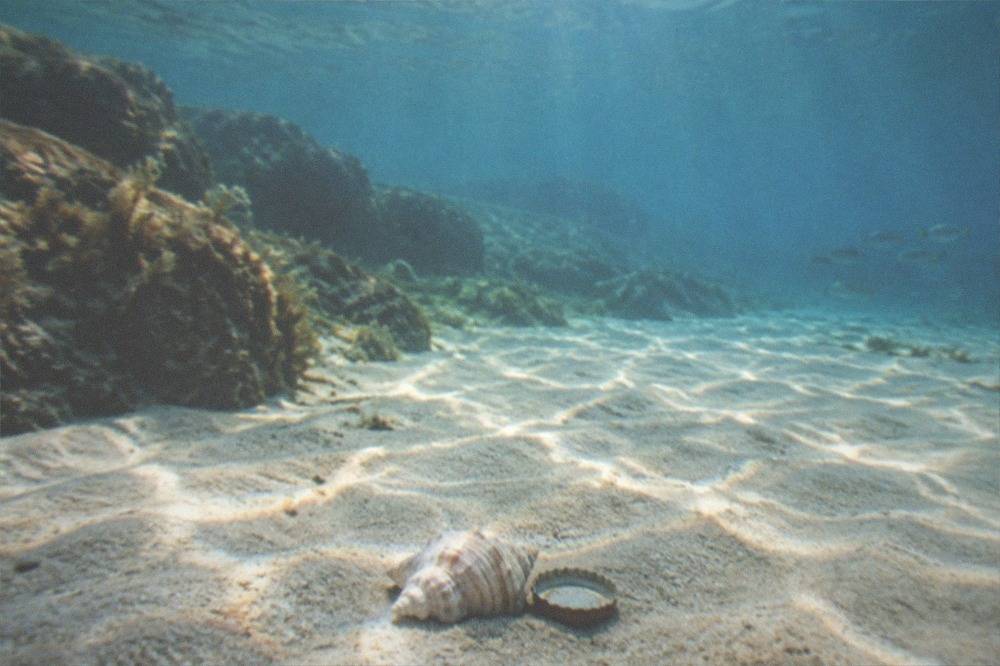
Visibility around Los Arcos is best from November through May, the dry season, when calm seas can open up 15 meters or more of underwater sightlines. June through October brings warmer water but visibility can drop after rain and runoff. Daily conditions matter more than the calendar, and morning departures consistently get the clearest water.
The seasonal pattern is well documented in climate analysis of the region, and the dry season's advantage is twofold: less rain means less runoff clouding the nearshore water, and calmer seas mean less swell stirring up the shallows around the islands. A seasonal breakdown of the region's weather and its effect on water conditions is available in this detailed climate analysis for Puerto Vallarta. If clear water is your priority, book a morning Los Arcos departure between November and May, and you are playing the odds at their best.
The rainy months are not a write-off, and this is where the shark worry inverts nicely. Warm-season snorkelers report the most comfortable water temperatures of the year, and the bay's marine life is fully present; you simply accept that some days the visibility will be shorter, especially after a heavy rain. Tours still run, crews still brief, and the reef is still there. The one planning note that genuinely matters in these months is hurricane season, which officially runs May 15 through November 30 for the Eastern Pacific, with the risk concentrated in August through October. That affects tour schedules and sea states, not shark behavior, and operators cancel or reschedule around weather rather than run rough trips.
| Period | Typical visibility | Water feel | Planning note |
|---|---|---|---|
| November - May (dry season) | Best, sometimes 15 m or more | Comfortable, cooler mornings | Book morning departures for calmest seas |
| June - July | Good, can dip after rain | Warmest water of the early summer | Watch daily conditions, not the calendar |
| August - October | Variable, runoff after storms | Warm, more humid season | Peak hurricane-window months, tours reschedule around weather |
None of this seasonal picture changes the answer to the question this page opened with. Clear water or green, December or August, the documented marine life of Banderas Bay is the same reef-and-whale cast, and great whites stay absent from the record. If you are ready to get in the water, these are the three tours this site would shortlist for Los Arcos and the bay:
Common Questions About Great White Sharks Near Puerto Vallarta
Are there great white sharks near Puerto Vallarta?
No verified record supports great white sharks in Banderas Bay. The official sources, tour listings, and thousands of guest reviews behind this site describe reef fish, rays, sea turtles, dolphins, and seasonal humpback whales, with no documented great white presence or shark-encounter reports in these waters.
What sharks swim in Banderas Bay?
The verified research for this site contains no documented shark population data for Banderas Bay. What the record does show is what tours and guests actually encounter: tropical reef species at Los Arcos, rays, and sea turtles, alongside federally regulated humpback whales from December to March. No local tour product sells or mentions shark encounters.
Is snorkeling at Los Arcos dangerous?
No, and the review record backs that up. Los Arcos snorkel products on this site's roster hold ratings from 4.6 to 4.9 across review pools of 477 to 1,347 guests, on sheltered, federally protected water with crew supervision. The realistic risks are ordinary ones, swimming ability and sea conditions, both managed by the tour crew.
Do Puerto Vallarta tours have shark safety procedures?
Tours here operate under federal wildlife regulations, including NOM-131-SEMARNAT-2010 for whale watching and marine park rules at Los Arcos that prohibit touching, chasing, or feeding marine life. Crews brief every group before water entry. No shark-specific protocol appears in any local tour listing, because the documented encounters do not call for one.
Should I worry about sharks when booking a snorkel tour in Puerto Vallarta?
No. Between the federal regulation of wildlife interactions, the protected status of the snorkel sites, and review pools totaling thousands of guests with no shark-encounter reports, the fear is not supported by the record. Book the tour, take the crew's briefing seriously, and enjoy the reef.