Puerto Vallarta Whale Watching Tours
Humpback whales travel thousands of kilometers from cold northern feeding grounds to Banderas Bay each winter, and Puerto Vallarta sits directly on their breeding route. The regulated season runs from about December 8 to March 23, and the bay's warm, sheltered water makes it one of the most reliable places in Mexico to watch mothers and calves at close range.
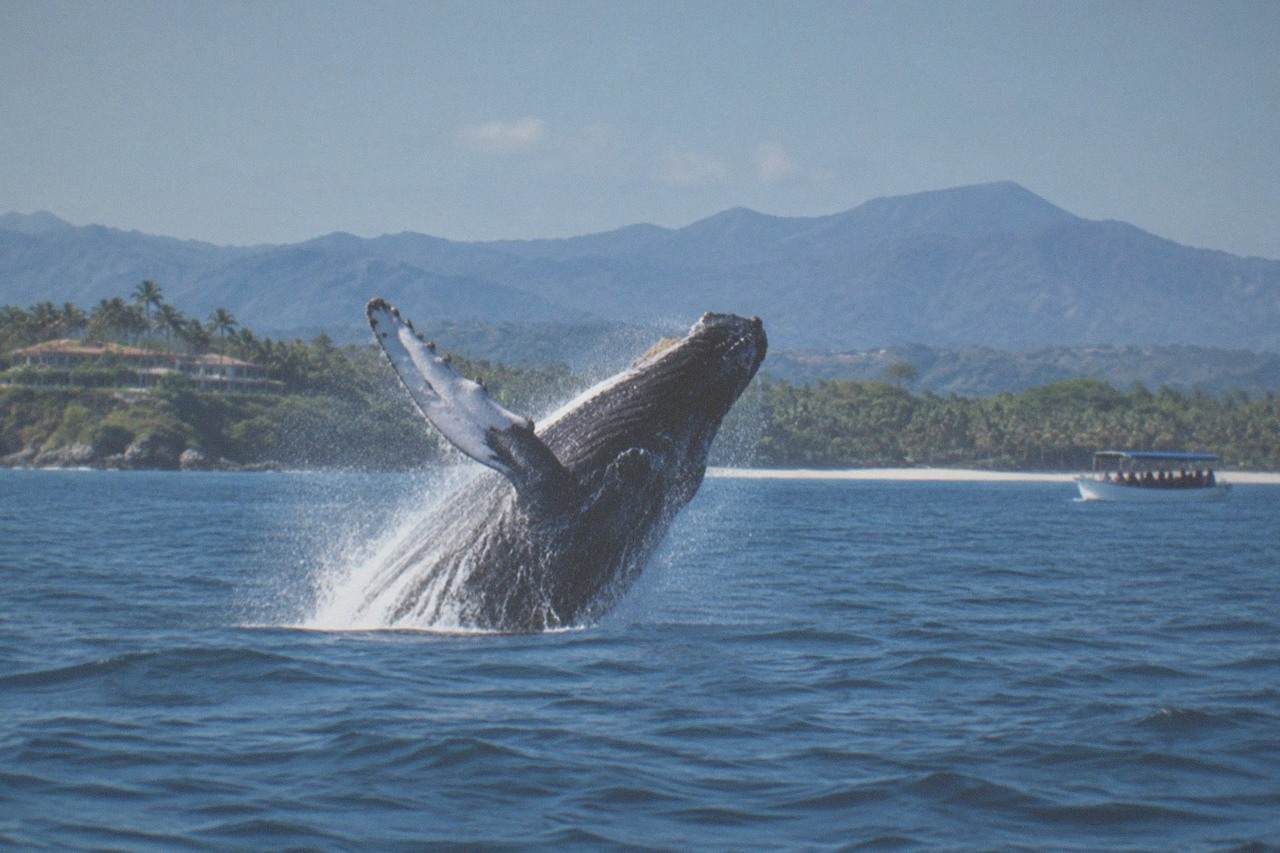
Short answer
Whale watching in Puerto Vallarta runs approximately December 8 to March 23, with peak sightings mid-January to mid-February. Tours last 3 to 4 hours, mostly departing Marina Vallarta, from $45 to $110 per person. Rules under NOM-131-SEMARNAT-2010 keep boats 60 to 80 meters from the whales.
Humpback whales leave cold northern feeding grounds and migrate to the warm, protected water of Banderas Bay to breed and give birth, and Puerto Vallarta sits right on their route. The regulated watching season runs approximately December 8 to March 23 each winter, and the most recent season was described by ECOBAC researchers as historic, with average sightings of about 5 whales per hour against a more typical 2, and estimates of up to 100 whales in the bay at once. This guide lays out the season window, what species you will actually see, the federal rules that govern every boat, and how the three main tour formats compare on price, duration and comfort.
What Is The Best Month For Whale Watching In Puerto Vallarta?
The best month for whale watching in Puerto Vallarta is mid-January to mid-February, when humpback mother-and-calf pairs are most active and sighting rates peak across the bay. The season opens around December 8 and closes around March 23 under federal rules, so January and February offer both the highest activity and the most stable weather, with dry-season conditions and calmer morning seas.
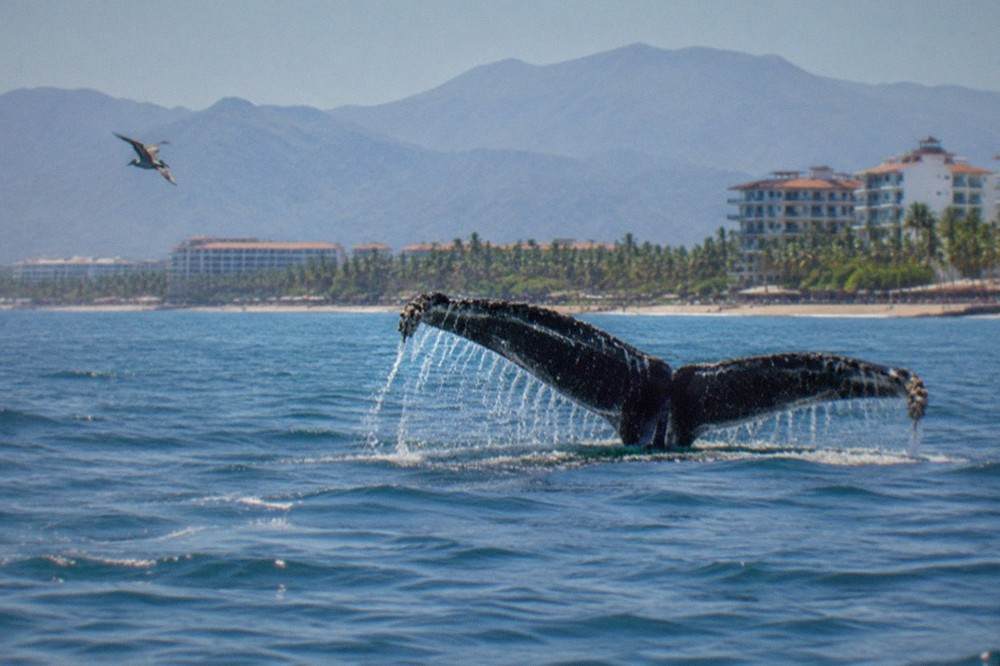
Early December brings the first arrivals, mostly adult males competing and singing, but the numbers build through the month. By mid-January the bay holds the full mix: males breaching and slapping pectoral fins, pregnant females, and the first newborn calves close to shore. February keeps that density while adding more calves, which is what most visitors want to see, since mothers with newborns stay near the surface and travel slowly.
March tapers off, but it tapers slowly. Sightings remain possible into mid-March before the regulated close, and late-season boats often get long, calm encounters with mothers teaching calves to swim and dive. The trade-off in March is weather rather than whales: the dry season is still in force, seas stay manageable, but you are betting on the tail end of the population rather than its peak.
| Period | What to expect | Verdict |
|---|---|---|
| December 8 - December 31 | First arrivals, adult males, building numbers | Good, improving |
| Early to late January | Peak density, first calves, strong breaching activity | Excellent |
| February | Peak continues, more mother-calf pairs near shore | Excellent, best overall |
| March 1 - 23 | Tapering numbers, calm late-season encounters | Good, book early in the month |
Weather shapes the experience almost as much as the calendar. The dry season runs roughly November to May, and the same stretch that brings clear skies brings calmer bays, which matters for spotting and for comfort on a small boat. The official Eastern Pacific hurricane window closes November 30, well before whale season begins, so storms are not a factor in season, but a winter north wind can still churn the bay for a day. If you are weighing the whole calendar, the seasonal analysis at bestdateweather.com's Puerto Vallarta climate breakdown covers the months outside the whale window. For a deeper look at how the bay stacks up nationally, our piece on the best place in Mexico to see whales compares Banderas Bay with the other major watching destinations.
What Whales Are Off The Coast Of Puerto Vallarta?
Humpback whales are the species you will see off Puerto Vallarta, and they are the reason the season exists. They dominate Banderas Bay from December through March. Other whales pass through, including the occasional gray, bryde's and orca sighting, but no tour is built around them, and every licensed whale watching product in the bay is effectively a humpback tour.
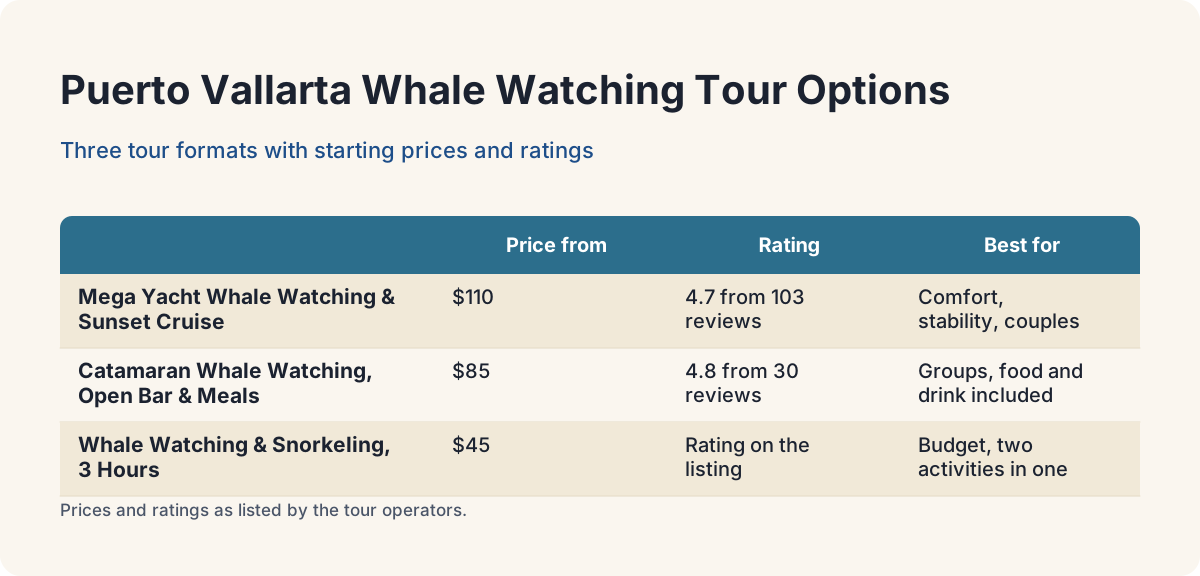
Humpbacks are the show for a reason. A full-grown adult reaches 15 to 16 meters and can breach almost entirely clear of the water, and the bay's depth profile, deep water close to a shallow shoreline, is exactly what mothers want for newborn calves. The behavior you watch is the breeding cycle itself: males competing with surface displays, females with calves resting in the shallows, and the long tail-fluke dives that mark a whale going deep.
The supporting cast matters too. Dolphins, including bottlenose and spinner pods, are common year-round in Banderas Bay and most whale tours encounter them, and many operators will pause the whale search to let a dolphin pod ride the bow wave. Sea turtles, manta rays and frigatebird schools round out a typical morning on the water. A few tours, including one of the three we compare below, combine whale watching with a snorkeling stop, which pairs the two experiences in a single departure.
Rarer visitors exist. Grays pass offshore during their own migration window, bryde's whales feed in the bay's deeper water in some years, and orca pods appear sporadically, usually hunting dolphins or fish. None of these are scheduled or promised by any operator, and a listing that implies otherwise is overselling. If your heart is set on a specific species beyond humpbacks, the honest answer is that Banderas Bay delivers humpbacks reliably and everything else as a bonus.
Is There Whale Watching In Puerto Vallarta, And How Do The Tours Work?
Yes, whale watching runs in Puerto Vallarta every winter from roughly December 8 to March 23, on licensed boats departing mainly from Marina Vallarta, with additional departures from Nuevo Vallarta, Punta de Mita, La Cruz and Los Muertos Pier. Tours typically last 3 to 4 hours, cost $45 to $110 per person depending on format, and are governed by federal rules on distance, speed and time near each whale.
The season is not a marketing invention, it is a federal designation. The activity window is set through SEMARNAT seasonal notices, and whale watching in the bay is regulated under NOM-131-SEMARNAT-2010, a national standard that dictates how close boats may approach, how fast they may travel near whales, and how long each encounter may last. Certified operators display an official whale-watching flag with an identification number, which is the simplest way to confirm a boat is authorized: trained crews fly it, unpermitted boats do not.
That regulation is the reason the experience is as good as it is. Because boats keep their distance and limit their time with each pod, the whales are not harassed, and the bay's population keeps returning year after year in the numbers described above. Enforcement is real, with Profepa patrols active in the bay during the season, and the restricted 1.5 km zone around Islas Marietas exists specifically to protect mothers and calves in the most sensitive area.
Practically, a whale tour works like this: you check in at the marina, get a safety briefing, and head out into the bay where the crew listens for whale activity and watches for surface breaks. Most boats find whales within the first hour in peak weeks. The crew holds each encounter to the regulated limit, then moves on to find another group. Morning departures are standard because seas are calmer, and the question of whether timing within the day matters is covered in detail in our article on what time of day whales are most likely to be seen.
Mega Yacht, Catamaran Or 3-Hour Tour: Which Whale Watching Option Fits You?
The three formats split cleanly: the mega yacht tour, from $110, is the comfort play with a sunset cruise attached; the catamaran tour, from $85, is a mid-priced all-inclusive with open bar and meals; and the 3-hour whale watching and snorkeling tour, from $45, is the budget pick that trades amenities for a lower price. Your choice depends on budget, seasickness tolerance and whether you want a second activity in the same outing.
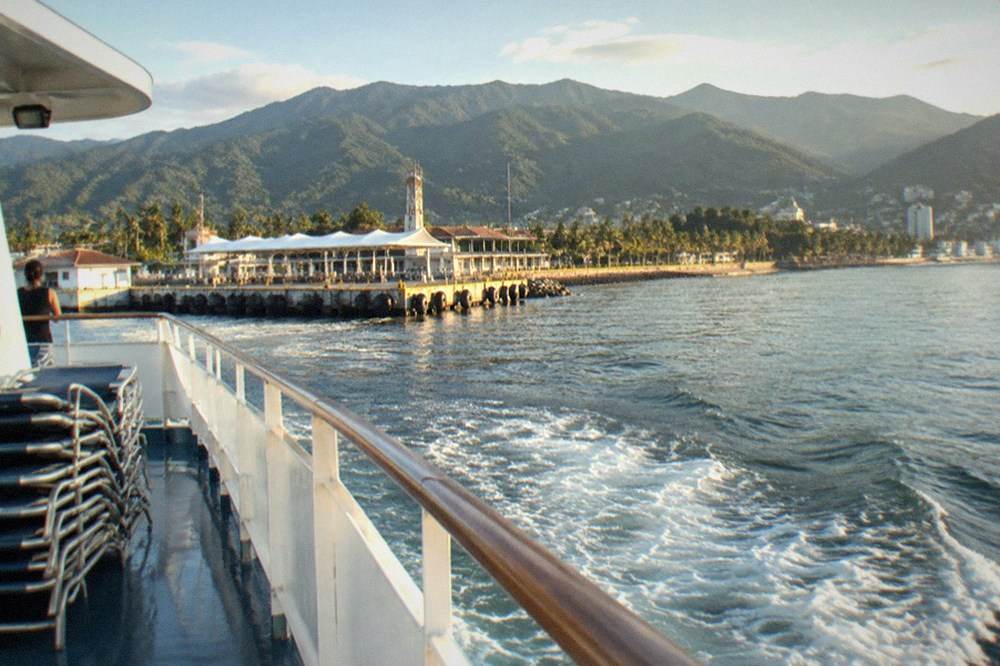
The mega yacht format is the most comfortable way to watch whales in the bay. The Mega Yacht Whale Watching & Sunset Cruise, run by Chica Locca Tours, holds a 4.7 rating from 103 reviews and starts from $110, and its selling point is stability: a bigger hull means less roll in a chop, more deck levels for viewing, and a sunset cruise on the back end that turns a wildlife outing into a full afternoon. For anyone worried about seasickness, or anyone combining whale watching with a romantic evening, it is the strongest fit on the roster. Everything else covered here is indexed on Tours in Puerto Vallarta.
The catamaran format splits the difference on price. The Catamaran Whale Watching, Open Bar & Meals tour, run by Mike's Fishing & Tours, starts from $85 and carries a 4.8 rating, though from a small pool of 30 reviews, so treat the score as promising rather than proven. What you get for the money is a genuine all-inclusive: open bar, meals, and a stable twin-hull platform that handles a bay chop better than a single-hull boat of the same size. It is the value pick for groups and families who want food and drink included without paying yacht prices.
The 3-hour format is the budget and time-efficient option. The Whale Watching & Snorkeling 3 Hours tour, run by Travel Vallarta, starts from $45, the lowest entry price among the whale products, and it is the only one that adds a snorkeling stop, so you get two activities in one departure. Its rating and review count are on the listing rather than independently confirmed, so book it for the price and the format, not for social proof. If you want the full picture of what else is in the water, our Puerto Vallarta snorkeling tours guide covers the bay's best sites and operators.
| Tour | Operator | Format | Price from | Rating | Best for |
|---|---|---|---|---|---|
| Mega Yacht Whale Watching & Sunset Cruise | Chica Locca Tours | Mega yacht, sunset cruise | $110 | 4.7 from 103 reviews | Comfort, stability, couples |
| Catamaran Whale Watching, Open Bar & Meals | Mike's Fishing & Tours | Catamaran, all-inclusive | $85 | 4.8 from 30 reviews | Groups, food and drink included |
| Whale Watching & Snorkeling, 3 Hours | Travel Vallarta | Small boat, whale watch plus snorkel | $45 | Rating on the listing | Budget, two activities in one |
How Close Do Boats Get To The Whales In Puerto Vallarta?
Authorized vessels must stay at least 60 meters from whales, rising to 80 meters for medium and larger boats, while unauthorized vessels must hold 240 meters. Boats approach from the rear or side at under 5 knots, and each group of whales gets a maximum of about 30 minutes of observation time before boats must move on. These distances come from NOM-131-SEMARNAT-2010, the federal standard enforced in Banderas Bay.
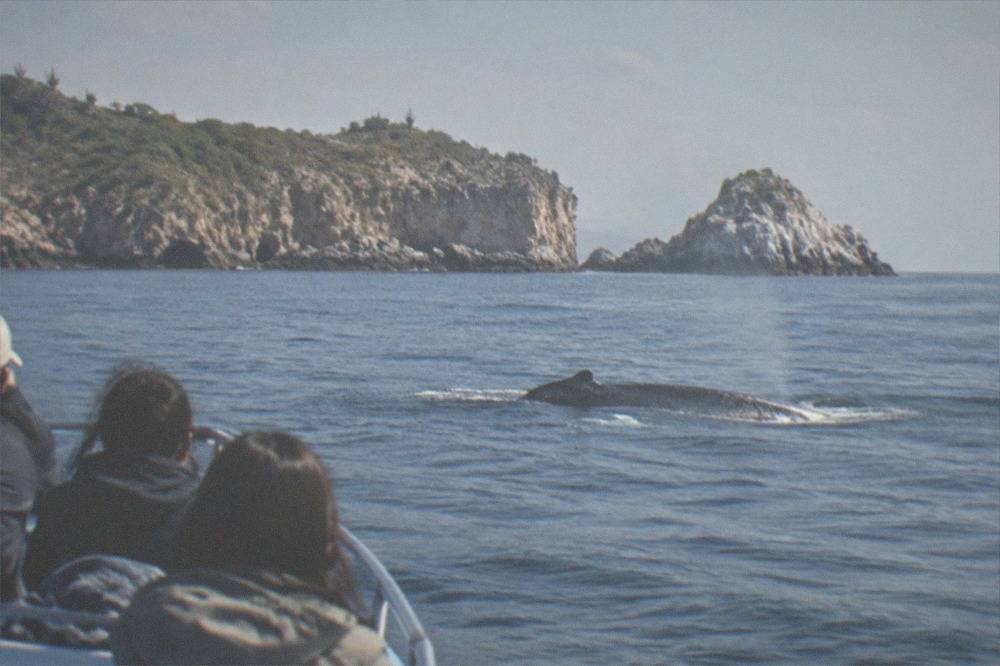
Sixty meters sounds far until you see it. A humpback is 15 meters long, so at the legal distance you are watching an animal the length of a school bus from about four bus-lengths away, and because humpbacks rarely stay still, they frequently close that gap themselves, swimming under or past a stationary boat. The rule restricts the boat, not the whale, which is why compliant tours still produce close-up moments without ever chasing an animal.
The full rule set is worth knowing before you board, because it explains the rhythm of a tour. Boats must approach from behind or the side, never head-on, and slow to under about 5 knots on approach. Only a limited number of authorized vessels may watch a single pod at once, and the 30-minute cap per group keeps the whales from being surrounded all day. Swimming, snorkeling or diving with whales is prohibited outright, as is any interference with mothers and calves, and the restricted 1.5 km zone around Islas Marietas is off-limits for watching during mother-calf periods. The official notice carrying these rules is published by the Federal Diario Oficial, the gazette that carries SEMARNAT whale watching notices.
| Rule | Requirement |
|---|---|
| Minimum distance, small boats under 10 m | 60 meters |
| Minimum distance, medium and larger boats | 80 meters |
| Distance for non-authorized vessels | 240 meters |
| Approach speed | Under 5 knots, slower on final approach |
| Approach angle | Rear or side only, never head-on |
| Time limit per whale or pod | About 30 minutes maximum |
| Swimming with whales | Prohibited |
| Restricted zone | 1.5 km radius around Islas Marietas |
For you as a passenger, the rules translate into two practical points. First, an operator that promises to get closer than the rules allow, or that lets passengers reach toward the animals, is one to walk away from, because those behaviors are exactly what the regulations exist to stop. Second, the certified-flag system means crew training is verifiable: look for the official whale-watching flag with its identification number, which signals a crew trained under the standard rather than a fishing boat improvising a tour.
Where Do Whale Watching Tours Depart From In Puerto Vallarta?
Most whale watching tours depart from Marina Vallarta, the primary hub on the north side of the bay, with additional departures from Nuevo Vallarta, Punta de Mita, La Cruz de Huanacaxtle and Los Muertos Pier in the Romantic Zone. Morning departures are standard because the seas are calmer, and your departure point matters mainly for transit time, not sighting odds, since whales move around the whole bay.
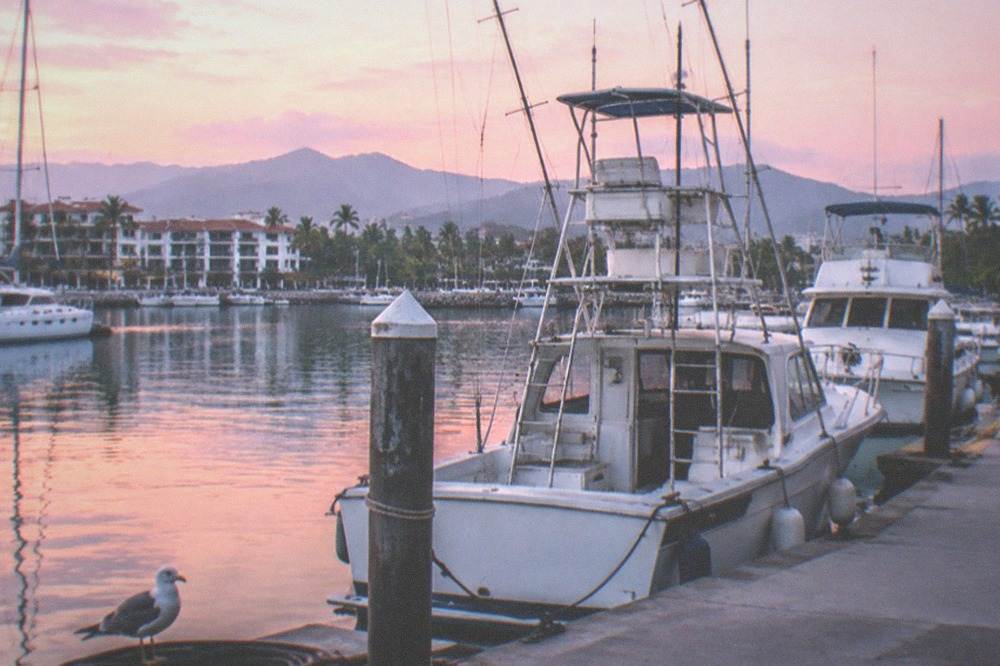
Marina Vallarta's dominance is logistical. It has the largest concentration of licensed operators, the deepest-water access, and the shortest run out to the middle of the bay where much of the activity happens. If you are staying in the hotel zone or the north shore, a Marina Vallarta departure usually means the least total travel time, and many operators include hotel pickup, a question we cover separately in our guide to Puerto Vallarta boat tours and its transport notes.
Los Muertos Pier serves the Romantic Zone and old town, and it is the right choice if you are staying south, since driving north to Marina Vallarta can eat 30 minutes in season traffic. Punta de Mita and La Cruz serve the Nayarit side of the bay, and Nuevo Vallarta sits between the two. None of these choices changes your whale odds meaningfully: humpbacks use the whole bay, and crews radio each other, so a boat from any pier will head toward the day's activity.
| Departure point | Best if you are staying in | Typical transit to whales |
|---|---|---|
| Marina Vallarta | Hotel zone, Marina area, north shore | Shortest, primary hub |
| Nuevo Vallarta | Nuevo Vallarta, Flamingos, Bucerías | Short |
| Los Muertos Pier | Romantic Zone, old town, south side | Moderate |
| Punta de Mita | Punta de Mita, Sayulita area | Short on the bay's north point |
| La Cruz de Huanacaxtle | La Cruz, Bucerías, north shore | Short |
One planning note: departure times cluster in the morning for a reason. Banderas Bay is calmest before the afternoon wind builds, and a calm surface makes blows, flukes and breaches visible from much farther away. Afternoon departures exist, and the mega yacht sunset format is built around one, but if whale sightings are your priority over the sunset, take the morning slot.
What Happens If You Don't See A Whale?
Some Banderas Bay operators advertise a free return trip, sometimes called a whale guarantee, if no whale is sighted, so check the live listing terms before you book, though the exact terms vary by operator and are stated on each live listing. In peak weeks of January and February, sighting rates run high enough that guarantees are rarely invoked, but no operator can promise whales on a specific day, and weather cancellations are refunded or rescheduled rather than counted against a guarantee.
The guarantee is worth reading closely before you book. Some operators run it as an unlimited free re-ride until you see a whale, others as a single return trip, and the conditions usually require that you complete the original tour rather than leave early. In a season where researchers recorded roughly 5 whales per hour on monitoring runs, the odds are strongly in your favor, but the bay is a wild system, and a slow morning happens even in February.
Weather is the other variable, and it is handled differently. A tour cancelled by the operator for rough seas is a refund or reschedule, not a guarantee claim, and the same goes for the rare day when the port authority closes the marina. If your trip dates are flexible, our best time to visit Puerto Vallarta for tours guide puts the whale season in the context of the rest of the year's weather, and our article on what happens if it rains on a Puerto Vallarta tour explains operator cancellation policies in detail.
The practical advice is simple: book with a licensed operator that states its guarantee terms clearly on the live listing, take the morning departure, and go in January or February if your dates allow. Do those three things and the question of whether you will see a whale in Banderas Bay stops being a real risk and becomes a matter of how many.
Common Questions About Whale Watching In Puerto Vallarta
What is the best month for whale watching in Puerto Vallarta?
Mid-January to mid-February is the peak, with the highest concentration of whales and the most mother-and-calf pairs. The season runs approximately December 8 to March 23, so any date in that window can produce sightings, but January and February combine peak activity with calm dry-season seas.
What whales are off the coast of Puerto Vallarta?
Humpback whales are the species every tour in Banderas Bay is built around, present from December through March. Gray whales, bryde's whales and orcas appear occasionally, but no tour schedules around them, and dolphins are a common bonus sighting on nearly every departure.
Is there whale watching in Puerto Vallarta?
Yes. Whale watching runs every winter on licensed boats, mostly from Marina Vallarta, from about December 8 to March 23 under federal regulation. Tours last 3 to 4 hours and cost from $45 to $110 per person depending on the format.
How close do the boats get to the whales?
Authorized vessels hold at least 60 meters from whales, 80 meters for larger boats, and approach from the rear or side at under 5 knots. Each pod gets about 30 minutes of observation time. Whales often swim closer on their own, but boats may not chase or close the distance themselves.
What happens if no whales are sighted?
Most established operators offer a free return trip if no whale is seen, with terms stated on the live listing. Weather cancellations by the operator are refunded or rescheduled separately. In peak weeks, sighting rates are high enough that guarantees are rarely needed.