Is Riviera Maya Or Puerto Vallarta Better?
A coast-to-coast comparison of Riviera Maya and Puerto Vallarta: water, snorkeling, whales, jungle, food, weather and crowds, with a clear verdict for each type of traveler.
Is Riviera Maya Or Puerto Vallarta Better?
Neither coast wins outright because they offer different experiences: Riviera Maya is better for postcard Caribbean water, swimmable beaches and easy access to big Mayan sites like Tulum and Chichen Itza, while Puerto Vallarta is better for dramatic scenery, humpback whales from December through March, jungle ziplines in the Sierra Madre and a genuinely lived-in town.
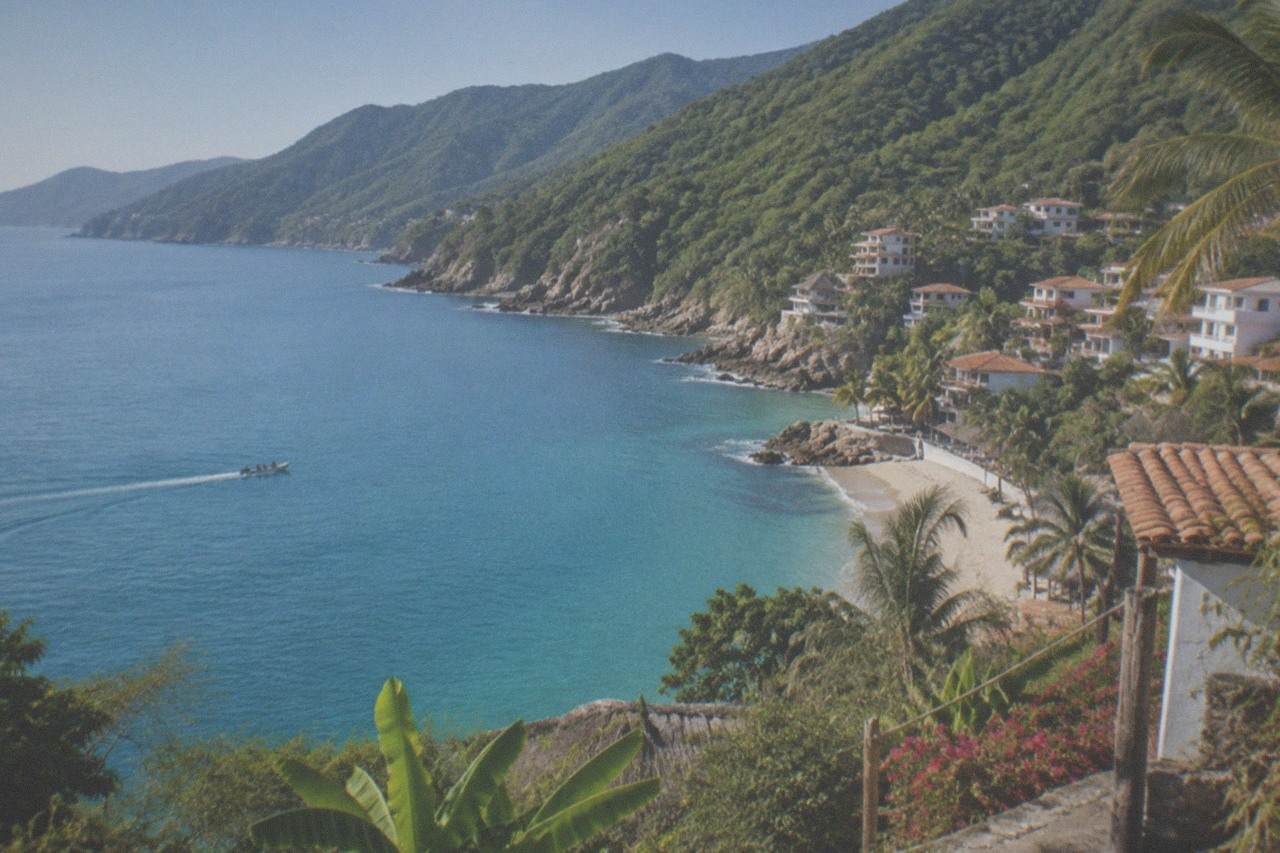
The honest starting point is geography. Riviera Maya runs along the Yucatan Peninsula's Caribbean coast, where the water is calm, shallow and that famous turquoise, and the land is flat limestone dotted with cenotes. Puerto Vallarta wraps around the south curve of Banderas Bay on the Pacific side, where the Sierra Madre mountains drop straight into the sea and the water is a deeper blue that changes with the season. Neither setting is a lesser version of the other. They are different products, and the mistake travelers make is comparing them as if both were generic "Mexico beach" trips.
The second difference is the town itself. Puerto Vallarta existed as a port and farming town long before tourism arrived, so the Zona Romantica and the malecon are real neighborhoods with locals, markets and family-run taco stands mixed in with the bars. Much of the Riviera Maya corridor, by contrast, was built as a resort strip: Playa del Carmen and Tulum have grown explosively, and a lot of the experience happens inside planned developments. Travelers who want a town to wander in usually click with Vallarta faster. Travelers who want to plant themselves at an all-inclusive and barely leave the property often prefer the Maya side.
There is also the question of what you can do in a day. From Vallarta you can boat to Los Arcos or the Marietas Islands, ride ATVs up the Cuale River into the Sierra Madre, zipline through canopy, take a water taxi to the car-free village of Yelapa or day trip north to the surf town of Sayulita. From a Riviera Maya base you can swim in cenotes, visit Tulum's cliff-top ruins, snorkel the Mesoamerican Reef or drive inland to Chichen Itza. Both lists are strong. The Vallarta list leans toward ocean, mountain and adventure; the Maya list leans toward water, ruins and swimming holes.
| What you want most | Better fit | Why |
|---|---|---|
| Flat, swimmable, postcard water | Riviera Maya | Caribbean side is calmer and clearer for beach swimming |
| Whales, mountains, dramatic bay scenery | Puerto Vallarta | Humpbacks in Banderas Bay December to March; Sierra Madre meets the sea |
| Mayan ruins and cenotes | Riviera Maya | Tulum, Coba and Chichen Itza day trips, plus limestone cenotes |
| A real town with nightlife and street food | Puerto Vallarta | Zona Romantica and the malecon are a lived-in city core |
| Jungle ziplines and ATV terrain | Puerto Vallarta | Sierra Madre foothills, river crossings and canyon bridges |
| All-inclusive resort convenience | Riviera Maya | The corridor was purpose-built for resort stays |
If you are weighing Vallarta against Cabo rather than the Caribbean, the comparison runs on different axes entirely; the Cabo versus Puerto Vallarta question covers that Pacific pairing separately.
Which Coast Has Better Water And Snorkeling?
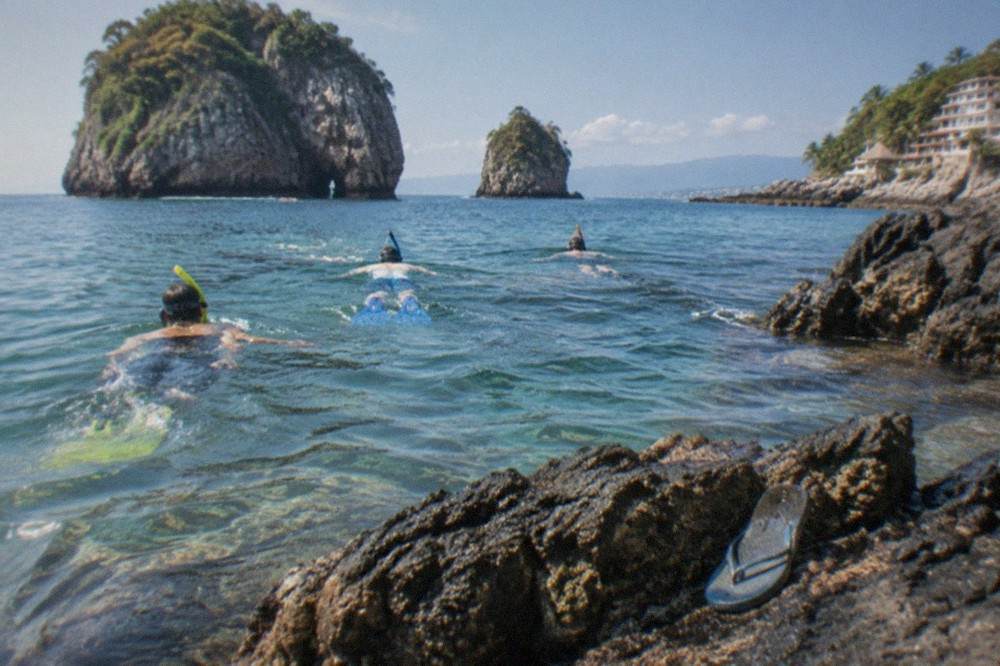
It splits by activity: Riviera Maya has the better water for swimming, with a calmer, clearer Caribbean close to shore, while Puerto Vallarta has the better snorkeling at protected sites like Los Arcos and the Marietas Islands, where volcanic rock, caves and dense fish life meet dry-season visibility from November to May that can reach 15 meters. Float in blue water on the Caribbean; swim over something in Vallarta.
The Pacific gets an unfair reputation. People see one photo of the Caribbean's turquoise and conclude the Pacific is murky, but the two coasts are simply different colors for physical reasons: the Caribbean shelf is shallow and sand-reflective, while Banderas Bay is deep ocean water that reads blue or teal depending on the light and the season. What actually matters for a snorkeler is visibility and what is under you, and on both counts Vallarta performs well in the right months. Dry season, November through May, brings calmer seas and the best clarity; June through October the water warms up but clarity can drop after rain and runoff.
Los Arcos National Marine Park is the standard snorkeling stop, a cluster of granite islands just south of town with protected status, no fishing and no anchoring on the reef. Operators run small-group trips there from Marina Vallarta, Mismaloya and Boca de Tomatlan, and a per-person park fee of 41 Mexican pesos applies, usually collected by the operator in cash. The Los Arcos 5-Islands Snorkeling, Cliff Jumping & Hidden Beach tour, from $51 and rated 4.9 across 477 reviews, is the roster's strongest example of the format, combining reef snorkeling with cliff jumps and a quieter beach stop.
The Marietas Islands sit at the mouth of the bay and add a national-park layer to the snorkeling. CONANP manages the park, entry is paid through the official "Brazalete de la Conservacion" wristband at $125 MXN per person per day, life jackets are mandatory in the water and alcohol is prohibited inside the park. Playa del Amor, the famous hidden beach inside a collapsed crater, is capped at 116 visitors per day with a maximum of 15 people on the beach at one time, which is why the licensed all-inclusive tours there book out in peak weeks. The Marietas Islands National Park Full-Day All-Inclusive tour, from $120 with a 4.8 rating across 771 reviews, is the flagship version of that day.
The Riviera Maya counter is the Mesoamerican Reef, the second-largest barrier reef system in the world, reachable from Puerto Morelos, Akumal and Cozumel. Reef snorkeling there is genuinely good, and the water is warmer and calmer year round. What the Maya side cannot offer is the structure Vallarta has: cliff jumping, volcanic tunnels, a hidden crater beach and a bay you can see mountains across while you swim. For a fuller picture of the Pacific side's underwater options, the Puerto Vallarta snorkeling tours guide breaks down the sites by season.
What About Whale Watching And Marine Life?
Puerto Vallarta wins this one outright, and it is not close. Banderas Bay is a calving ground for humpback whales, with a regulated season running approximately December 8 to March 23, and the bay regularly holds dozens of whales at once in peak years. The Riviera Maya's whale shark swims near Isla Mujeres and Cancun are impressive, but they are a different summer experience with filter feeders.
The whale season in Banderas Bay is set by federal regulation under NOM-131-SEMARNAT-2010, with a restricted zone around the Islas Marietas and minimum approach distances of 60 meters for small boats, 80 meters for larger vessels and 240 meters for any boat not authorized for whale watching. Licensed crews run observation flags with identification numbers, approach from the rear or side at under 5 knots, and cap their time near any pod at 30 minutes. That framework is why the tours here feel like watching rather than chasing.
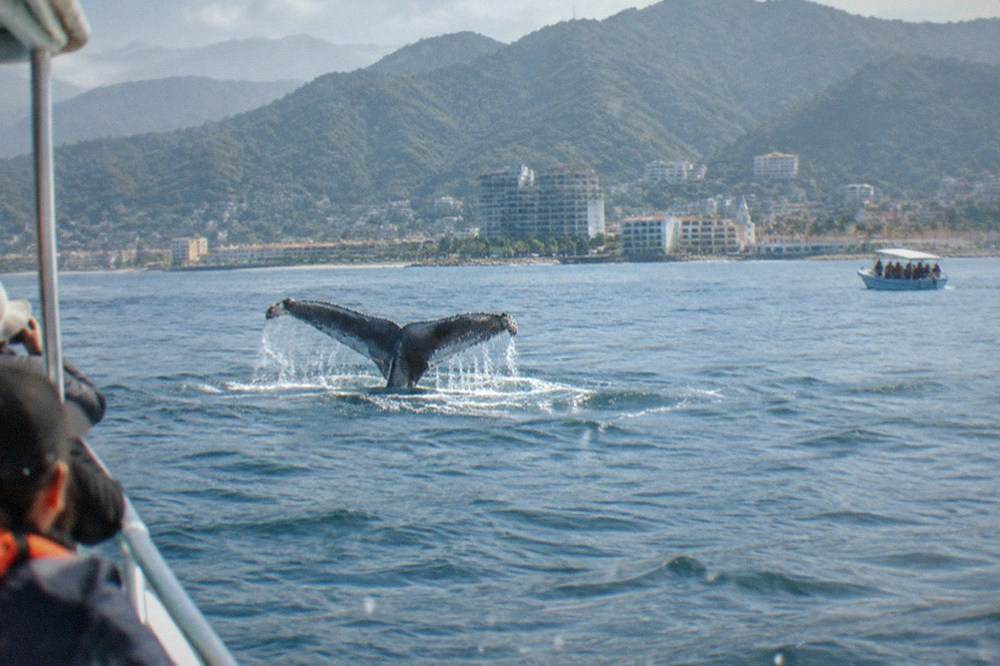
Peak activity runs roughly mid-January to mid-February, when mothers and calves move through the bay alongside competing males. The Mega Yacht Whale Watching & Sunset Cruise, from $110 with a 4.7 rating across 103 reviews, pairs the whale run with a sunset return leg, which is a format the Caribbean coast simply has no answer to. There is also a budget tier: a 3-hour whale watching and snorkeling combo runs from $45, though its rating is not yet settled on the listing, so treat the social proof cautiously and read the live listing before booking.
The Maya side's marquee marine experience is whale sharks, which gather near Isla Mujeres and Contoy in the summer months. Swimming next to a whale shark in clear Caribbean water is a legitimately memorable experience, and it fills up fast because permits are limited. But it is seasonal in the opposite direction from Vallarta's whales, it is a swim alongside a gentle giant rather than a breaching spectacle, and it involves a full-day logistics chain from most Riviera Maya bases. For most travelers the deciding factor is simpler: if your trip falls between December and March, the Pacific delivers a wildlife show the Caribbean cannot match that time of year. The Puerto Vallarta whale watching guide covers the season, the rules and the tour formats in detail.
How Do The Jungles, Ziplines And Inland Day Trips Compare?
Puerto Vallarta wins on jungles and ziplines because the Sierra Madre foothills rise minutes from town, with ATV and zipline tours running up the Cuale River past the Jorullo Bridge, a vehicular suspension bridge roughly 150 meters above the river. The Riviera Maya's flat interior leans toward cenote swims and guided archaeological sites instead, so pick Vallarta for mud, speed and canyon crossings.
The geography explains everything. Behind Vallarta the land climbs almost immediately, so half-day ATV and RZR tours run from foothill bases along the Cuale into jungle trails, river crossings and viewpoints like El Coyote and Cerro de Vallejo, with the Jorullo Bridge as the signature crossing. Combinations are common: zipline plus ATV, rappel plus mule ride, tequila tasting bolted onto the end. The roster's strongest performer in this family is the Private ATV Tour, Waterfall & Tequila Tasting, from $94 with a 4.9 rating across 977 reviews, which adds a waterfall swim and a tasting stop to the ride. A standard ATV/RZR Jorullo Bridge Experience runs from $169 and holds 4.7 across 555 reviews. Other pages covering the same trip are gathered on Tours in Puerto Vallarta.
Zipline canopy tours work on both coasts, but the Vallarta versions hang over river canyons rather than flat forest. The Canopy Tour, Zipline & Speedboat Ride from Los Veranos, from $120 with 4.7 across 56 reviews, is a good example of the hybrid format, pairing the canopy with a boat leg. Several newer jungle listings on the roster are too fresh to carry settled ratings, so judge those by itinerary and price rather than social proof.
The Riviera Maya compensates with what Vallarta flatly does not have: cenotes and ruins. A cenote day, swimming in a limestone sinkhole lit from an opening in the ceiling, is one of Mexico's best inland experiences, and there are dozens within an hour or two of Playa del Carmen. The archaeological tier is unmatched anywhere on the Pacific coast: Tulum's ruins sit on a cliff over the sea, Coba lets you climb a pyramid, and Chichen Itza is a full-day pilgrimage to one of the new seven wonders. Vallarta has no equivalent. If your trip is as much about Mayan history as it is about the beach, this single fact can settle the whole comparison, and the things to do in Puerto Vallarta guide shows what the Pacific side offers instead.
Which Is Better For Food, Towns And Nightlife?
Puerto Vallarta wins this contest: its Zona Romantica and downtown pack street stands, taquerias and family kitchens into walkable blocks, and the Downtown Vallarta Food Tour, from $59 with a 5.0 rating across 3,943 reviews, backs up that reputation with numbers. The Riviera Maya eats well too, especially in Tulum and Playa del Carmen, but its scene is younger, more international and spread along a strip.
Vallarta's food identity is built on a working city. Fish tacos, birria, aguachile and coastal seafood come out of kitchens that predate the tourism boom, and the walking food tours thread the Zona Romantica's back streets with multiple stops, usually five to nine tastings paired with tequila, mezcal or agave cocktails. The downtown food tour's numbers are worth pausing on: 5.0 across 3,943 reviews is an unusually deep pool for a tour product anywhere in Mexico, and it reflects how repeatable the experience is.
Nightlife follows the same pattern. Vallarta's scene runs from the malecon's open-air bars to the Zona Romantica's cocktail corners, mixed into streets where locals also eat and drink, and the Rhythms of the Night dinner and Alma show, from $119 with a 4.5 rating across 2,069 reviews, adds a boat-based evening show on a private beach. The Riviera Maya's nightlife is concentrated in Playa del Carmen's Fifth Avenue corridor and hotel-zone venues, which is plenty of fun but feels more like a district you visit than a city you are inside. Tulum's restaurant scene is genuinely excellent, arguably the best dining per capita on either coast, though it skews international and expensive.
The town comparison extends to day trips. From Vallarta you can boat to Yelapa, a car-free village reachable only by water taxi, or head north to Sayulita for surf and a bohemian beach scene. From the Maya side you hop between Playa del Carmen, Akumal, Isla Mujeres and Cozumel. Both are good; the difference is that Vallarta's day-trip towns sit on water and in jungle, while the Maya corridor's sit along one long flat strip. The Banderas Bay guide maps the Pacific side's geography so you can see how much variety fits inside one bay.
What About Weather, Crowds And The Best Time To Go?
Both coasts stay warm year round, but their storm windows differ: Puerto Vallarta's Eastern Pacific hurricane season runs officially from May 15 through November 30, with August and September the rainiest and riskiest months, while the Riviera Maya's Atlantic season spans June through November. Neither coast is storm-free, but Vallarta's dry season, roughly November through May, doubles as its whale and snorkeling season, making it the smartest timing pick.
The Pacific season is worth stating precisely because travelers assume Mexico is uniformly hot and sunny. NOAA's official Eastern Pacific hurricane window runs May 15 to November 30, and peak risk for the Puerto Vallarta region falls in August through October. August scores worst on climate analyses of the area, with rain probability above 80 percent, and September is close behind. What that means practically: a December-through-April Vallarta trip is reliably dry, and a summer trip is a coin flip on afternoon downpours, though hotel prices drop accordingly.
The Atlantic side follows a similar shape with different dates: the Caribbean hurricane season runs June through November, and the Yucatan coast can take direct hits, as it periodically does. The Riviera Maya's high season is the same December-to-April band, and its shoulder months are less rainy than Vallarta's on average. The real planning difference is that Vallarta's best months are also the whale months and the best snorkeling-visibility months, so a January or February trip stacks three peak experiences at once. On the Maya side, winter is the best beach weather but the whale sharks are gone and the water is at its busiest.
Crowds follow the same calendar on both coasts: December through March brings the most visitors, spring break adds a spike in March, and summer is the low season despite the heat. The sargassum question deserves a mention for fairness, because seaweed arrivals on Caribbean beaches vary year to year and can affect swimming in some months, something the Pacific does not deal with. On the other hand, Pacific surf means some Vallarta beaches are simply not swimming beaches, which the Caribbean rarely has to say. The best time to visit guide lays out the month-by-month trade-offs for the Pacific side.
So Which One Should You Choose?
Choose Riviera Maya for flat turquoise water, all-inclusive convenience, cenotes, and Mayan ruins, especially between April and November while the Pacific sits in its wet season; choose Puerto Vallarta for winter whales, mountains meeting the sea, jungle ATV and zipline terrain, a real town for food and nightlife, and boat days to islands and hidden beaches. Families favoring one resort fit the Maya corridor, while daily adventurers fit Vallarta.
One useful test is to ask what you would do on day four of each trip. In the Maya corridor, day four is often another beach day, another cenote or a second ruin, and for a lot of travelers that is exactly the rest they came for. In Vallarta, day four might be a bioluminescence sunset boat tour at Los Arcos, a catamaran to a remote beach, a baby turtle release at a conservation area or a whale watching sunset cruise with the kids. Neither answer is wrong; they are just different vacations that happen to share a country and a language.
Budget behaves differently on the two coasts too. The Maya corridor's all-inclusives front-load the cost but cap the daily spend; Vallarta's hotel-plus-tour model spreads it out, and the tour floor is low, with boat and snorkel days from $48, food tours from $59 and full-day island all-inclusives from $120. Travelers who book a few big days rather than a resort package often find Vallarta comes in cheaper for the same amount of activity, though the comparison depends entirely on how many tours you take.
The final tiebreaker is honestly temperament. The Riviera Maya is a polished, purpose-built product: easier, flatter, more predictable, better for a first Mexico beach trip with small kids or a low-effort escape. Puerto Vallarta is a real town in a dramatic bay that asks slightly more of you and pays it back with variety, wildlife and texture. If you are still torn, the Cabo or Puerto Vallarta comparison and the safety-focused Cabo versus Puerto Vallarta piece cover two more Pacific angles that may shake out the decision.
Whichever way you land, the three experiences below are the ones that show off what the Vallarta side does best: reef and cliff snorkeling at Los Arcos, the national-park island day at the Marietas, and a whale watching sunset cruise in season.
Common Questions About Riviera Maya Vs Puerto Vallarta
Is Riviera Maya Or Puerto Vallarta Better?
It depends on what the trip is for. Riviera Maya is better for calm Caribbean water, cenotes, Mayan ruins and all-inclusive resort convenience. Puerto Vallarta is better for whales in season, jungle and zipline terrain, a real food town and dramatic bay scenery. Neither is objectively superior; they serve different travel styles.
Is the water warmer in Riviera Maya or Puerto Vallarta?
The Caribbean side is generally warmer and calmer close to shore, which is why it photographs turquoise. The Pacific around Puerto Vallarta is deeper blue and varies more by season, but visibility for snorkeling peaks from November to May and can reach 15 meters in the dry season.
Can you see whales in Puerto Vallarta?
Yes. Humpback whales calve in Banderas Bay, with the regulated season running approximately December 8 to March 23 and peak activity in mid-January to mid-February. Tours from $45 to $110 cover the range, and observation is governed by federal approach-distance rules.
Which is cheaper, Riviera Maya or Puerto Vallarta?
Both can be done affordably, but the spending models differ. The Maya corridor's all-inclusives front-load cost into the room rate, while Vallarta spreads it across hotel plus tours, with boat and snorkel days from $48 and food tours from $59. How many tours you take determines which coast costs you less.
When is the best time to visit Puerto Vallarta?
December through April is the dry season and the best window, which conveniently overlaps the whale season and the best snorkeling visibility. August and September are the rainiest months, and the official Eastern Pacific hurricane season runs May 15 through November 30.
Does Puerto Vallarta have ruins like the Riviera Maya?
No. The Yucatan Peninsula's Mayan sites, including Tulum, Coba and Chichen Itza, have no Pacific-coast equivalent. Vallarta's inland days run instead to jungle, waterfalls, ziplines and mountain villages rather than archaeology.