Banderas Bay Guide: Beaches, Boat Tours And Wildlife
Banderas Bay is the shared stage for nearly every boat, snorkel, whale and sunset product sold in Puerto Vallarta, and understanding its geography is the fastest way to pick the right tour.
Short answer
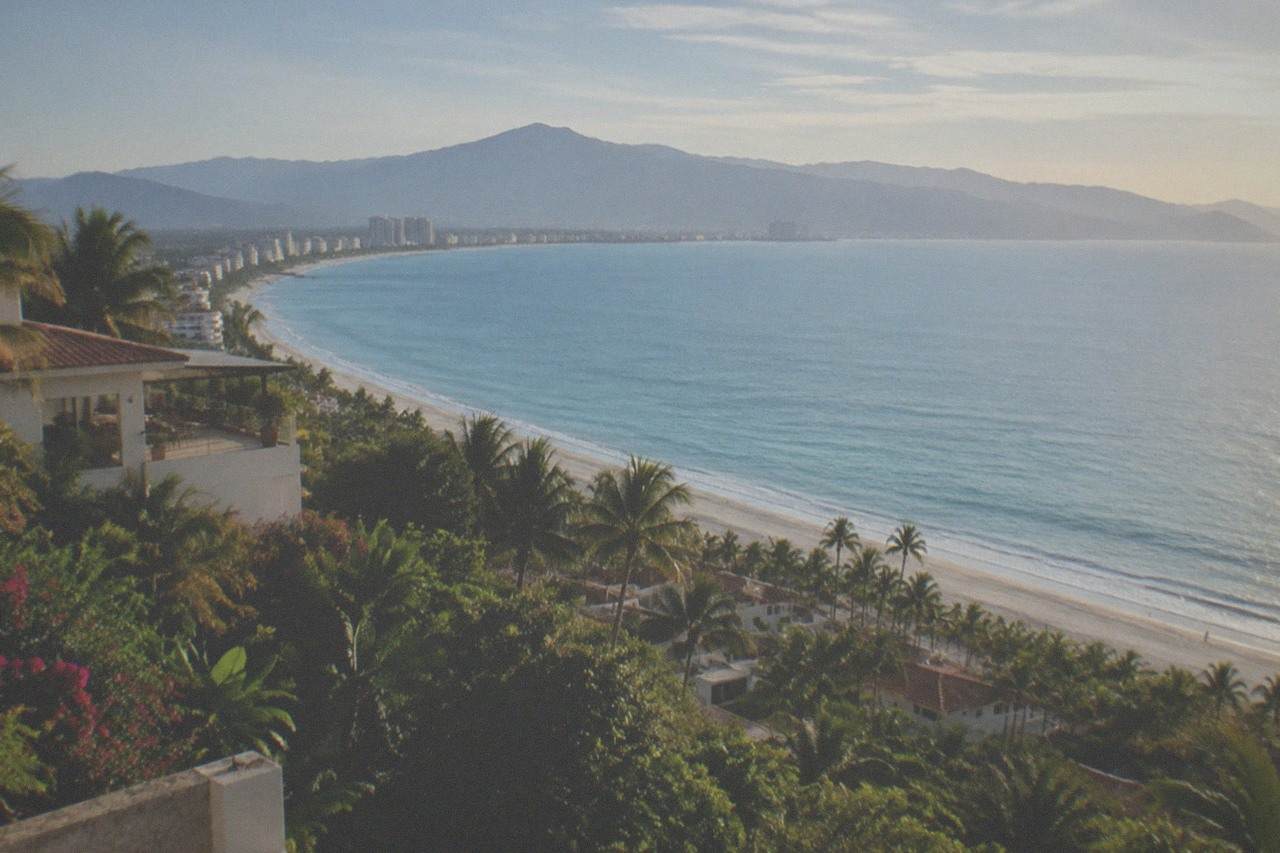
Banderas Bay is one of the largest natural bays in North America, roughly 100 kilometers of coastline shared by Jalisco and Nayarit. Humpback whales visit from about December 8 to March 23, Los Arcos offers the closest snorkeling from $48, and crossing times range from 20 minutes to over an hour depending on your departure point.
Banderas Bay is the reason Puerto Vallarta has a tour industry at all. This single sweep of protected Pacific water, hemmed in by the Sierra Madre foothills on the south side and the flat Nayarit coast on the north, holds nearly everything visitors come to see by boat: the Los Arcos marine sanctuary, the Marietas Islands, the waterfall village of Yelapa, humpback whales from December to March, and bioluminescence that glows off the southern shore on dark nights. One bay, several distinct zones, and a set of rules that decide which boats can go where.
This guide covers the bay as a piece of geography first, because that is what actually determines which tour you should book. A snorkeling tour from Boca de Tomatlán and a catamaran from Marina Vallarta may advertise the same destination, but they are very different days on the water. The bay's marine ecology, its wildlife calendar, and the practical matter of crossing times are all covered below, with the tour categories mapped onto the parts of the bay they actually visit.
What Is Banderas Bay And Why Does It Matter For Tours?
Banderas Bay is a deep, roughly 100-kilometer-wide crescent of Pacific coastline shared between Jalisco and Nayarit, and its sheltered shape is what makes year-round boat touring possible. The bay cuts far enough inland that its southern reaches stay protected from open-ocean swell for most of the year, which is why whales calve here and why snorkel boats run in nearly every month.
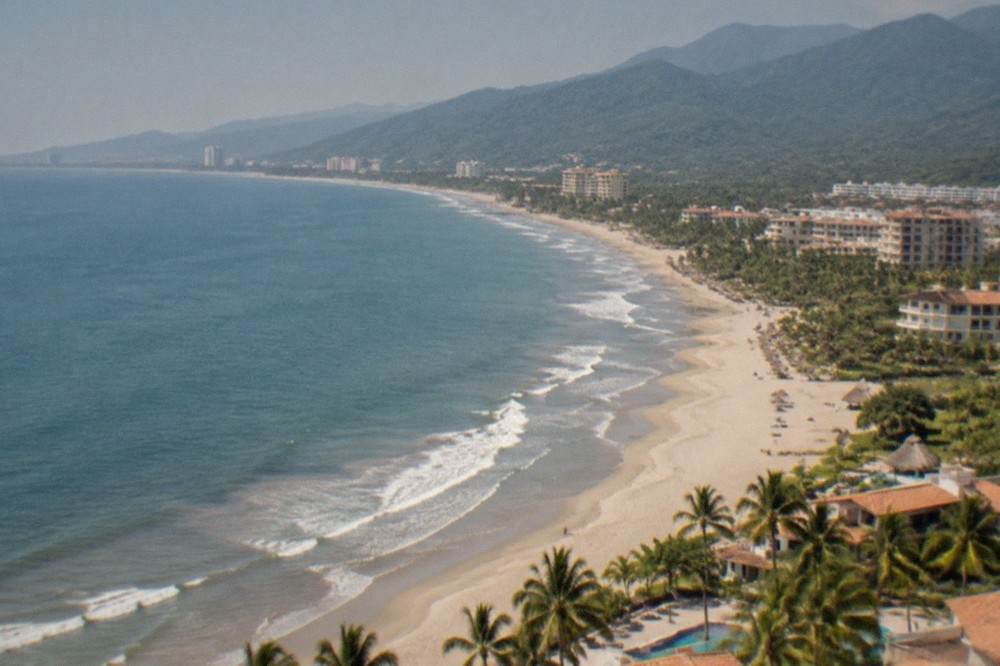
The bay's official name, Bahía de Banderas, translates to Bay of Flags, and its boundaries are administrative as well as geographic: the south shore belongs to the state of Jalisco and includes Puerto Vallarta, Mismaloya, Boca de Tomatlán and Yelapa, while the north shore belongs to Nayarit and includes Nuevo Vallarta, Punta de Mita, La Cruz de Huanacaxtle and the mouth of the Ameca River. The Marietas Islands sit just off the Nayarit headland at the bay's mouth. That split matters for tour logistics, since your hotel's location often decides which departure point, and therefore which crossing time, applies to you.
The depth is the other defining feature. The bay is deep enough near its mouth that humpback whales treat it as a wintering ground: deep water close to sheltered coastlines is exactly what calving mothers look for. Along the southern shore, the Sierra Madre foothills come down almost to the waterline, which produces the small coves, rocky islets and seasonal waterfalls that the small-boat tours exploit. The north shore is shallower, sandier and hosts the larger marina infrastructure, which is why the big catamarans mostly depart from there.
For tour planning, the practical takeaway is simple. The bay is big enough that "a boat tour in Puerto Vallarta" can mean a 20-minute hop to a reef or a 90-minute crossing to a national park, and the price differences between products track that distance more than they track luxury. Before comparing tours, compare departure points.
Which Parts Of The Bay Do Boat Tours Visit?
Most tours concentrate in four zones: the Los Arcos marine sanctuary just south of Puerto Vallarta, the south-shore coves of Yelapa and Majahuitas, the Marietas Islands at the bay's mouth, and the open mid-bay water where whale watching happens. Each zone has its own rules, its own travel time and its own kind of boat, and nearly every product on the market is a variation on one of these four itineraries.
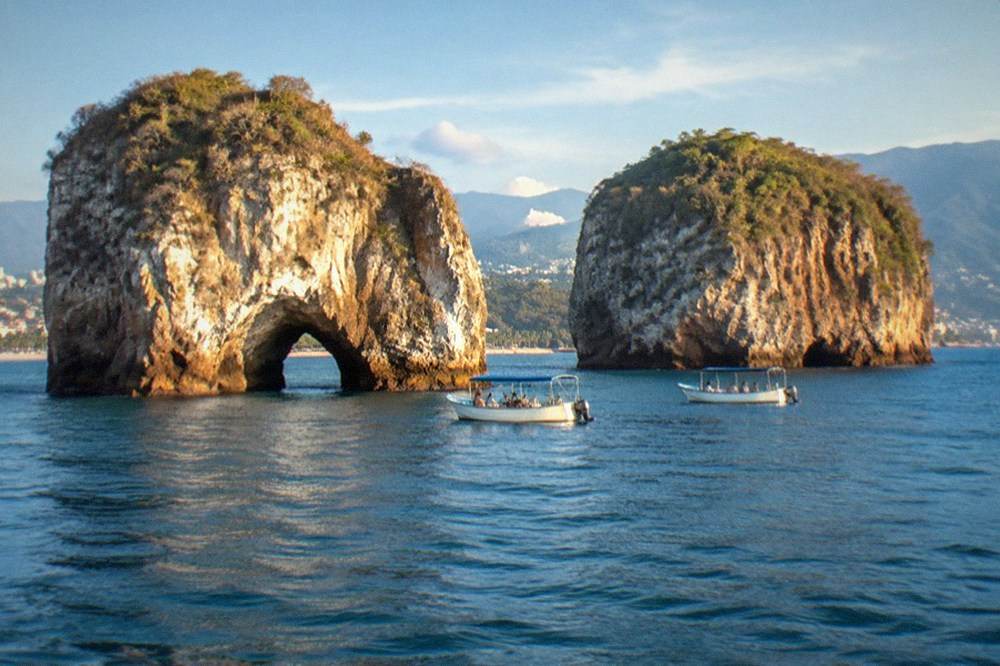
Los Arcos is the closest and cheapest zone to reach. The granite islands sit offshore between Mismaloya and Boca de Tomatlán, they are protected as a national marine park, and the crossing from Boca de Tomatlán takes roughly 20 minutes by small boat. This is where the high-volume snorkel products run: the 5 Islands of Los Arcos boat tour from Vallarta Nature Trips is rated 4.6 from 389 reviews and starts from $48, while the Los Arcos 5-Islands Snorkeling, Cliff Jumping & Hidden Beach tour is rated 4.9 from 477 reviews and starts from $51. The largest review pool in this family, 4.7 from 1,347 reviews from $48, belongs to the Boat & Snorkel Tour of the same islands.
The south-shore coves, Yelapa and Majahuitas, sit further along the same coastline, reachable only by water on the Yelapa side. These are the domain of the beach-day catamarans and the all-inclusive products, such as the Mega Catamarans Remote Paradise Beach tour from Chica Locca, rated 4.8 from 541 reviews and priced from $120, and the Yelapa Waterfall, BBQ, Open Bar & Majahuitas tour from Vallarta Adventures, rated 4.4 from 792 reviews from $79.
The Marietas Islands are the longest commitment in the bay. The flagship full-day all-inclusive Marietas tour from Chica Locca, rated 4.8 from 771 reviews from $120, crosses the entire bay, and the islands themselves are a federally managed national park with an entry wristband, the Brazalete de la Conservación, costing $125 MXN per person per day. Playa del Amor, the famous hidden beach inside the collapsed crater, admits 116 visitors per day with a maximum of 15 people on the beach at any one time, which is why advance booking through a licensed operator is not optional.
The mid-bay open water is the whale-watching zone from December through March, and it is also where the sunset and bioluminescence boats operate in the evening hours. A detailed breakdown of which product fits which traveler is in our Puerto Vallarta boat tours comparison, and the whale products specifically are covered in the Puerto Vallarta whale watching tours guide.
How Long Does It Take To Cross The Bay?
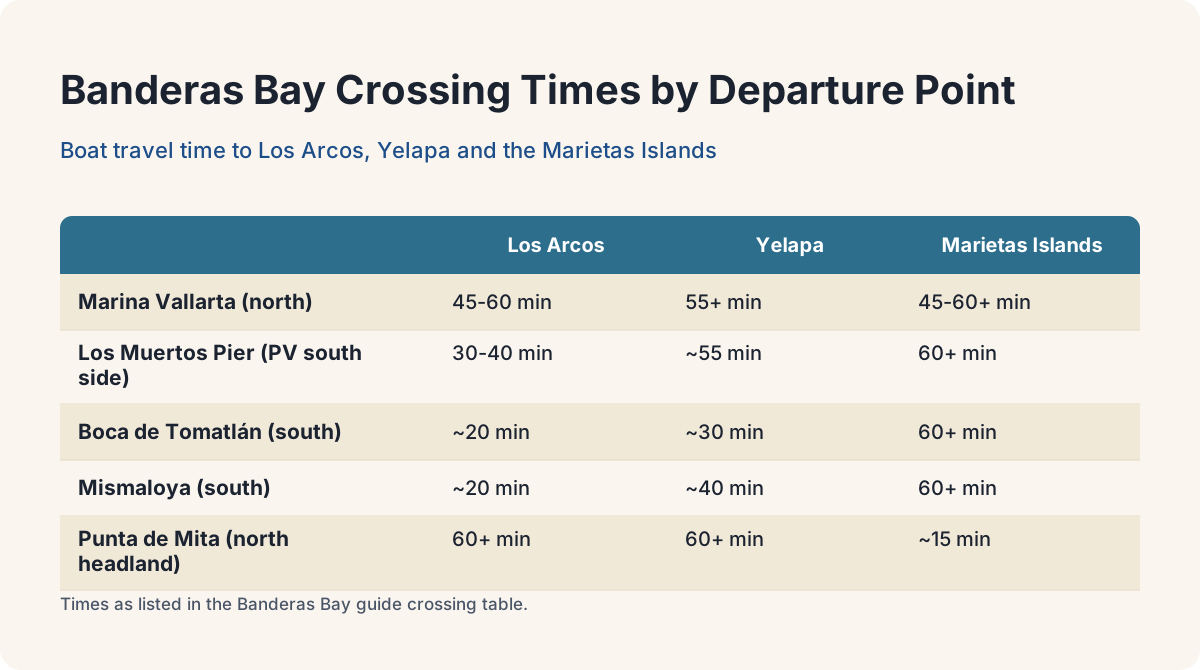
Crossing time depends almost entirely on departure point: Los Arcos is about 20 minutes from Boca de Tomatlán but 45 to 60 minutes from Marina Vallarta, Yelapa is roughly 30 minutes from Boca de Tomatlán, and the Marietas Islands are around 15 minutes from Punta de Mita but 45 to 60 minutes or more from Puerto Vallarta itself. Booking from the nearest departure point can cut more than an hour of boat time each way.
The table below pulls together the practical numbers for the bay's main destinations. Use it to sanity-check any tour's advertised duration: a "full day" Marietas tour is genuinely full because of the crossing, while a Los Arcos morning trip can be comfortably done in half a day even with snorkeling time included.
| Departure point | Los Arcos | Yelapa | Marietas Islands | Typical boats |
|---|---|---|---|---|
| Marina Vallarta (north) | 45-60 min | 55+ min | 45-60+ min | Catamarans, yachts, large pangas |
| Los Muertos Pier (PV south side) | 30-40 min | ~55 min | 60+ min | Pangas, mid-size boats |
| Boca de Tomatlán (south) | ~20 min | ~30 min | 60+ min | Small pangas, water taxis |
| Mismaloya (south) | ~20 min | ~40 min | 60+ min | Small pangas |
| Punta de Mita (north headland) | 60+ min | 60+ min | ~15 min | Speedboats, small pangas |
Two practical notes follow from these numbers. First, if your hotel is in the Romantic Zone or along the south shore, the Boca de Tomatlán departure point usually gives you the shortest boat rides in the entire bay, and several operators run shuttles to that dock from central Puerto Vallarta. Second, the Marietas crossing from Puerto Vallarta is the one where sea state genuinely matters: the bay's mouth is where open Pacific swell enters, and operators reroute or reschedule when the channel is rough.
The Los Arcos 5-Islands Snorkeling, Cliff Jumping & Hidden Beach tour is the strongest-reviewed product in the closest zone, rated 4.9 from 477 reviews and starting from $51, and its itinerary is built around the short Boca-side crossing with cliff jumping and a quieter beach stop included.
Because that tour sits at the budget end of the bay's price range while covering the sanctuary, the cliffs and a beach stop, it works as a default pick for travelers who want the water without committing a full day. If you are weighing it against the shared-boat alternatives, the private versus shared tours guide breaks down the cost logic.
What Wildlife Lives In Banderas Bay?
Humpback whales are the headline species, present from roughly December 8 to March 23 under federal regulation, and the bay also holds resident bottlenose dolphins, manta rays, sea turtles, and the reef fish of Los Arcos and the Marietas. Whale watching is governed by NOM-131-SEMARNAT-2010, which sets approach distances of 60 meters for small boats and 80 meters for larger vessels, with non-authorized craft held to 240 meters.
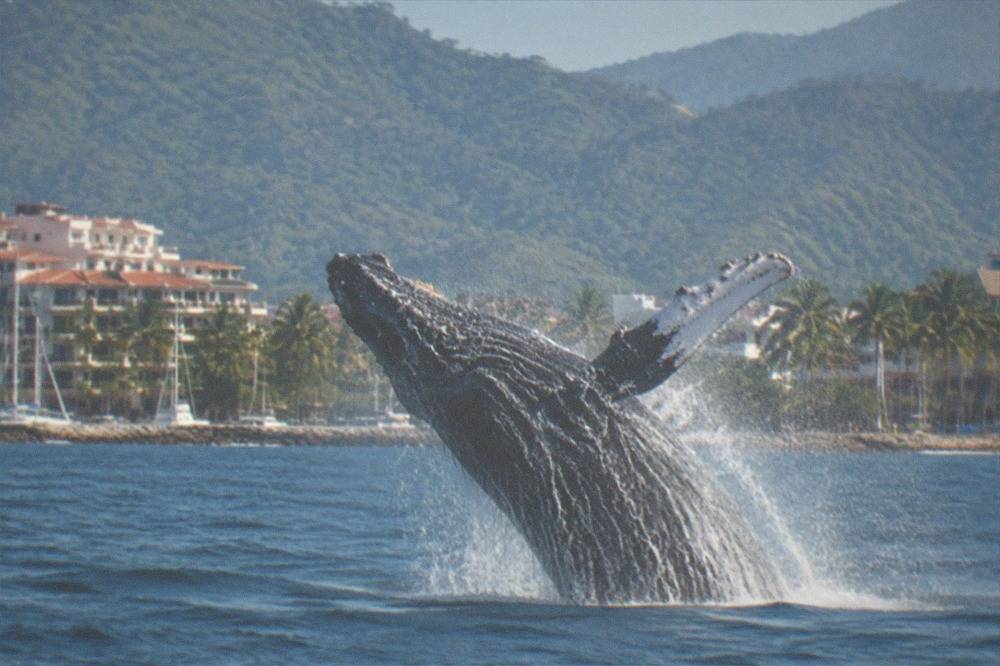
The humpback season is the bay's biggest natural event. Whales travel from the North Pacific to Banderas Bay to breed and calve, and the season window of approximately December 8 through March 23 is set by federal notice rather than by operators. The rules that protect the whales are specific: authorized vessels approach from the rear or side at under 5 knots, spend a maximum of 30 minutes near any whale or pod, and keep a 1.5-kilometer restricted radius around the Islas Marietas during mother-calf periods. Certified operators display an official whale-watching flag with identification numbers, and enforcement patrols do check compliance. The federal notice setting these rules is published by the Diario Oficial de la Federación.
Beyond the whales, the bay's south shore is a dolphin corridor year-round, and manta rays gather at Los Arcos in numbers that make it the bay's signature dive and snorkel site. Olive ridley and hawksbill turtles nest on the bay's beaches, and several operators run evening turtle-release programs on the north shore during nesting season. Birdlife concentrates at the Marietas, where blue-footed boobies are the marquee sighting, one of the reasons the islands carry national park status. The rest of the planning pages sit on Tours in Puerto Vallarta.
For whale products specifically, the Mega Yacht Whale Watching & Sunset Cruise from Chica Locca Tours, rated 4.7 from 103 reviews and starting from $110, pairs the December-to-March whale zone with the bay's evening light, which is a sensible combination given that whale tours end by mid-afternoon under the season rules.
If whales are the reason you are traveling, plan the whole trip around the season window rather than hoping for an early arrival. Mid-January to mid-February is the peak of activity in most years, and the best time to visit Puerto Vallarta guide aligns the whale calendar with weather, prices and crowds.
Where Is The Best Snorkeling In The Bay?
Los Arcos is the bay's most accessible and most heavily booked snorkeling site, with dry-season visibility sometimes reaching 15 meters or more, while the Marietas Islands offer the clearest protected water at the cost of a long crossing, and the south-shore coves near Yelapa and Majahuitas hold calmer, shallower snorkeling suited to beginners. The marine park fee at Los Arcos is 41 Mexican pesos per person, usually collected by the operator.
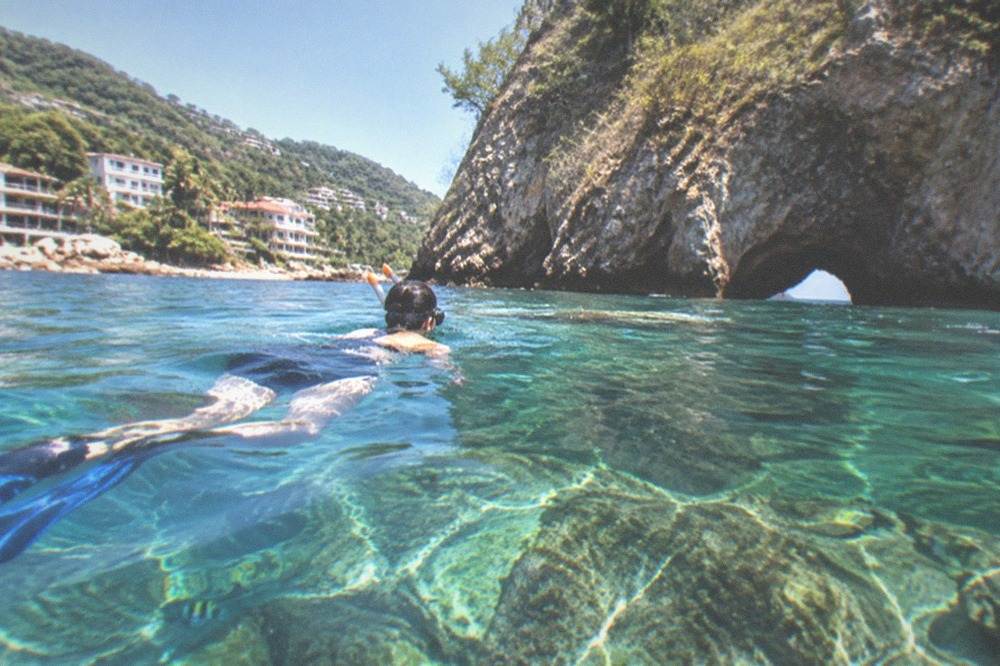
Los Arcos earns its volume honestly. The granite islands protect a small but dense reef system, the site is reachable in about 20 minutes from Boca de Tomatlán, and federal protection means no fishing, no anchoring on reefs and no touching or feeding marine life. Visibility follows the season rather than the calendar of any single month: November through May, the dry season, brings the calmest seas and the clearest water, sometimes 15 meters or about 50 feet and more, while June through October warms the water but can reduce visibility after rain and runoff. Morning departures consistently get the better conditions, which is another argument for the short south-shore crossings.
The Marietas snorkeling is arguably better water, but the trade is time. The crossing plus the park's entry process, including the mandatory conservation wristband and life jackets in the water, makes it a full-day commitment from Puerto Vallarta. The Luxury Yacht Tour, Snorkeling, Open Bar & Lunch product, rated 4.6 from 786 reviews and starting from $89, splits the difference by combining a comfortable boat with a proper snorkel stop, and it is the pick for travelers who want the water without the panga-and-cooler experience.
The three main snorkeling zones differ in more than crossing time, and the table below summarizes the practical differences side by side.
| Snorkel zone | Entry cost | Water character | Best for |
|---|---|---|---|
| Los Arcos | 41 MXN park fee | Reef, deeper water, sometimes 15m visibility in dry season | Confident snorkelers, short trips |
| Marietas Islands | $125 MXN wristband | Clearest protected water, strong currents possible | Full-day visitors, wildlife watchers |
| Yelapa and Majahuitas coves | None stated | Calmer, shallower cove water | Beginners, beach-day combinations |
For a fuller treatment of sites, gear and the small-group options, the Puerto Vallarta snorkeling tours guide covers the whole bay, and the Los Arcos snorkeling tour guide goes deep on the closest site. One planning note: the Los Arcos park fee is cash-only, so carry a small peso amount even on an all-inclusive boat.
When Is The Best Time To Tour The Bay?
December through March is whale season and the bay's peak touring window, November through May delivers the clearest snorkeling water, and August through October is the wettest period, inside the Eastern Pacific hurricane season that officially runs May 15 to November 30. The bay is tourable year-round, but the product you should book changes with the season.
The season logic falls into three blocks. Winter, roughly December to March, is when the bay is at its busiest and its best for wildlife: whales are present under the federal season, water is clear, and rain is rare. Spring, April and May, keeps the clear water and drops the whale crowds, making it the connoisseur's window for snorkeling and south-shore cove trips. Summer and early fall, June through October, is hot, humid and wet, with August and September the rainiest months, though this is also when the bay is quietest and tour prices soften.
The hurricane question comes up often, and the honest answer is that the official Eastern Pacific season runs from May 15 through November 30, with peak regional risk in August through October, per NOAA's tropical cyclone climatology. Direct strikes on Banderas Bay are uncommon, but heavy rain weeks in September can and do cancel boat departures, so travelers booking in that window should confirm the operator's weather policy before paying.
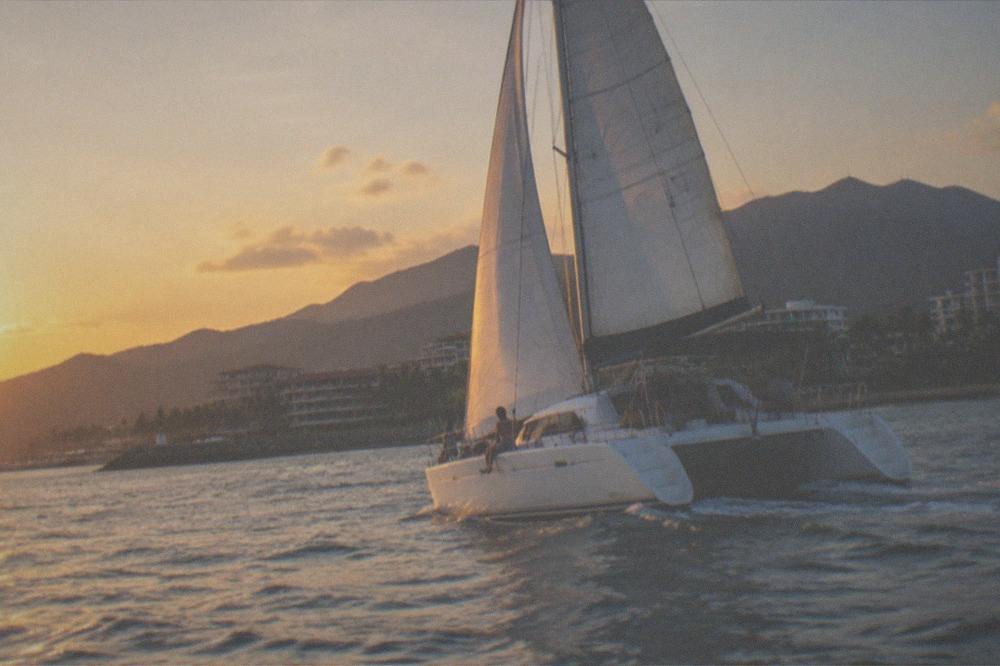
Evening products run across most of the year. The bioluminescence tours are the seasonal exception worth knowing about: the glow is produced by dinoflagellates that are brightest in the warmer months, and the Bioluminescence Sunset Boat Tour at Los Arcos, rated 4.7 from 108 reviews and starting from $46, times its route so the sunset half happens first and the dark-water half follows. The Puerto Vallarta sunset cruise guide compares the full evening fleet.
Which Bay Tour Should You Book For Your Trip?
Match the tour to your departure point and your season rather than to a single "best" product: short south-shore crossings suit Los Arcos snorkel tours, the Marietas full-day all-inclusive suits travelers staying north who want the national park, whale products only make sense December to March, and evening boats fit any day the weather holds. Price on the bay ranges from about $46 to about $120 per person across the mainstream products.
The comparison table below maps the main product families to the bay zones they actually serve. It is a planning aid, not a ranking: the right row depends on where you are staying, how much boat time you tolerate, and the month you are traveling.
| Product family | Bay zone | Typical price | Time on water | Best season |
|---|---|---|---|---|
| Los Arcos snorkel tours | South marine park | from $48-$51 | Half day | Nov-May |
| Yelapa and Majahuitas beach days | South-shore coves | from $79-$120 | Full day | Nov-May |
| Marietas Islands full day | Bay mouth, national park | from $120 | Full day | Year-round, check sea state |
| Whale watching | Open mid-bay | from $85-$110 | 3-4 hours | Dec 8-Mar 23 |
| Sunset and bioluminescence | South shore, evening | from $46-$119 | 3-5 hours | Year-round, best glow in warm months |
For the national park itself, the Marietas Islands National Park Full-Day All-Inclusive from Chica Locca, rated 4.8 from 771 reviews and starting from $120, is the site's flagship product and the one most likely to include the Playa del Amor access within its itinerary, subject to the park's daily limits. The islands are managed by the National Commission of Natural Protected Areas, and the official CONANP park page carries the current rules on fees and hours.
A final word on booking logistics. Bay tours sell out first in the December-to-March whale window and around holiday weeks, and the Marietas products carry park-imposed caps that do not flex with demand. If your dates are fixed, book the crossing-heavy tours before the short ones, since those are the ones with hard ceilings on daily visitors. Travelers assembling a whole week can mix one full-day park trip, one south-shore beach day and one evening cruise without repeating any water, which is the pattern the Puerto Vallarta tour packages guide builds out in detail.
Common Questions About Banderas Bay
What is Banderas Bay?
Banderas Bay, or Bahía de Banderas, is a large Pacific bay on Mexico's west coast, shared between the states of Jalisco and Nayarit, with Puerto Vallarta on its south shore. Its sheltered, deep water is what makes year-round boat touring, whale watching and snorkeling possible from the city.
When is whale watching season in Banderas Bay?
The humpback whale season runs approximately December 8 to March 23, set by federal regulation under NOM-131-SEMARNAT-2010. Peak activity is typically mid-January to mid-February, and only authorized operators with the official whale-watching flag may approach within the regulated distances.
How long does it take to get to the Marietas Islands from Puerto Vallarta?
From Puerto Vallarta departure points the crossing takes roughly 45 to 60 minutes or more each way. From Punta de Mita, near the islands, the crossing is about 15 minutes, so where you stay materially changes the length of the day.
Do you need a permit or fee to snorkel at Los Arcos?
No personal permit is required, but Los Arcos is a federally protected marine park with a per-person access fee of 41 Mexican pesos, cash-only, often collected by the tour operator. Boats must follow federal rules: no fishing, no anchoring on reefs, and no touching or feeding marine life.
What is the fee to enter the Marietas Islands National Park?
Entry costs $125 MXN per person per day, paid through the mandatory Brazalete de la Conservación wristband. Children under 12 are exempt, and discounts apply for Mexican nationals and residents with proof, seniors, students and teachers with valid ID.
Is Banderas Bay safe for boat tours?
Yes, in the normal course. The bay is sheltered, operators hold federal permits for the protected areas, and whale watching is regulated with set approach distances and time limits. The main genuine risks are seasonal: rough conditions at the bay's mouth near the Marietas, and rainy-season weather from June through October, when departures can be rescheduled.